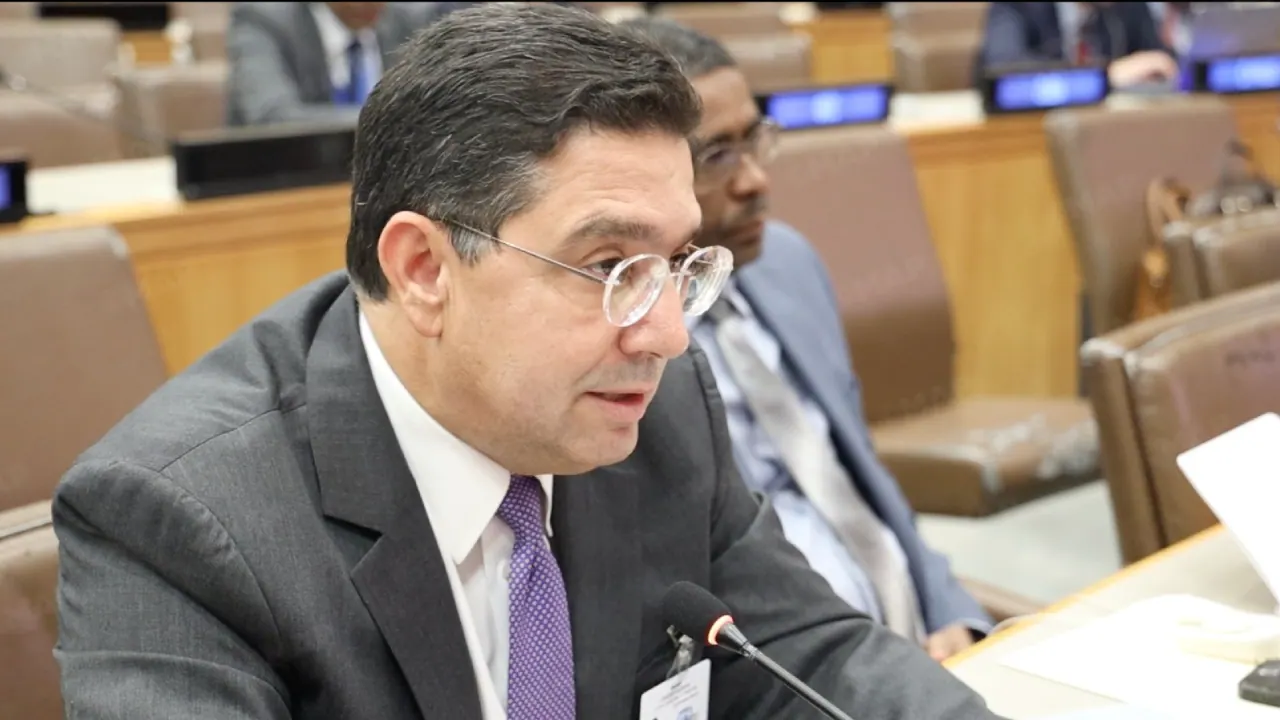
Morocco's Minister of Foreign Affairs, Nasser Bourita, addressed a UN Security Council meeting, emphasizing the need for an international code of conduct for countries bordering strategic maritime passages. He highlighted Morocco's direct responsibility for managing and securing the Strait of Gibraltar, a crucial waterway with nearly 100,000 ships transiting annually. Bourita stressed that Morocco views its geographic position as an international responsibility, not a tool for pressure or blackmail.
The Strait of Gibraltar is one of the world's most important maritime routes, with approximately 300 ships passing through daily, or one every five minutes. Bourita noted that traffic through Gibraltar is five times heavier than the Suez Canal and eleven times heavier than the Panama Canal. He also compared it to the Strait of Hormuz, stating that Gibraltar's traffic is nearly three times more intense. This significant maritime passage underscores the importance of secure and predictable navigation.
Bourita proposed hosting an international forum, in coordination with Bahrain, to reinforce commitment to international law and prevent polarization between countries claiming ownership of strategic passages and those exploiting them for leverage. He warned that seas and oceans form a fragile global infrastructure, vulnerable to greed and malicious designs. The international community must ensure that these waterways remain open, safe, and predictable.
During the 81st session of the UN General Assembly, Bourita engaged in several meetings, including one with his Bahraini counterpart, Abdullatif bin Rashid Al Zayani. The two agreed to coordinate positions within international bodies. Bourita also co-chaired a world conference against hate speech through interreligious and intercultural dialogue, an initiative co-organized with the UN.
The focus on Gibraltar recalls a similar scenario raised at the UN headquarters in May. US Ambassador to the United Nations Mike Waltz drew a comparison between Hormuz and Gibraltar, condemning Iran's mining and tolling operations in the Gulf corridor. Waltz described such actions as immoral and illegal under international law, highlighting the importance of secure navigation.
Bourita's intervention at the UN Security Council meeting reflects Morocco's commitment to international cooperation and stability. He emphasized that Morocco does not view its geographic position as a privilege, but as a responsibility to ensure the security and freedom of navigation in strategic waterways. This stance aligns with Morocco's efforts to promote cooperation and development in the region.
The call for an international code of conduct for strait management is a key aspect of Morocco's foreign policy. By promoting a framework for safe navigation, Morocco aims to prevent the exploitation of strategic passages for blackmail or leverage. This initiative is expected to contribute to global efforts to maintain secure and predictable maritime routes, essential for international trade and stability.
Key points
- Morocco's Foreign Minister Nasser Bourita calls for an international code of conduct for countries bordering strategic maritime passages.
- The Strait of Gibraltar is a crucial waterway with nearly 100,000 ships transiting annually.
- Morocco views its geographic position as an international responsibility, not a tool for pressure or blackmail.