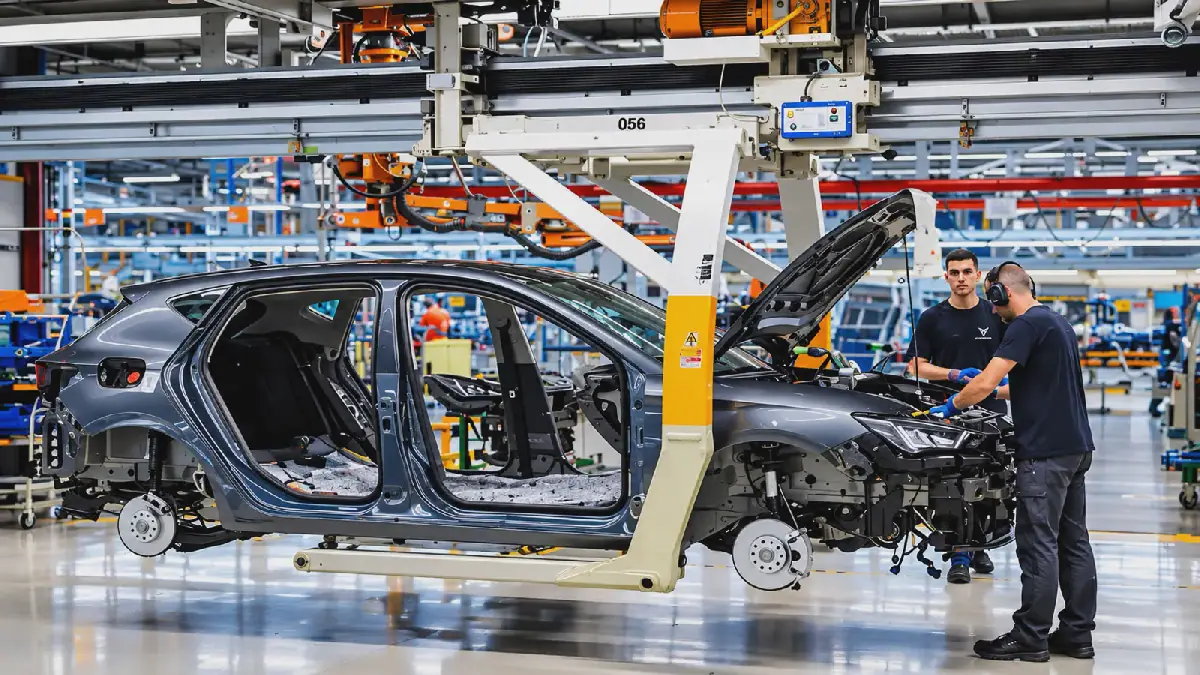
Morocco has spent decades building a integrated automotive industry closely tied to European production chains, leveraging its geographic location and developed infrastructure. The industry has become a leading exporter and a major driver of manufacturing, investment, and employment. However, the European Union's new "Made in Europe" policy, which aims to relocate 80% of car production within its borders, poses new challenges to the sector's competitiveness and ability to attract future investments.
The policy, also known as the Industrial Accelerator Act, prioritizes low-carbon production and has raised concerns in Morocco about the potential consequences for its automotive industry. Moroccan Industry and Trade Minister Ryad Mezzour has warned that the policy could lead to Morocco being limited to producing thermal vehicles, while Europe focuses on electric vehicles. This shift could have significant implications for the country's industrial sector and its role in the global automotive supply chain.
According to Azeddine Alioui, a professor and financial and economic analyst, the "Made in Europe" policy should not be seen as an insurmountable threat, but rather as an opportunity to reconfigure the industrial relationship between Morocco and Europe. Alioui notes that the policy aligns with Morocco's priorities in areas such as energy transition and manufacturing, and that the country has a strong track record of attracting foreign industrial investments and developing sectors such as automotive, aerospace, and textiles.
The automotive sector is a strategic industry for Morocco, with exports reaching 93.7 billion dirhams in the first half of 2026, up 17.4% from the same period last year. The sector encompasses not only vehicle assembly but also a comprehensive industrial ecosystem, including the production of electrical wiring, metal components, electronic systems, and logistics services. Any changes to European industrial policies could have far-reaching consequences for the sector, affecting not only manufacturers but also suppliers, training programs, and employment opportunities.
The Moroccan government's efforts to promote the industry are critical, given the significance of the sector to the country's economy. According to Abderrahim Lamchari, head of the European-Mediterranean committee at the General Confederation of Moroccan Enterprises, the private sector is concerned about the implications of the "Made in Europe" policy for the country's industrial sector. The government must navigate these challenges to ensure that Morocco remains an attractive location for investment and a competitive player in the global automotive industry.
Alioui emphasizes that Morocco has several strengths that position it well to adapt to the changing landscape, including its proximity to the European market, free trade agreements, and developed industrial infrastructure. He notes that the country's experience and skilled workforce make it a natural partner for European industry, and that the existing integration between Morocco and Europe makes a complete disruption of their industrial relationship unlikely.
The development of the battery sector presents an opportunity for Morocco to strengthen its industrial position, given Europe's need for a reliable and nearby production base to reduce its dependence on distant supply chains. Alioui sees this area as a promising opportunity for Morocco to capitalize on its existing strengths and expertise, and to establish itself as a key player in the emerging electric vehicle market.
Key points
- The EU's "Made in Europe" policy prioritizes local production and could lead to a shift in Morocco's role in the global automotive supply chain.
- Morocco's automotive industry is a significant contributor to the country's economy, with exports reaching 93.7 billion dirhams in the first half of 2026.
- The development of the battery sector presents an opportunity for Morocco to strengthen its industrial position and capitalize on emerging trends in the electric vehicle market.