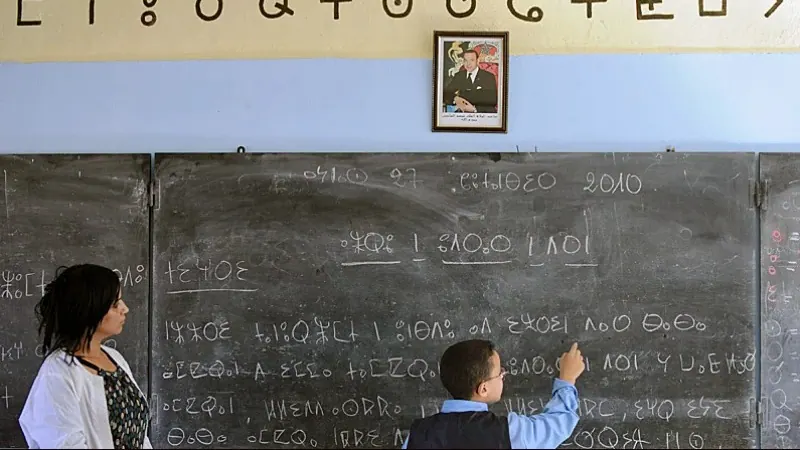
The Moroccan government's initiative to generalize the teaching of the Amazigh language is encountering numerous obstacles. Despite the push to incorporate Amazigh into the national education system, the project is struggling with limited resources and logistical challenges. This has raised concerns about the potential impact on the program's effectiveness and reach. According to a recent report, the implementation of Amazigh language courses has been hindered by a lack of qualified teachers and inadequate infrastructure.
One of the primary challenges facing the Amazigh education program is the current scheduling of Amazigh language courses. These courses are often relegated to outside of regular school hours, which can limit student participation and engagement. Furthermore, teachers are frequently reassigned to multiple schools, disrupting the continuity of instruction and making it difficult for students to receive consistent guidance. This has resulted in a disjointed and ineffective learning environment for many students.
The shortage of resources is another significant challenge confronting the Amazigh education program. Many schools lack the necessary materials and equipment to support the teaching of Amazigh, including textbooks, educational software, and audiovisual aids. This dearth of resources has forced educators to rely on outdated and inadequate materials, hindering their ability to provide high-quality instruction.
The Moroccan Ministry of Education has faced criticism for its handling of the Amazigh education program. Educators and policymakers have expressed concerns about the lack of support and resources provided to schools attempting to implement Amazigh language courses. In response, the Ministry has acknowledged the challenges and pledged to increase funding and support for the program. However, it remains to be seen whether these efforts will be sufficient to address the program's systemic issues.
The Amazigh language is an integral part of Moroccan culture and identity. Efforts to promote and preserve the language have been ongoing for several years, with many advocating for greater recognition and support. Despite these efforts, the Amazigh language remains underrepresented in the education system, and many students have limited opportunities to learn and engage with the language.
To address the challenges facing the Amazigh education program, the Moroccan government may need to reassess its priorities and allocate additional resources. This could involve increasing funding for teacher training, educational materials, and infrastructure development. Additionally, policymakers may need to reconsider the scheduling and organization of Amazigh language courses to ensure that they are more accessible and effective.
The success of the Amazigh education program has significant implications for Morocco's linguistic and cultural diversity. If implemented effectively, the program could help promote greater understanding and appreciation of the Amazigh language and culture. However, if the challenges persist, the program may fail to achieve its goals, undermining efforts to preserve and promote Morocco's rich cultural heritage.
Key points
- The Moroccan government's efforts to generalize Amazigh language education face significant challenges, including limited resources and logistical issues.