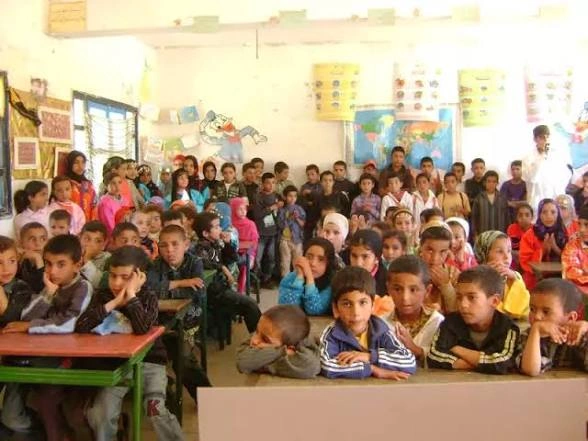
The start of the new academic year in Morocco's Al Jadida region has been marred by a complex crisis, with overcrowding, inadequate infrastructure, and poor human resource management. The Moroccan Association for Student Rights has highlighted the issue, stating that the new academic year has not brought significant improvements, with overcrowding and a shortage of administrative staff remaining major concerns. This situation is particularly challenging in urban areas, where schools are struggling to accommodate the growing number of students.
In rural areas, the situation is even more dire, with transportation issues leading to a significant waste of learning time. Despite efforts by the Regional Committee for Human Development to distribute 49 school buses and 20 additional buses to areas with severe needs, the reality remains fragile. In some rural communities, such as Al Houzia, the single school bus is insufficient, leading to long and arduous journeys for students. The lack of urban transportation infrastructure has further exacerbated the issue, turning the start of the academic year into a social crisis that threatens family stability and the right to education.
The issue of "paper institutions" – schools that exist on paper but not in reality – has sparked controversy in the region. According to reports, several schools, including the Al Tazi Secondary School in Oulad Hamdan, have been plagued by delays and construction stoppages. The project's estimated cost was around 7 million dirhams, but the sole bidder's offer of 8 million dirhams led to a stalemate. Despite recent announcements that construction has begun, residents remain skeptical, and the school's impact on reducing dropout rates, particularly among rural girls, is eagerly awaited.
The file of administrative appointments remains a sensitive issue, with reports suggesting that it has become a source of tension within the education sector. The union has described the situation as a source of discontent, with concerns about the use of appointments for personal gain rather than based on need and public interest. The situation has led to calls for an independent administrative and financial audit to address the issue.
The crisis in Al Jadida's education sector has far-reaching implications, with the local community bearing the brunt of the challenges. Parents, students, and teachers are all affected by the overcrowding, inadequate infrastructure, and transportation issues. As the academic year progresses, there are concerns about the impact on student learning outcomes and the overall quality of education.
Efforts to address the challenges facing Al Jadida's education sector are underway, with the Regional Committee for Human Development working to improve infrastructure and transportation. However, more needs to be done to address the root causes of the crisis and ensure that all students have access to quality education. The situation in Al Jadida serves as a microcosm of the broader challenges facing Morocco's education sector.
As the academic year continues, stakeholders are calling for urgent action to address the crisis in Al Jadida's education sector. The situation requires a comprehensive and sustainable solution that addresses the needs of students, teachers, and the broader community. With the right support and investment, it is possible to turn around the fortunes of Al Jadida's education sector and provide students with the quality education they deserve.
Key points
- Overcrowding, inadequate infrastructure, and transportation issues are major challenges facing schools in Morocco's Al Jadida region.