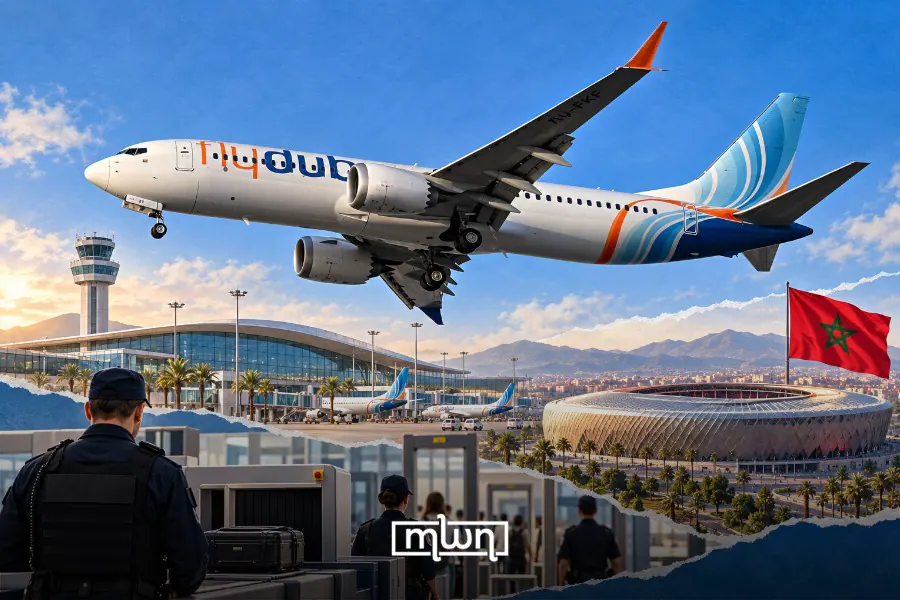
Morocco's preparations for the 2030 World Cup will involve a dense operational network of airports, transport, hotels, venues, and public agencies. This has raised concerns about the need for a robust security culture that can adapt to potential threats. According to Abdulla Saeed Alhebsi, Morocco's experience can draw on Gulf countries' expertise in handling large international events. The UAE's experience with flydubai flight FZ1073 incident has shown that even with trusted individuals, abnormal behavior can pose a significant threat.
The recent flydubai flight FZ1073 incident, where the co-pilot attempted to carry out a terrorist act, has highlighted the need for a security culture that can challenge trust. The UAE Attorney-General's investigation revealed that the co-pilot, who was already on the trusted side of security, attempted to attack the captain and take control of the aircraft. This incident raises questions about how to mitigate risks when legitimate access has already been granted. Alhebsi argues that exercises should test assumptions on which systems rely, including those with valid credentials or authorized operators.
Alhebsi emphasizes that trust is operationally necessary, but it must remain open to review. He argues that a person may remain trusted while a particular action deserves a second check, and a credential may remain valid while circumstances justify a temporary restriction. A mature security culture creates room for these distinctions. The UAE General Civil Aviation Authority has commended the captain, crew, and passengers whose swift intervention helped bring the situation under control, highlighting the importance of resilience and swift action in preventing catastrophe.
The incident also highlights the importance of a defensible system that focuses on behavior relevant to the role, unusual attempts to exercise authority, high-consequence actions, and clear escalation channels. Such a system should protect the person being reviewed, with temporary verification not being a verdict, and raising a concern not being proof of guilt. Alhebsi argues that a secure major event is not one in which nobody is trusted, but one in which trust can be questioned for a moment without the whole system freezing.
Alhebsi's argument is built around the design principle that the higher the consequence of an action, the less comfortable we should be with irreversible single-person authority. This may involve a second human check, segmented permissions, a rehearsed transfer of control, or a way for colleagues to pause an abnormal action without first proving malicious intent. These measures are not dramatic, which is precisely why they can work.
Morocco's 2030 World Cup preparations offer an opportunity to develop a security culture that balances trust with vigilance. The country's experience can draw on Gulf countries' expertise, and the UAE can learn from Morocco's own city-scale preparations. The collaboration between Morocco and the UAE can help create a robust security culture that can adapt to potential threats and ensure a safe and successful event.
The Morocco 2030 World Cup is expected to draw large crowds and involve complex logistics. Developing a security culture that can challenge trust and adapt to potential threats will be crucial to ensuring the event's success. By learning from each other's experiences and expertise, Morocco and the UAE can create a model for secure major events that balances trust with vigilance.
Key points
- Morocco's 2030 World Cup preparations highlight the need for a security culture that balances trust with vigilance.
- A secure major event is not one in which nobody is trusted, but one in which trust can be questioned for a moment without the whole system freezing.
- A defensible system should focus on behavior relevant to the role, unusual attempts to exercise authority, high-consequence actions, and clear escalation channels.