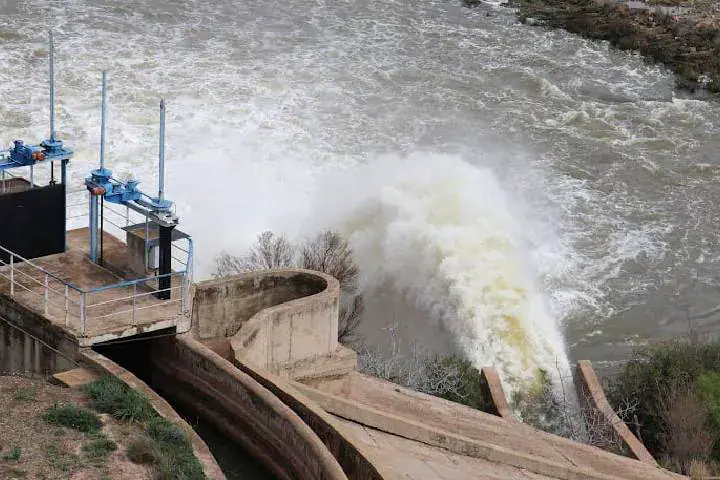
Morocco's government has outlined its 2027 finance law, prioritizing the country's water strategy with a significant investment of 67 billion dirhams. This move aims to enhance water security, crucial for sustaining economic growth and addressing climate-related challenges. The finance law seeks to continue the development of major dam projects, water desalination initiatives, and inter-basin connections, fostering a partnership between the public and private sectors.
The water sector's objectives include increasing the national dam storage capacity to over 24 billion cubic meters by the end of 2027 and reaching 1.8 billion cubic meters by 2031 through seawater desalination projects. Additionally, the sector aims to promote the reuse of treated wastewater. These efforts aim to ensure a sufficient supply of drinking water in both rural and urban areas and meet the irrigation needs of the agricultural sector.
These measures align with the royal directives to strengthen Morocco's water and food security. The country has faced significant water stress in recent periods, necessitating proactive measures. The government's proactive policy includes raising the public investment envelope to 400 billion dirhams for 2027 to support various major development projects. This initiative seeks to stimulate private sector involvement in the economic dynamic, in line with the Investment Charter's requirements.
The government's approach also involves supporting small and medium-sized enterprises, facilitating their access to financing, guarantees, real estate, and public contracts. Previously, the Prime Minister, Fatima Zahra El Mansouri, commended the achievements of the Equipment and Water sector during the previous government term. She acknowledged the efforts made over the past five years to address delayed water projects, enabling several regions in Morocco to secure water supplies for their populations and agricultural activities for over two years.
The 2027 finance law reflects Morocco's commitment to addressing its water challenges through substantial investment and strategic planning. By focusing on water security, the government aims to mitigate the impacts of climate change and ensure sustainable development. The allocation of 67 billion dirhams underscores the government's determination to prioritize water infrastructure and management.
Key aspects of Morocco's water strategy include enhancing dam capacity, expanding desalination projects, and promoting water reuse. These initiatives are crucial for ensuring a stable water supply, supporting agricultural growth, and meeting the needs of urban and rural populations. The involvement of both public and private sectors will be vital in achieving these objectives.
As Morocco continues to implement its water strategy, the country is expected to make significant progress in addressing its water security challenges. The 2027 finance law's provisions will play a critical role in supporting these efforts, contributing to sustainable economic growth and development. The government's commitment to water security reflects its broader strategy for addressing climate-related challenges and ensuring a resilient future.
Key points
- The 2027 finance law allocates 67 billion dirhams to enhance Morocco's water strategy, focusing on dam construction, water desalination, and basin interconnection.