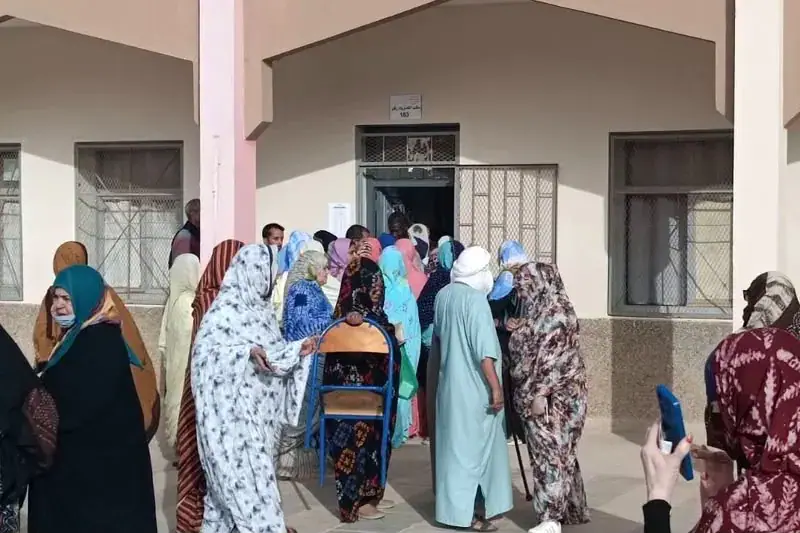
Morocco's southern regions have demonstrated strong voter participation in the 2026 legislative elections. The regions of Laayoune-Sakia El Hamra, Dakhla-Oued Ed-Dahab, and Guelmim-Oued Noun recorded turnout rates of 77%, 61%, and 53.48%, respectively. These numbers reflect a continuation of the high voter engagement observed in previous elections. The elections took place on Wednesday, with citizens heading to the polls to choose their representatives in the House of Representatives.
According to Moulay Bouabker El Hamdani, head of the Strategic Thinking and Defense of Democracy center in Laayoune, the high voter turnout in the southern regions is a testament to the ongoing interest of local voters in participating in public life and selecting their representatives. El Hamdani noted that the consistent high turnout rates across multiple elections demonstrate the vitality of local political life and the significance of the electoral process to citizens. He attributed this dynamic to factors such as intense local competition, candidates' proximity to voters, and the ability of parties to mobilize support.
El Hamdani identified several key factors contributing to the high voter turnout in the southern regions. These include the intensity of local competition among candidates, the close relationship between candidates and voters, and the capacity of political parties to mobilize their supporters. Additionally, the renewal of candidatures and the role of digital platforms and social media in stimulating young people's interest and disseminating information about the elections were cited as significant factors.
The southern regions of Morocco have consistently shown high levels of voter engagement in recent elections. In the 2016 and 2021 legislative elections, these regions recorded significant turnout rates, reflecting the importance of the electoral process to local citizens. The continued high participation in the 2026 elections underscores the growing maturity of democratic processes in these regions and the interest of citizens in shaping their political representation.
The 2026 legislative elections in Morocco are a crucial step in the country's democratic development. With a significant number of citizens participating in the electoral process, the elections are expected to produce a representative parliament that reflects the will of the Moroccan people. The high voter turnout in the southern regions is particularly noteworthy, given the region's historical significance in Moroccan politics.
The elections in Morocco are being closely watched by local and international observers. The high voter turnout in the southern regions is seen as a positive indicator of the country's democratic progress. As the electoral process continues, attention is focused on the implications of the election results for Morocco's future political landscape and the representation of its citizens in the national parliament.
The official results of the 2026 legislative elections in Morocco are expected to be announced in the coming days. Once released, the results will provide insight into the composition of the next House of Representatives and the distribution of seats among the various political parties. The elections are a critical component of Morocco's democratic system, and the participation of citizens in the electoral process is essential for ensuring the legitimacy and representativeness of the resulting government.
Key points
- The southern regions of Morocco recorded high voter turnout rates in the 2026 legislative elections, with Laayoune-Sakia El Hamra, Dakhla-Oued Ed-Dahab, and Guelmim-Oued Noun registering 77%, 61%, and 53.48%, respectively.