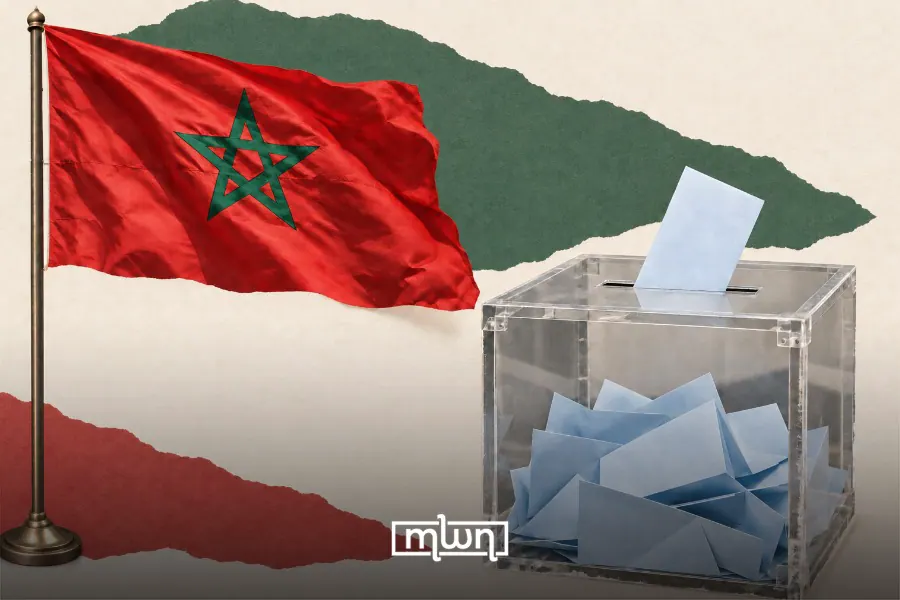
Morocco's legislative elections took place on September 23, 2026, with 15.8 million registered voters and 27 participating parties. The elections aim to fill 395 parliamentary seats, with 1,850 lists and 7,288 candidates competing for votes. The campaign ran from September 10 to 22, showcasing substantial electoral competition. However, the significance of these elections goes beyond the distribution of seats, as they raise questions about the kind of political society Morocco is becoming.
The 2026 elections occur at a significant moment in Morocco's political history, marked by economic and institutional modernization, growing international profile, and the consolidation of the social state. Despite this progress, a persistent crisis of confidence affects relations between part of the population and representative institutions. The elections, therefore, test the country's ability to move towards a more institutionalized democracy, where citizens are considered actors rather than beneficiaries.
The concept of neo-tribalism is relevant in this context, referring to the reactivation of forms of solidarity, belonging, and social mediation based on family, territory, or professional networks. This phenomenon does not necessarily contradict modernity, as citizens can be modern in their use of technology while remaining embedded in traditional networks. The real significance of these elections lies in the tension between Morocco's modernization and the persistence of older logics of proximity, notability, and clientelism.
The 2011 Constitution represents a major stage in Morocco's institutional evolution, introducing a new legal and political architecture that strengthened the role of the Head of Government and Parliament. The Constitution also recognized Amazigh as an official language and enshrined advanced regionalization. Article 47 establishes a constitutional link between electoral results and government formation, making elections a mechanism for determining the direction of government.
Despite the existence of democratic institutions, including an elected Parliament, political parties, and regular elections, the Moroccan system remains hybrid. The 2011 Constitution maintained important royal prerogatives in strategic domains, and the gap between constitutional modernity and actual political practices remains significant. The question of neo-tribalism becomes relevant at this level, as electoral practices and political parties must translate constitutional principles into everyday realities.
The phenomenon of neo-tribalism is complex, representing a modernization of older forms of solidarity rather than a return to the past. Research has demonstrated the persistence of patronage and clientelist relationships in political life, particularly during legislative elections. Candidate selection often depends on an individual's capacity to mobilize a constituency or social relationships, rather than ideological adherence to a program.
As Morocco moves forward, the genuine democratic significance of the 2026 elections will lie in the political system's capacity to progressively move citizens from the status of beneficiaries to that of actors. The country's ability to establish a more individualized and institutionalized citizenship based on universal rights will be crucial in determining its democratic future. The outcome of these elections will provide insight into whether Morocco's modernization will produce a more institutionalized democracy or continue to be shaped by older logics of proximity and clientelism.
Key points
- The 2026 elections test Morocco's ability to transition towards a more institutionalized democracy.
- The concept of neo-tribalism is relevant in understanding the persistence of traditional networks in Moroccan politics.
- The 2011 Constitution represents a significant step towards democratic reform in Morocco.