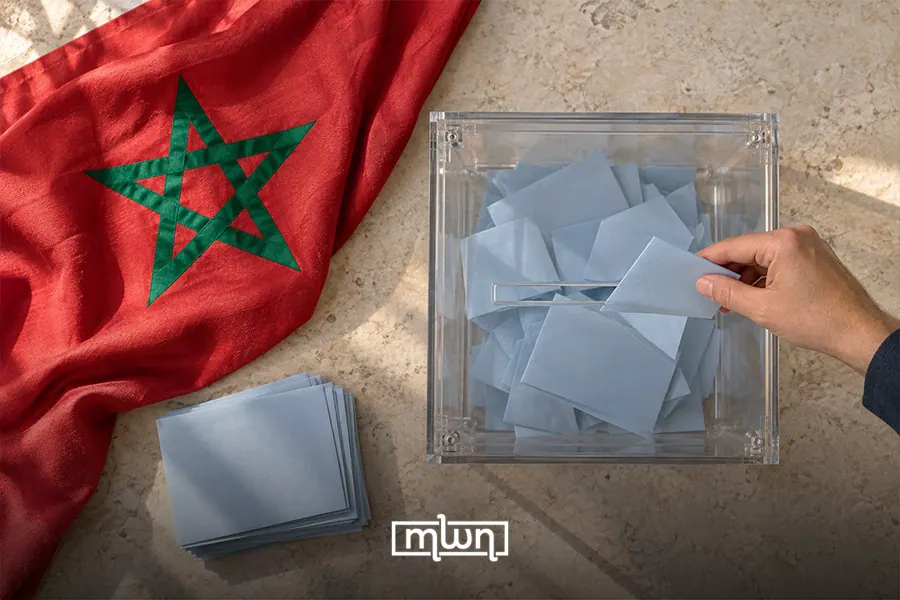
Morocco conducted its legislative elections on Wednesday, with voters casting ballots under normal conditions. The Interior Ministry reported a national participation rate of 28.05% as of 5 p.m. The voting process began at 8 a.m. and was set to conclude at 7 p.m. at polling stations across the country. This election marks the 12th legislative election since Morocco gained independence and the sixth since King Mohammed VI ascended to the throne in 1999.
A total of 28 parties are competing for 395 seats in the Chamber of Representatives, with 7,288 candidacies registered nationwide across 1,850 lists. The election campaign, which started on September 10, concluded at midnight on Tuesday. Key issues in the contest include employment, economic situation, public services, and political participation, with youth mobilization being a central theme. The results will determine the party tasked with forming a government for the next five years.
The voter demographic breakdown shows 54% men and 46% women, with 55% urban and 45% rural voters. Those aged 60 and above make up more than 29% of the registered voters. Among sitting lawmakers, 227 are seeking reelection. Women comprise a significant share of candidates, with 2,658 candidates, or about 36.5% of the total. Of these, 1,783 are running on 235 lists in regional constituencies reserved exclusively for women.
The current election cycle introduced new incentives for younger candidates, including a sixfold increase in financial support for each seat won by a contender aged 35 or under in local constituencies. The Public Prosecution recorded 93 election-related complaints between August 21 and September 15, a decrease from 229 in the same period in 2021. Amendments under Laws 53.25 and 55.25 have criminalized digital offenses, including fake news and fabricated images used to defame candidates or voters.
Approximately 6 million Moroccans living abroad in over 100 countries were unable to vote directly and instead cast ballots through proxies in Morocco using the E-Procuration platform. Once polls closed, members of each bureau tallied the ballots before representatives of the candidate lists. The Interior Ministry is expected to announce preliminary results in the early hours of Thursday.
Under Article 47 of the Constitution, the King appoints the head of government from the party that finishes first. Forming a government requires an absolute majority of at least 198 seats, a threshold rarely met by any single party under the list-based system. This often leads to coalition talks, as seen in the September 2021 elections where the National Rally of Independents (RNI) finished first with 102 seats.
The outcome of these elections will have significant implications for Morocco's future, including its bid to co-host the 2030 World Cup. The newly formed government will inherit various pressing issues and will be tasked with addressing the concerns of the electorate, particularly youth mobilization and economic challenges.
Key points
- The voter turnout was 28.05% as of 5 PM.
- A total of 28 parties are competing for 395 seats.
- The Interior Ministry will announce preliminary results in the early hours of Thursday.