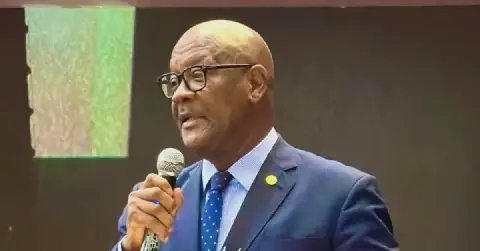
Morocco has reaffirmed its international commitment to supporting criminal justice mechanisms and promoting human security and dignity. According to Aziz El Farhan, Morocco's permanent representative to international organizations in Vienna, the country will continue to enhance its approach to preventing crime and promoting criminal justice. This approach is based on cooperation, prevention, and human dignity, as well as building institutional capacities and international solidarity.
El Farhan made these remarks during a session titled "From Regional Contributions to the Abu Dhabi Declaration: Civil Society's Contributions to the 15th UN Congress on Crime Prevention and Criminal Justice." The session was held on the sidelines of the 15th UN Congress on Crime Prevention and Criminal Justice, which took place from September 26 to October 1, 2026. El Farhan emphasized that Morocco's approach is based on engaging all relevant stakeholders, particularly civil society components.
El Farhan reviewed Morocco's experience in hosting the regional preparatory meeting for West Asia in April 2025. He noted that hosting this meeting was not just a logistical responsibility but also reflected a deep conviction that multilateral work is more powerful and effective when based on regional realities and national commitment. This approach involves listening to the voices of field actors close to local communities.
El Farhan highlighted five lessons learned from Morocco's experience. The first lesson concerns regional specificity, which is essential given that transnational crime has a global dimension but its manifestations and consequences remain local and regional. He stressed that preparatory meetings are a vital bridge between national realities and international standard-setting.
The second lesson learned is the principle of inclusiveness, which enhances legitimacy and effectiveness. El Farhan noted that governments cannot face complex criminal challenges alone without drawing on the complementary expertise of civil society, academia, practitioners, youth, and the private sector. He emphasized the need to move from consultation to a culture of co-construction in identifying challenges and developing response mechanisms.
El Farhan also highlighted the importance of converting regional diversity into a source of global convergence. He noted that despite differences in historical and institutional perspectives, dialogue can enrich multilateral decisions and shape common priorities and unified international commitments. El Farhan also stressed the need to maintain continuity between consultation, negotiation, and implementation.
El Farhan concluded his speech by emphasizing that the true measure of the Congress's success will not be limited to the text of the adopted declaration but will be reflected in the collective ability to translate regional voices into global commitments and then into national actions. These actions should result in more justice, security, and confidence for citizens.
Key points
- Morocco reaffirms its commitment to supporting international criminal justice mechanisms and promoting human security and dignity.