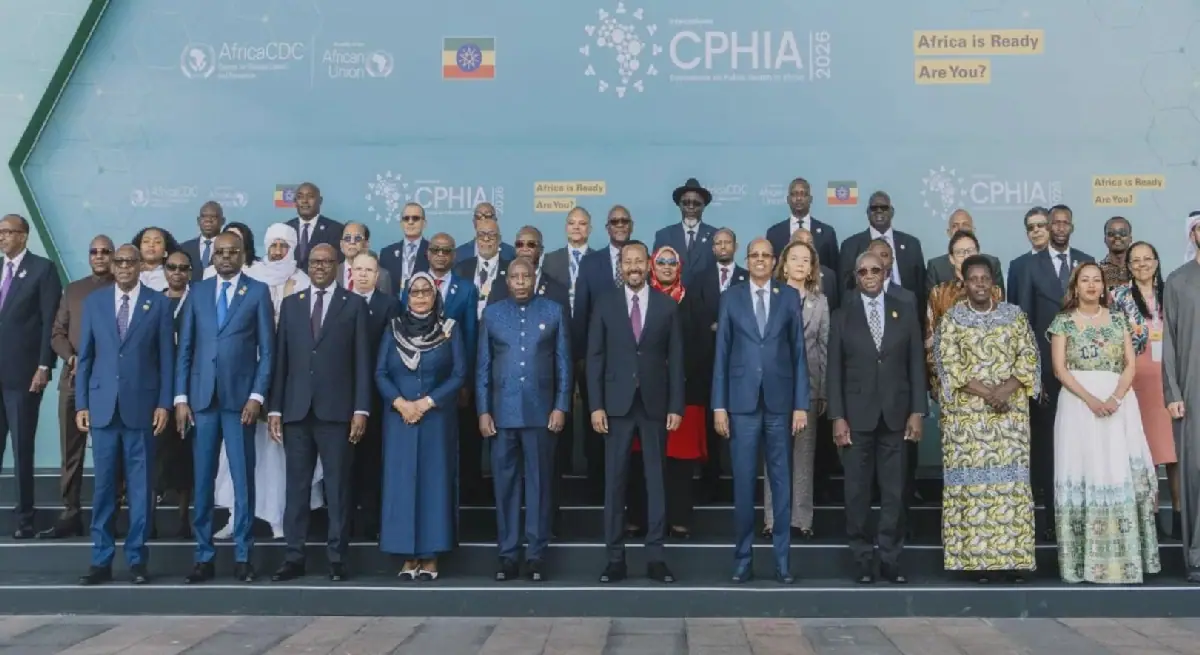
Moroccan Health Minister Youns Bjijou has reaffirmed Morocco's commitment to building collective African health sovereignty at the 5th International Conference on Public Health in Africa (CPHIA 2026) in Addis Abeba. The conference, which runs until November 27, brings together African ministers of health, government officials, and international organization representatives to discuss strategic issues related to strengthening health systems and African health sovereignty.
Minister Bjijou emphasized Morocco's commitment to collective African health sovereignty under the leadership of King Mohammed VI. He highlighted the need for a deep reform of the global health architecture, enabling Africa to play a full role in defining global health priorities, decision-making mechanisms, and resource allocation. This reform should respect the sovereignty of states and their strategic choices.
Bjijou outlined three key orientations for the reform: better complementarity between national, continental, and international institutions; more equitable global governance based on mutual responsibility; and a sustainable, predictable financing model aligned with national priorities. He also recalled Morocco's initiatives to support African health sovereignty, including the training of African competencies, development of scientific research, and strengthening of industrial capacities and vaccine autonomy.
The minister highlighted the strategic role of the African Centre for Disease Control and Prevention (CDC Africa) in consolidating continental health action, in partnership with the World Health Organization. He stressed the need to move from a logic of dependence to a dynamic of balanced partnership and sustainable strengthening of African capacities. Health is a strategic investment, a lever of sovereignty, and a factor of stability and development for states.
Bjijou also presented the main orientations of Morocco's national health system transformation, including the generalization of social protection, expansion of medical coverage, modernization of health infrastructure, and improvement of sector governance. These reforms aim to ensure equitable access to quality health services. The minister held discussions with African and international health institution officials and had bilateral meetings with several African counterparts.
The meetings examined the prospects for consolidating existing partnerships and exploring new cooperation opportunities in areas such as health professional training, hospital infrastructure development, pharmaceutical industry, scientific research, and innovation. These exchanges took place within the framework of South-South cooperation and expertise sharing. The conference brings together high-level African and international officials to discuss health sovereignty and global governance.
Morocco's participation in the conference reflects its commitment to implementing the King's High Orientations and Vision, which prioritize African solidarity, South-South cooperation, and shared development. Through its participation, Morocco reaffirms its attachment to consolidating African health cooperation and contributing to the emergence of a more resilient, solidary, and sovereign Africa in the health sector.
Key points
- Morocco's Health Minister Youns Bjijou calls for a deep reform of the global health architecture to enable Africa to play a full role in defining global health priorities.
- Morocco is committed to building collective African health sovereignty through initiatives such as training African competencies and strengthening industrial capacities and vaccine autonomy.
- The 5th International Conference on Public Health in Africa brings together high-level officials to discuss health sovereignty and global governance.