Morocco has been ranked seventh among 19 African economies in Bloomberg Economics’ 2026 Investment Risk-O-Meter, placing it in the upper half of the markets assessed. The ranking reflects the combined effect of Morocco's economic fundamentals, public finances, institutions, infrastructure, and exposure to external risks. This position presents Morocco as a relatively strong but not dominant investment market. The country's overall risk rating is 0.2, according to Bloomberg’s 2026 Investor’s Guide to Africa.
The Bloomberg Economics’ 2026 Investment Risk-O-Meter compares 19 African economies across five areas relevant to investment risk, including economic strength, fiscal strength, institutions and governance, infrastructure, and external vulnerability. The methodology standardizes indicators such as economic growth, debt, political risk, and foreign reserves before combining them into an overall score. This score does not mean that Morocco carries a specific level of investment risk, nor does seventh place represent a ranking of all African countries.
Mauritius ranked first with 0.6, followed by South Africa at 0.5, while Egypt, Ghana, Botswana, and Côte d’Ivoire each scored 0.3. Nigeria followed Morocco in eighth place with 0.1. The 19 economies in the assessment account for roughly one-third of the continent’s economy and were selected to include major markets as well as countries with characteristics that attract investors, such as commodity resources and established financial centers.
The relatively narrow spread between several countries puts Morocco’s position into perspective. Six of the top 10 markets scored between 0.1 and 0.3, meaning relatively small differences separate Morocco from a number of its peers. Nigeria, for example, climbed four places to eighth after improvements in its economic strength, fiscal strength, and external vulnerability scores.
Morocco’s position reflects several factors that have made the country an established destination for international investment. The country has attracted investment into aerospace, renewable energy, and other export-oriented industries. Morocco’s role as a continental automotive hub, particularly through vehicle and electric-vehicle exports to European markets, has also been highlighted.
The scorecard comes as African economies compete for investment in infrastructure, manufacturing, energy, and critical minerals. These sectors are likely to attract capital as companies seek new supply chains and markets. For Morocco, the seventh-place ranking offers a mixed picture rather than a clear accolade, leaving room for improvement across the economic, fiscal, institutional, infrastructure, and external-risk indicators.
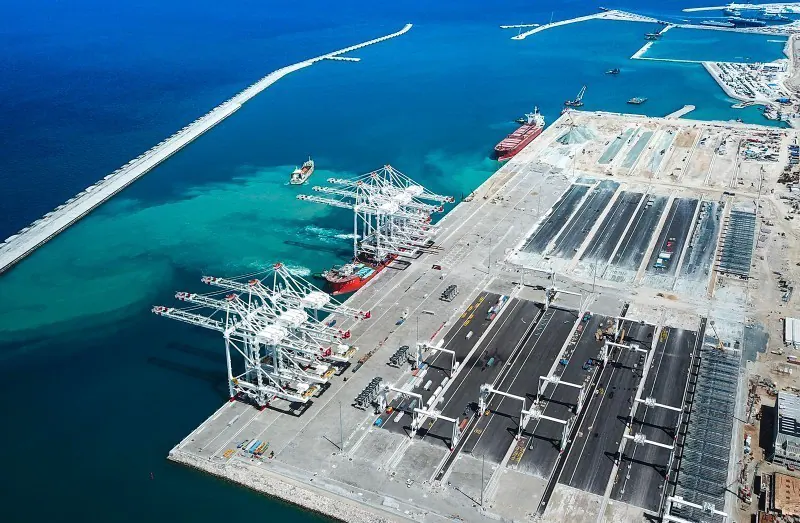
Morocco continues to strengthen its position as an investment destination through large infrastructure projects, industrial development, and efforts to attract foreign capital. The country is preparing for major spending linked to the 2030 FIFA World Cup, which it will co-host with Spain and Portugal, while continuing to expand its automotive, aerospace, renewable energy, and phosphate-related industries. Morocco also regained an investment-grade sovereign credit rating from S&P Global Ratings in 2025.
Key points
- Morocco ranked seventh among 19 African economies in Bloomberg Economics’ 2026 Investment Risk-O-Meter.
- The country's overall risk rating is 0.2, according to Bloomberg’s 2026 Investor’s Guide to Africa.
- Morocco continues to strengthen its position as an investment destination through large infrastructure projects and industrial development.