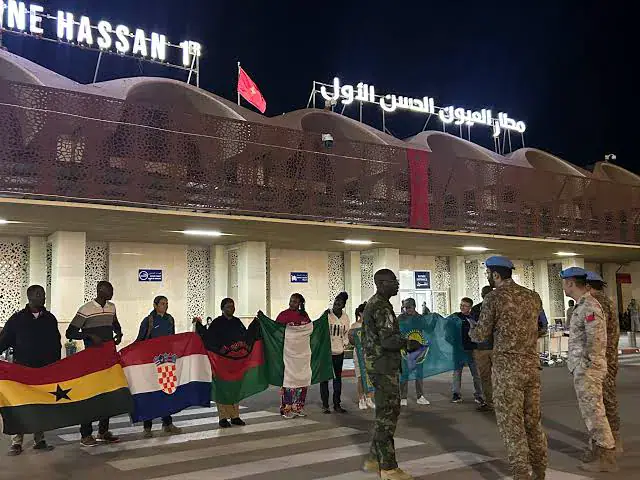
The United Nations Mission for the Referendum in Western Sahara (MINURSO) has started its gradual withdrawal from the city of Laayoune, marking a new chapter in managing the Western Sahara issue. This development follows the expiration of MINURSO's mandate on October 31, and a meeting led by King Mohammed VI on November 4 to determine post-MINURSO arrangements. The Moroccan government has prioritized a smooth, organized, and safe withdrawal, respecting Moroccan sovereignty and laws.
The withdrawal process is being overseen by the Coordination Office with MINURSO, under the Ministry of Interior, which is working closely with relevant UN services to facilitate the departure of civilian and military personnel, and the transfer of equipment. This process reflects Morocco's commitment to managing this transition responsibly and institutionally, avoiding confusion or escalation. The departure of the first group of MINURSO personnel on November 16 has significant political and field implications.
The withdrawal comes as Morocco continues to strengthen its institutional and developmental presence in the southern regions, based on a diplomatic approach led by King Mohammed VI. This approach has successfully expanded international recognition of the Moroccan autonomy proposal, while separatist arguments have lost traction. In contrast, Algeria's political and media propaganda faces the challenge of keeping pace with developments in the file.
Algerian propaganda has attempted to cast doubt on the significance of MINURSO's withdrawal, resorting to scenarios of security chaos and military confrontation. However, many observers see these narratives as an attempt to cling to outdated positions and undermine the new diplomatic realities. Morocco's autonomy initiative remains a realistic framework for resolving the conflict, and the country continues to promote its development projects and investments in the southern regions.
Morocco's position on the ceasefire remains clear, with the Royal Palace statement on November 4 emphasizing the country's commitment to this agreement. Morocco will continue to respect its obligations while defending its territorial integrity, the security of its citizens, and the stability of its southern regions. This approach demonstrates Morocco's readiness to manage the transformations related to its national issue.
The withdrawal of MINURSO has sparked reactions on social media, with many users criticizing Algerian and Polisario Front propaganda for trying to exploit the end of the UN mission to fuel separatist discourse. However, Morocco's diplomatic efforts have gained momentum, with increasing international support for its autonomy proposal. The country remains committed to its national project, focusing on development, infrastructure, and improving living conditions for its citizens.
As Algeria and the Polisario Front cling to outdated rhetoric, Morocco is consolidating its approach based on sovereignty, development, and stability. The withdrawal of MINURSO opens a discussion on the nature of the next phase and the future of conflict management, amid shifts in the international position and Morocco's determination to defend its territorial integrity and autonomy initiative.
Key points
- Morocco begins new phase after MINURSO withdrawal, focusing on development and stability in the southern regions.
- Algeria seeks diplomatic exit from its prolonged involvement in the Western Sahara conflict.
- Morocco's autonomy proposal gains increasing international support as a realistic framework for resolving the conflict.