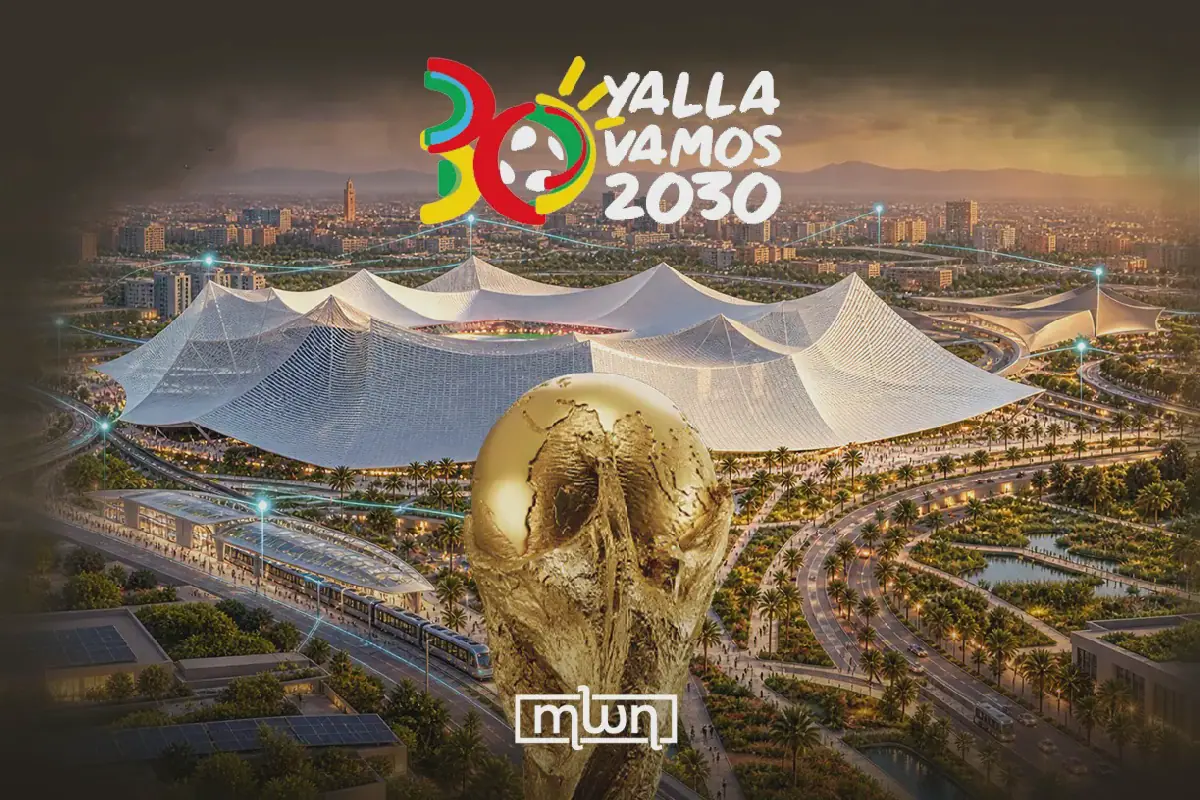
Morocco is set to co-host the 2030 FIFA World Cup alongside Spain and Portugal, and as the country prepares for this mega-event, it is shifting its focus from stadium security to city resilience. According to Abdulla Saeed Alhebsi, resilience planning must extend beyond stadiums to the wider urban systems that keep cities functioning. This includes transport, communications, hospitals, utilities, hotels, public information, and roads connecting them.
A major event like the FIFA World Cup places unusual pressure on a city's infrastructure, and a disruption in one area can create pressure elsewhere. For instance, public transport may operate closer to capacity, roads may experience unfamiliar traffic patterns, and emergency services may have to respond to incidents in areas far from the stadium while maintaining normal services for residents.
To address these challenges, Morocco needs to develop a broader continuity architecture that preserves essential city functions when several systems are under pressure at the same time. This requires thinking about the city as an interconnected network rather than a collection of separate services. Security authorities, transport agencies, and health services must work together to ensure a smooth event.
The risk of disruption is not necessarily a dramatic failure, but a series of smaller disruptions that share one dependency. A communications outage can affect transport coordination and emergency response, while a road incident can delay medical access and crowd dispersal. Therefore, redundancy must be tested for true independence to ensure that backups remain available when primary systems are under pressure.
The UAE has learned similar lessons through large-scale events, aviation, ports, and rapidly growing cities. Both Morocco and the UAE face the same modern operational reality: as systems become more connected, disruption can travel across organisational boundaries faster than traditional plans assume. Morocco can draw on these experiences to inform its own resilience planning.
To test the city's resilience, Morocco can conduct exercises that simulate the removal of one shared service from the scenario and observe what happens after ten minutes, one hour, and six hours. These exercises can reveal dependencies that ordinary security drills often miss and help identify critical dependencies and establish clear procedures for maintaining essential services.
A successful mega-event like the FIFA World Cup is remembered for what people saw, but resilience is measured by everything they never had to notice. The goal of resilience planning is not to eliminate every possible disruption, but to understand which disruptions can cascade and establish procedures for maintaining essential services when they do. The city behind the stadium deserves as much operational attention as the stadium itself.
Key points
- Morocco is co-hosting the 2030 FIFA World Cup with Spain and Portugal.
- The country is focusing on city resilience beyond stadium security.
- Resilience planning includes continuity of essential services, cross-agency coordination, and alternative communications.