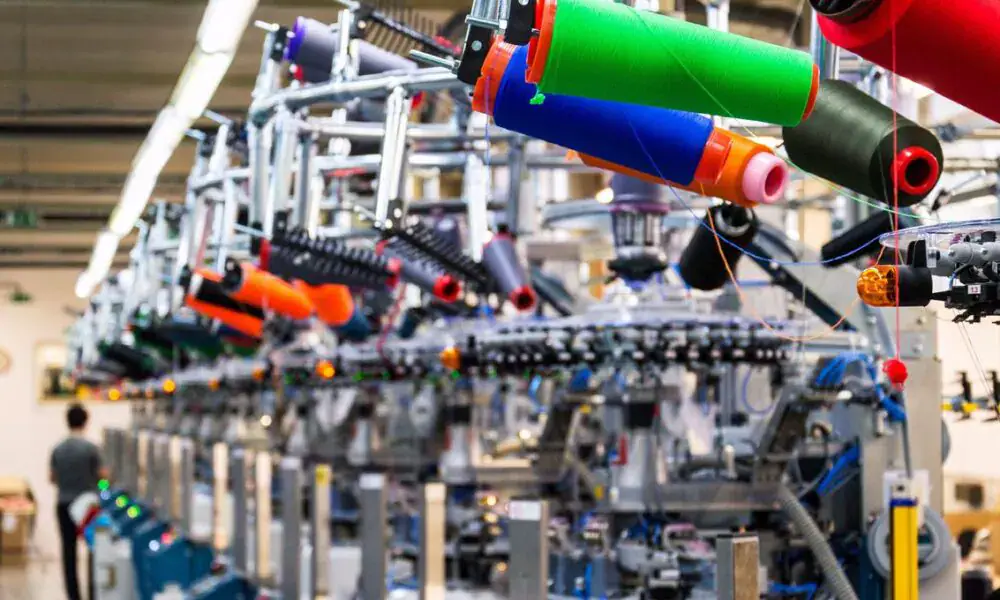
The Moroccan government has announced plans to boost its textile industry with a MAD 2.3 billion investment, set to generate 7,000 jobs and produce 80% of its output for export. The investment is part of a broader strategy to reduce the country's reliance on imports and increase local production of textiles and clothing. Currently, 77% of Morocco's clothing exports are produced under the CMT (cut, make, and trim) model, which involves importing fabrics and threads.
The government aims to reduce this figure to 50% by developing local production of fabrics and threads, and promoting industrial integration in the textile sector. According to Omar Hejira, Minister Delegate to the Minister of Industry, Trade, Investment, and Economic Inclusion, the country's textile industry needs to evolve towards a more integrated model. Hejira made the announcement at the opening of the 23rd edition of the International Textile and Clothing Show, "Morocco in Mode," in Casablanca.
The textile industry is a significant sector in Morocco, but it currently relies heavily on imported raw materials. Hejira stated that nearly 80% of the fabrics and threads used by Moroccan industrialists are imported, highlighting the need to develop local supply chains. By reducing its dependence on external markets and mitigating fluctuations in procurement costs, Morocco aims to increase the value added by its industrial sector and enhance the competitiveness of its companies.
The investment is expected to contribute to the strengthening of national production of raw materials and better integration of the textile value chain. Hejira emphasized that developing these activities is essential to increasing industrial added value and consolidating the competitiveness of Moroccan companies. The government is also encouraging operators in the sector to take advantage of the country's logistics and port infrastructure, as well as its proximity to international markets, to diversify their outlets, particularly in Africa.
The African Continental Free Trade Area (AfCFTA) offers opportunities for Moroccan textile companies to strengthen their presence in continental markets and consolidate their international positioning. Hejira also highlighted the importance of young people in the economic and industrial dynamic, stressing the need to strengthen their employability and facilitate their access to professional opportunities. The textile and clothing sector offers significant prospects for valorizing young people's skills.
Salah Eddine Abkari, Minister Delegate to the Minister of Youth, Culture, and Sports, emphasized the importance of placing young people at the heart of the national economic and industrial dynamic. Abkari also reaffirmed his department's willingness to strengthen cooperation with the Moroccan Association of Textile and Clothing Industries (AMITH) and professional actors to bring companies and young people together. The "Morocco in Mode" show, which runs from November 3 to 5, brings together over 200 exhibitors from 25 countries.
The event is an opportunity for Morocco to showcase its "Made in Morocco" label and eco-responsibility initiatives, such as water recycling, textile waste recovery, and the use of sustainable fibers. The show confirms Morocco's commitment to a modern, ethical, and competitive industry. The AMITH and CEMS-Global USA organized the event, which features seven themed areas dedicated to clothing, Moroccan brands, fabrics, and innovation.
Key points
- Morocco plans to invest MAD 2.3 billion in its textile industry to generate 7,000 jobs and boost local production.
- The government aims to reduce the country's reliance on imports and increase local production of textiles and clothing.
- The investment is part of a broader strategy to promote industrial integration and reduce the CMT model's share of clothing exports to 50%.