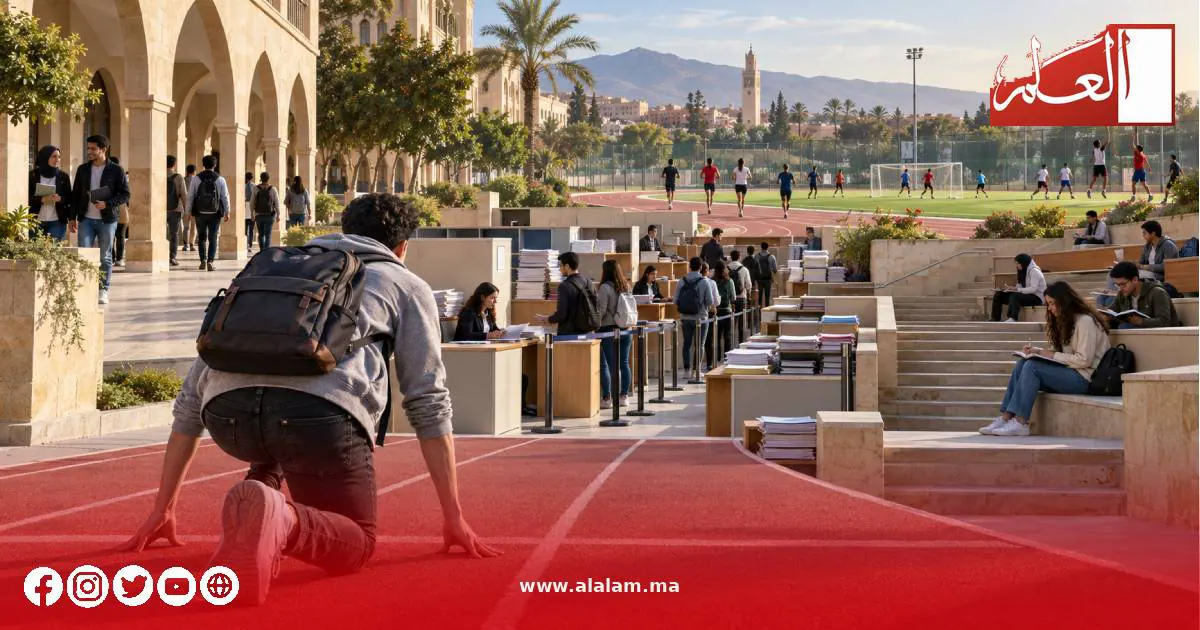
On September 20, the International University Sports Day was celebrated worldwide, emphasizing the importance of sports as part of a student's overall development. In Morocco, however, the day is marked with a paradox. While universities around the world honor sports as a vital component of student life, many Moroccan institutions are still grappling with enrollment, re-registration, and selection processes, leaving little room for sports activities. This raises questions about the prioritization of sports in Moroccan universities.
The International University Sports Day aims to promote sports as an essential aspect of student life, beyond just competitions and events. The idea is simple yet profound: universities should be more than just places of academic learning; they should also foster physical well-being, mental balance, and social interaction among students. However, in Morocco, the celebration of this day often seems disconnected from the reality of university life, where sports are frequently relegated to the sidelines.
The Moroccan government has established laws and institutions to promote sports in universities, including the Royal Moroccan University Sports Federation and the National Commission for University Sports. Additionally, the 2009 law on physical education and sports and the 2024 law on higher education and scientific research emphasize the importance of sports in university life. Despite these efforts, the real challenge lies in ensuring that sports are accessible and inclusive for all students.
One of the main issues with university sports in Morocco is the lack of data on student participation. While institutions often report on their athletic achievements, there is a need for more transparency on the number of students who regularly engage in sports activities. This information is crucial to understanding the effectiveness of current initiatives and identifying areas for improvement.
The start of the academic year in Morocco often highlights the marginalization of sports in university life. The focus on administrative tasks, such as registration and course selection, leaves little room for sports and cultural activities. This approach neglects the importance of sports in shaping students' overall university experience and preparing them for a healthy and balanced life.
As Morocco prepares to co-host the 2030 World Cup with Spain and Portugal, the country is investing heavily in sports infrastructure. However, building stadiums and facilities is only part of the equation; what matters most is the number of people who engage in regular physical activity. Universities have a critical role to play in promoting sports culture among young people, and this can have long-term benefits for public health and well-being.
To move forward, Moroccan universities need to prioritize sports as an integral part of student life. This requires a new approach that emphasizes inclusivity, accessibility, and measurable goals. By setting clear targets for student participation, providing adequate resources and infrastructure, and promoting a culture of sports and physical activity, universities can help shape a healthier and more balanced generation of young people.
Key points
- Moroccan universities need to prioritize sports as an integral part of student life.
- There is a need for more transparency on student participation in sports activities.
- Universities should set clear targets for student participation in sports and provide adequate resources and infrastructure.