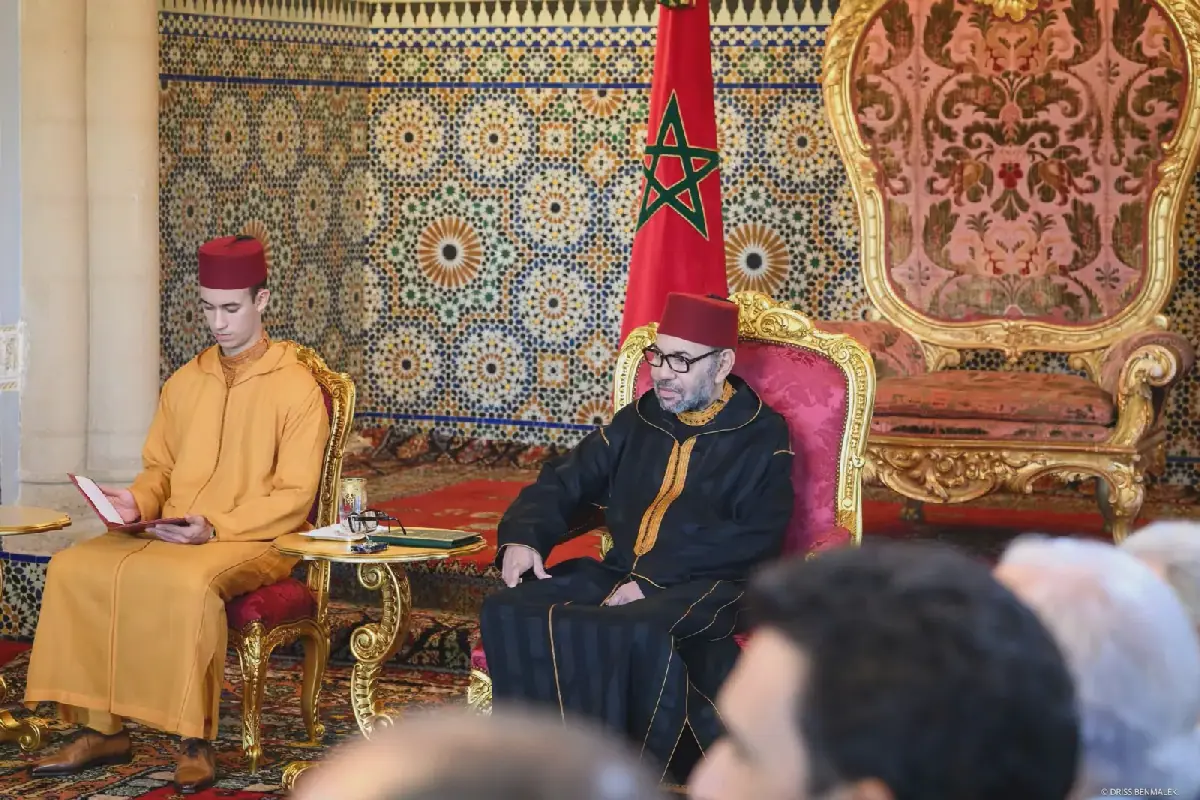
On Wednesday, November 25, 2026, King Mohammed VI, accompanied by Crown Prince Moulay Hassan, chaired a ceremony at the Royal Palace in Rabat to mark the launch of a roadmap for developing Morocco's defense and security industry. The roadmap aims to create a national industrial and technological base for defense and security, which is expected to boost the country's economy and create jobs. The ceremony included the signing of two framework agreements related to financing and activating the roadmap.
The roadmap is part of King Mohammed VI's vision to develop Morocco's industrial sector, particularly in the defense and security industries. The plan involves creating a national base for defense and security industries that is sovereign, effective, innovative, and competitive. The industry is expected to generate annual revenues of at least 50 billion dirhams, with over 65% coming from exports. The development of this industry is also expected to create at least 50,000 direct and indirect jobs by 2035.
The Moroccan Agency for Investment and Export Development, led by Ali Sadiqi, has been tasked with overseeing the implementation of the roadmap. Sadiqi highlighted the importance of this project, stating that it aligns with the King's high instructions to accelerate the implementation of the roadmap. He emphasized that the defense and security industry will be a major driver of economic growth and job creation in Morocco.
The roadmap involves a significant investment of around 22 billion dirhams, which will be mobilized through a partnership between public and private sector players. The industry will focus on developing various defense and security products, including drones, autonomous systems, land and sea systems, defense electronics, cybersecurity, and artificial intelligence. The development of this industry is expected to enhance Morocco's industrial and technological capabilities.
The Moroccan Agency for Defense and Security Industry (DIFAA) has been established to oversee the implementation of the roadmap. DIFAA will be responsible for developing the national industrial base, promoting investment, and managing support mechanisms. The agency will also work to mobilize resources, including industrial compensation, public procurement, and real estate, to support the development of the industry.
The launch of the roadmap has been welcomed by various stakeholders, including government officials, business leaders, and investors. The development of the defense and security industry is expected to have a positive impact on Morocco's economy and will help to create new opportunities for growth and job creation. The industry is also expected to enhance Morocco's sovereignty and competitiveness in the defense and security sector.
The signing of the two framework agreements marks an important milestone in the implementation of the roadmap. The agreements were signed by various government ministers, including the Minister of Interior, Minister of Economy and Finance, and Minister of Industry and Trade. The agreements will help to mobilize resources and support for the development of the defense and security industry, which is expected to play a key role in Morocco's economic development.
Key points
- Morocco aims to generate annual revenues of at least 50 billion dirhams from its defense and security industry by 2035.