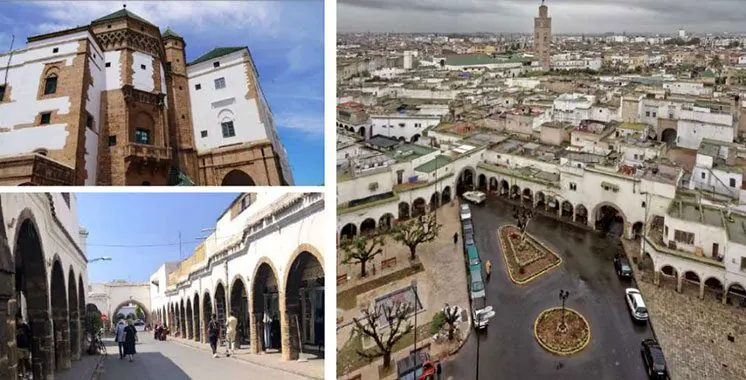
The Moroccan government has initiated a project to enhance the tourist appeal of the historic Habous quarter in Casablanca. The project, led by the Société marocaine d'ingénierie touristique (SMIT), aims to improve the visitor experience while preserving the quarter's architectural, cultural, and urban identity. The Habous quarter is renowned for its arcades, facades, alleys, gardens, souks, and public squares.
The project involves the installation of discreet and coherent signage and urban furniture to guide visitors through the quarter. The estimated budget for the project is 3.661.200 Moroccan Dirham (DH). The initiative includes a series of equipment to facilitate a better understanding of the quarter's organization and history without altering its patrimonial character. The project is based on studies and orientations developed to strengthen the quarter's attractiveness and improve its readability for visitors.
The project has three main objectives: orientation, transmission, and valorization. The goal is to make the quarter's entrances, parking areas, monuments, souks, and gardens easily identifiable, while providing visitors with a clear and accessible understanding of the site's history and organization. The project goes beyond the simple installation of signs, aiming to transmit historical and patrimonial content through physical and digital supports.
The project includes a range of signage and urban furniture, such as four general plans of the quarter, 35 directional signs, 95 plaques for streets and alleys, and 18 patrimonial and interpretation panels. Additionally, 30 mural path markers, 40 service signage units, and QR code supports will be installed to provide visitors with complementary digital content. The urban furniture includes 56 model Habous benches and 52 waste bins, designed with a consistent aesthetic.
The project's base estimate includes 330 equipment, comprising 222 signage supports and 108 furniture elements. However, these quantities are indicative and subject to validation after detailed studies and prototype examination. Before implementation, the equipment will undergo thorough verification and adaptation, including confrontation with on-site surveys and validation committee decisions.
The project prioritizes graphic coherence, with signage required to adhere to the charter developed during the quarter's valorization studies. Materials, color palettes, motifs, and typography must conform to already validated orientations. The hierarchy of information will be designed to facilitate reading, with Arabic as the primary language, followed by French and English for digital content.
The project's implementation will involve detailed studies, including photomontages and simulations to assess the integration of equipment into the environment. The goal is to improve visitor welcome, orientation, and comfort while facilitating understanding of the quarter's urban and historical organization. Ultimately, the project seeks to highlight the Habous quarter's historical, architectural, artisanal, commercial, and religious identity.
Key points
- The Moroccan government has launched a project to enhance the tourist appeal of the historic Habous quarter in Casablanca.
- The project aims to improve the visitor experience while preserving the quarter's architectural, cultural, and urban identity.
- The initiative includes the installation of signage and urban furniture to guide visitors through the quarter.