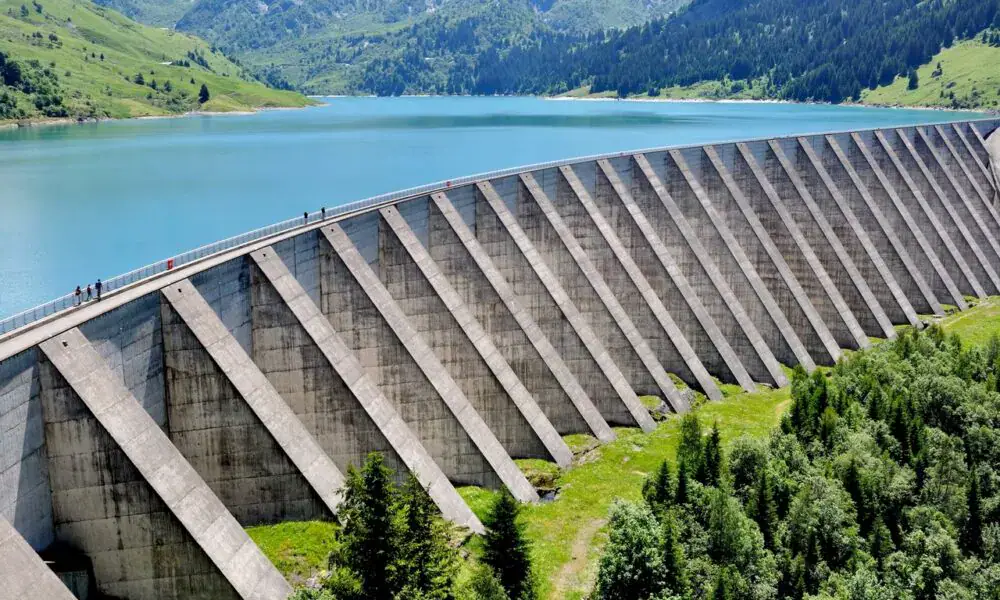
The Moroccan government has adopted a new regulatory framework aimed at strengthening the safety and control of dams across the country. The decree, approved by the Council of Government on Thursday, establishes clear criteria for classifying dams based on their height and water storage capacity. This move is part of the government's efforts to prioritize dam safety, with a focus on technical inspections and risk assessments. The new framework is designed to ensure the secure operation of dams, which are crucial for water management and supply.
The decree categorizes dams into three main groups based on their height and water storage capacity. The first category includes dams with a height of over 30 meters or a storage capacity exceeding 25 million cubic meters. The second category comprises dams with a height between 15 and 30 meters or a storage capacity between 1 and 25 million cubic meters. The third category covers dams with a height between 5 and 15 meters or a storage capacity of less than 1 million cubic meters. This classification system will help authorities to identify potential risks and prioritize inspections and maintenance.
Under the new decree, dams in the first two categories will undergo daily technical inspections, while those in the third category will be inspected weekly. Additionally, the decree mandates a comprehensive evaluation of dams every four years for the first two categories and every five years for the third category. This regular monitoring and assessment will enable authorities to identify potential issues and take corrective action to ensure the safe operation of dams.
According to Samir Belfkih, Minister of National Territory Planning, Urban Planning, Housing, and City Policy, the current situation of dams in Morocco does not pose any risk, with a water filling rate of around 66%, or 11.2 billion cubic meters. The new regulatory framework aims to further enhance dam safety by establishing a clear process for evaluating potential risks, conducting studies, and addressing any issues that may arise.
The decree also outlines the requirements for the evaluation of dam safety, including the identification of potential risks, the components of evaluation studies, and the conditions for their implementation and adoption. Furthermore, it establishes a procedure for addressing any malfunctions and specifies the data that must be recorded in the dam register. This comprehensive approach will help to ensure that dams in Morocco operate safely and efficiently.
The adoption of this decree demonstrates the Moroccan government's commitment to prioritizing dam safety and water management. The new regulatory framework will help to mitigate potential risks and ensure the secure operation of dams, which are critical infrastructure for the country's water supply and economic development. The government has emphasized its focus on technical inspections and risk assessments, underscoring the importance of proactive measures to prevent accidents and ensure public safety.
The implementation of this decree is expected to have a positive impact on Morocco's water management sector, enhancing the safety and reliability of dams and ensuring a stable water supply for various uses, including irrigation, drinking water, and industrial activities. The government's efforts to strengthen dam safety and control reflect its commitment to sustainable development and environmental protection, and are likely to contribute to the country's long-term economic growth and stability.
Key points
- The new decree categorizes dams into three main groups based on their height and water storage capacity.