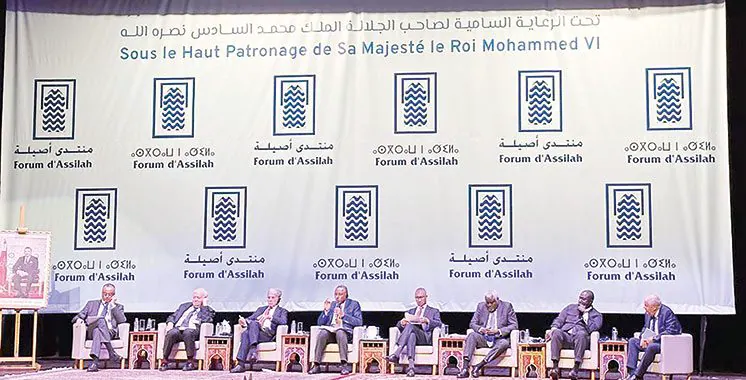
A colloquium was held in Assilah, Morocco, on October 2-3, 2026, to examine the relationships between energy, water, and strategic projects in Africa. The event, part of the city's cultural festival, aimed to contribute to a strategic reflection on Africa's ongoing transformations and new geopolitical dynamics. Victor Borges, former Cape Verde foreign minister and commissioner of the colloquium, emphasized the importance of discussing these issues for sustainable, inclusive, and sovereign development.
The colloquium highlighted Africa's significance as a strategic space, endowed with substantial energy, mining, agricultural, and water resources, as well as considerable potential in renewable energies. Its geographical position, connecting several maritime and economic spaces, reinforces its role in global balances. However, the continent faces challenges related to geopolitical competition, reducing economic dependencies, and valorizing its resources locally.
Mohamed Ouhmid, secretary general of Morocco's Ministry of Energy Transition and Sustainable Development, noted that Africa's main energy challenges lie in ensuring global access to reliable, affordable, and sustainable energy. He stressed that strengthening inter-African cooperation and diversifying partnerships are essential levers for consolidating strategic independence and achieving sustainable development.
The event provided an opportunity to welcome the Atlantic Initiative launched by King Mohammed VI in November 2023, which offers Sahel countries strategic access to the ocean, contributing to their de-enclavement and regional economic integration. Moussa Faki Mahamat, former president of the African Union Commission, hailed this initiative as extremely important and strategic, enabling landlocked countries to access the sea and facilitate exchanges with the outside world.
Regional connectivity projects, transport corridors, and logistics infrastructures are redefining Africa's economic geography. The Nigeria-Morocco gas pipeline project exemplifies this dynamic, connecting several West African countries to regional and international energy networks. These infrastructures have emerged as instruments of energy security, regional cooperation, and economic development.
The colloquium also examined the role of the African Continental Free Trade Area (AfCFTA) in the continent's economic integration and sought to identify conditions for building balanced and sustainable South-South partnerships. Discussions focused on the geopolitical impacts of major energy and logistics projects, highlighting the importance of these initiatives for regional cooperation and economic development.
Key points
- The colloquium emphasized the importance of Africa's energy and water resources for sustainable development and regional cooperation.
- The Nigeria-Morocco gas pipeline project was cited as an example of a strategic project that can enhance regional energy security and cooperation.
- The Atlantic Initiative was welcomed as a key project to promote Sahel countries' access to the ocean and regional economic integration.