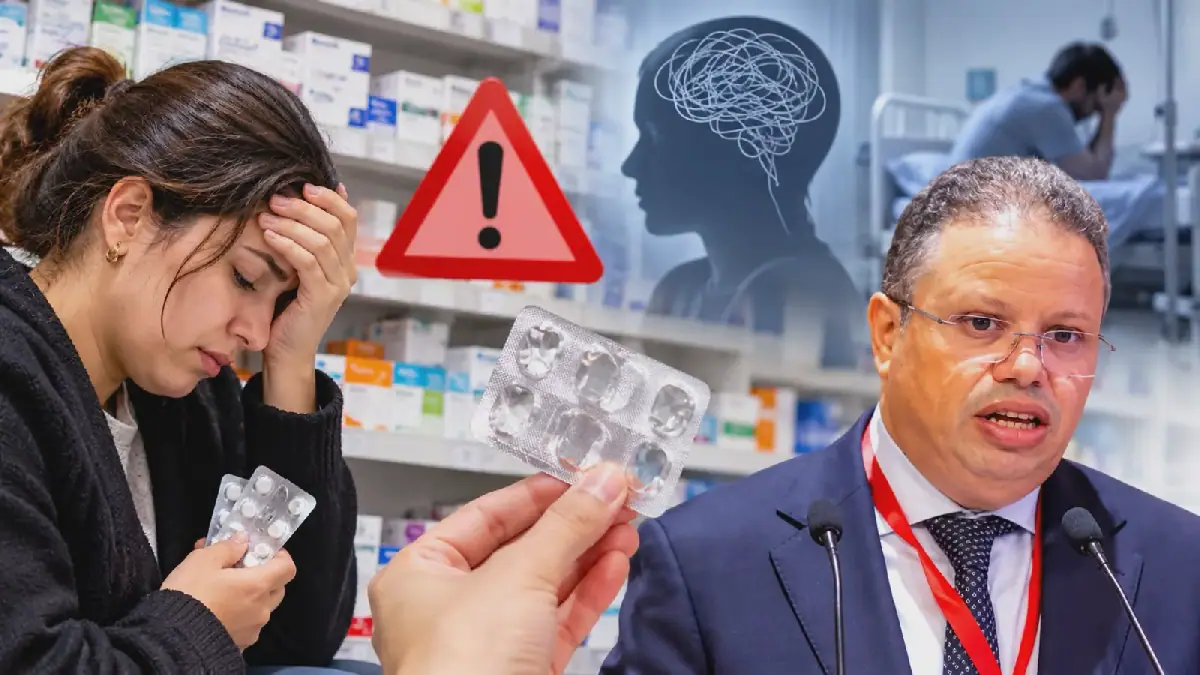
A Moroccan rights group, the Moroccan Network for the Defense of the Right to Health and the Right to Life, has raised concerns about a severe shortage of medications for mental and psychological illnesses in the country's hospitals and pharmacies. The group warns that this shortage poses significant risks to the stability and safety of patients. The scarcity affects essential medications, including those used in emergency situations and acute psychological crises.
The shortage includes critical medications such as "Nozinan," "Largactil," and "Haldol," which are often replaced with "lfanid" due to their unavailability. However, the effects of "lfanid" are slower and may be challenging for some patients to tolerate during crises. The group emphasizes that the absence of these treatments can lead to worsening symptoms, severe health complications, and risks to patients and medical staff within healthcare facilities.
The Moroccan Network for the Defense of the Right to Health and the Right to Life also highlighted that the shortage extends beyond injectable medications to include other essential drugs for mental and psychological treatment. These include "Leponex" in 25 and 100 mg concentrations and "Téralithe" at 250 mg. The recurrent shortages and increased prices of these medications place an additional burden on families, particularly those with limited incomes.
The group has called on the Moroccan Agency for Medicines and Health Products, in coordination with the Ministry of Health and Social Protection, to ensure a backup stock of mental and chronic illness medications. They also demand the assurance of regular supplies and market monitoring, along with the activation of early warning mechanisms to prevent medication shortages.
The Moroccan Network for the Defense of the Right to Health and the Right to Life has urged the government to provide essential injections or their approved therapeutic alternatives in hospitals and psychiatric services. They also advocate for the review of medication prices, expansion of health coverage, and compensation for treatment costs. Furthermore, they seek improvements in working conditions for medical and nursing staff, along with special compensation for those working in mental health institutions.
The group has demanded an increase in the budget allocated for mental and psychological health and addiction within the 2027 budget. They also call for the acceleration of the mental health law project and the revision of the 1959 decree regulating this field. The network stresses that the consistent availability of essential medications is not merely a matter of management but a component of the right to health, life, and dignity.
Ultimately, the Moroccan Network for the Defense of the Right to Health and the Right to Life emphasizes that ensuring a stable supply of essential medications is crucial for patient stability and the success of any mental health sector reform in Morocco. The organization continues to advocate for the rights of patients and improvements in the mental health care system.
Key points
- The Moroccan government is urged to increase the budget for mental health and revise the 1959 decree regulating mental health.
- Shortages of essential medications pose significant risks to patient stability and safety.
- The rights group calls for improved working conditions and compensation for medical staff in mental health institutions.