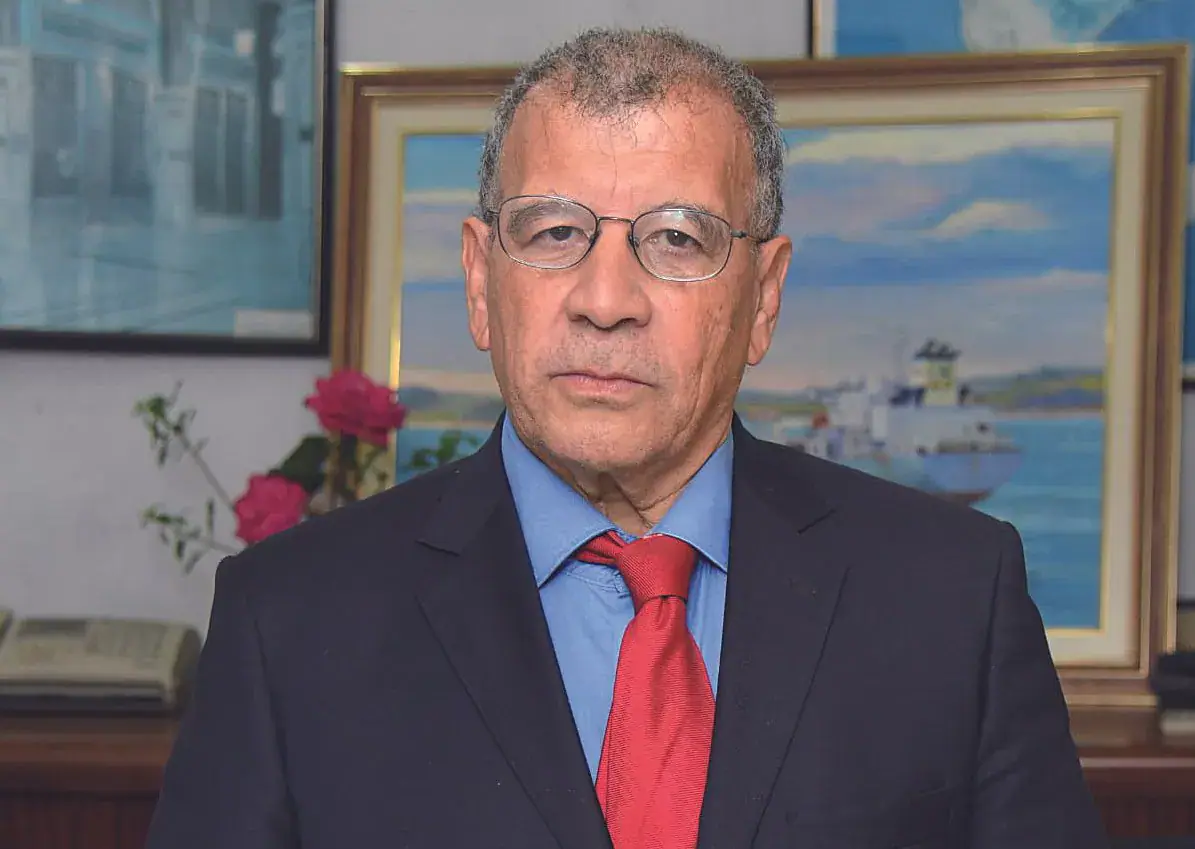
Morocco's maritime sector is undergoing a significant transformation, driven by investments in its port infrastructure. The country's strategic location and recent developments, including the Tanger Med, Nador West Med, and soon Dakhla Atlantique ports, have changed its dimension on the global maritime stage. According to Najib Cherfaoui, a port and maritime expert, Morocco's position is now consolidated due to changes in commercial routes, environmental constraints, and regional crises.
In 2025, over 1 billion tons of goods passed along Morocco's coast, highlighting the country's unique opportunity to become a major hub for global ocean lines. Two significant events have further solidified Morocco's position: the implementation of the Sulphur Emission Control Area (SECA) regulation in May 2025, which imposes the use of clean fuels, and the discovery of the reliability of the West African route following regional crises in 2026.
The upcoming Dakhla Atlantique port is expected to play a crucial role in this global redeployment, positioning Morocco as a major player alongside Tanger Med, Nador West Med, and Tanger Med 3. With 54 billion Moroccan Dirham (DH) in investments and a projected capacity of 5.3 million EVP, Nador West Med is set to become a significant player in the Western Mediterranean, complementing Tanger Med and attracting new international maritime flows.
Nador West Med's strategic importance lies in its geographical advantages, including protection from the marine environment and excellent transit times. The port's development will help regulate pressure on the Suez passage and capture new maritime flows, benefiting the economy of the Oriental region. According to Cherfaoui, Nador West Med's location allows it to become a balanced and controlled pivot for the new Silk Road launched in 2013.
The involvement of global giants like MSC, CMA CGM, and Maersk in Moroccan port projects demonstrates the country's attractiveness. However, this also raises questions about the balance between openness to international operators, control over strategic infrastructure, and the development of national maritime expertise. Cherfaoui emphasizes that concession agreements must be carefully crafted to ensure that the country's interests are protected and its maritime expertise is developed.
To achieve this balance, Cherfaoui suggests that concession agreements should include clauses that require operators to contribute to the development of Moroccan maritime expertise and employability of national resources. This approach aligns with the 2023 goal of building a strong and competitive national maritime fleet. Additionally, authorities must be equipped with the necessary maritime competencies to negotiate effectively with operators.
The development of Morocco's maritime sector also requires the growth of industrial zones and logistics platforms. As the country continues to invest in its port infrastructure, it is expected to become an increasingly important player in global trade. With its strategic location and commitment to developing its maritime expertise, Morocco is poised to solidify its position as an international maritime power.
Key points
- Morocco's strategic location and investments in port infrastructure have elevated its status as a major player in global maritime trade.
Reporting sources
- Najib Cherfaoui : «Le Maroc est une puissance maritime internationale» · Challenge Hebdo