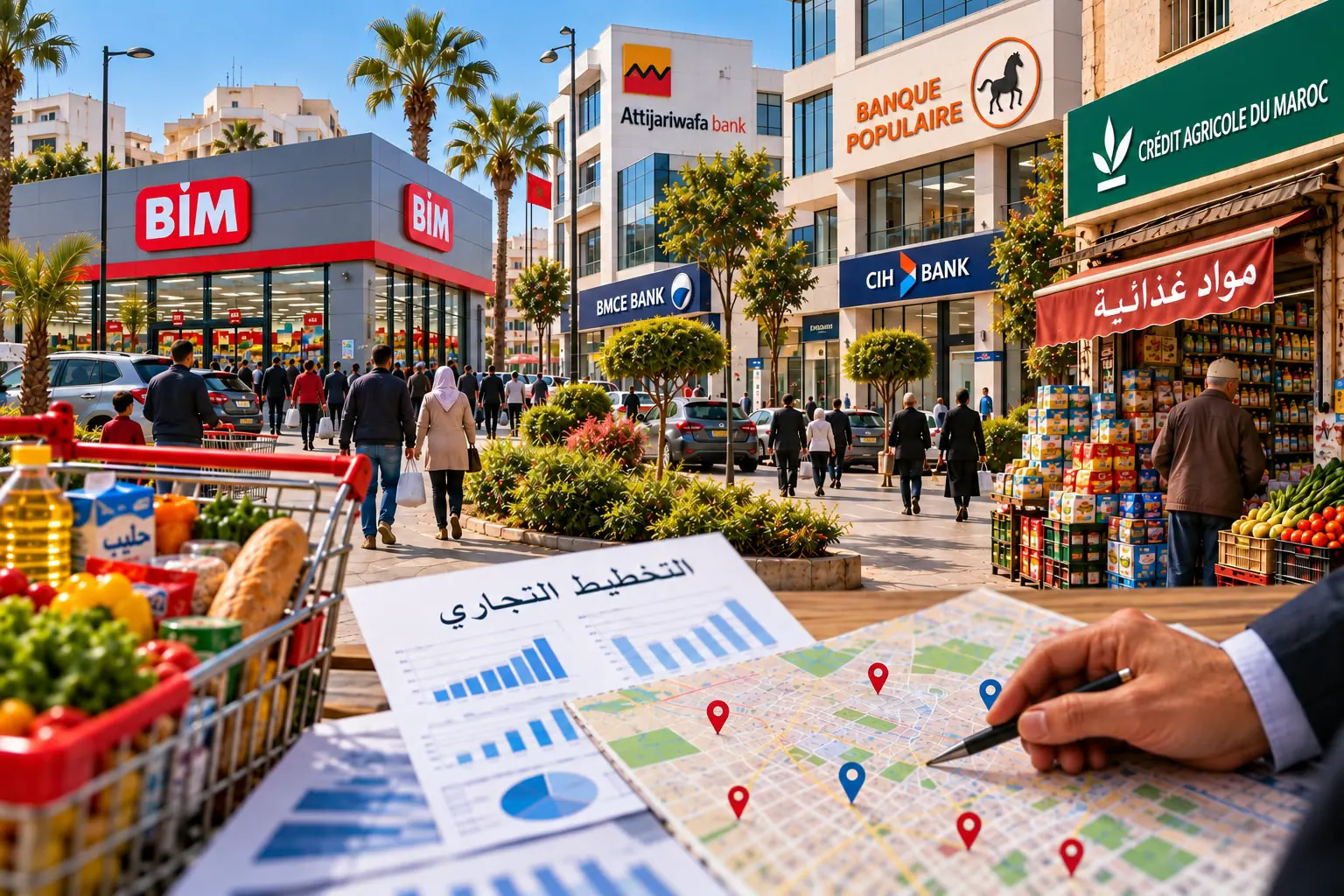
The recent news that 78 stores belonging to the "Bim" company in Morocco are threatened with closure due to disputes with property owners has reignited discussions about the rapid expansion of large commercial brands in Moroccan cities. This expansion has raised concerns about its impact on local businesses and the need for a more strategic approach to commercial development. The debate extends beyond competition issues, touching on the future of investments and the potential for market saturation.
The issue at hand is not just about the competition posed by large commercial chains to local businesses, but also about the sustainability of investments in areas that may not be able to support them. Opening new stores in areas with high commercial density, while other areas face shortages, can lead to reduced profitability and eventual closure. This highlights the need for "commercial planning," which involves understanding the local market, including population size, purchasing power, and existing commercial activities.
Local authorities can play a crucial role in promoting commercial planning by providing accurate and up-to-date commercial maps that identify areas of saturation and shortage. This information can help investors make informed decisions based on clear data, rather than simply searching for locations with favorable real estate conditions. Morocco already has a foundation to build on, with the 2023-2024 economic institutions map developed by the High Commission for Planning.
The experience of the banking sector also underscores the importance of understanding market trends before expanding. Moroccan banks had expanded their networks for years, only to see changes in customer behavior due to digital services and smartphones reduce the need for physical visits. This led banks to reassess their networks and close some branches, demonstrating that expansion decisions can require revision as market needs change.
Effective commercial planning can address multiple concerns simultaneously, protecting local businesses as a source of livelihood and ensuring that new investments are directed towards areas with growth potential. The Moroccan Union of Traders and Professionals has raised this issue on several occasions, emphasizing the need for a balanced approach between local trade and large commercial networks.
The success of commercial expansion in Morocco now depends on how well it aligns with market needs and capacity. This underscores the importance of commercial planning in directing investments towards areas that genuinely require more commercial offerings, thereby protecting local businesses and ensuring the sustainability of new investments.
As Morocco continues to develop its commercial sector, the emphasis on strategic planning will likely grow. By leveraging existing data and promoting transparency, local authorities can help create a more balanced and sustainable commercial landscape that benefits both local businesses and large commercial chains.
Key points
- The need for commercial planning in Morocco to ensure sustainable investments and protect local businesses.