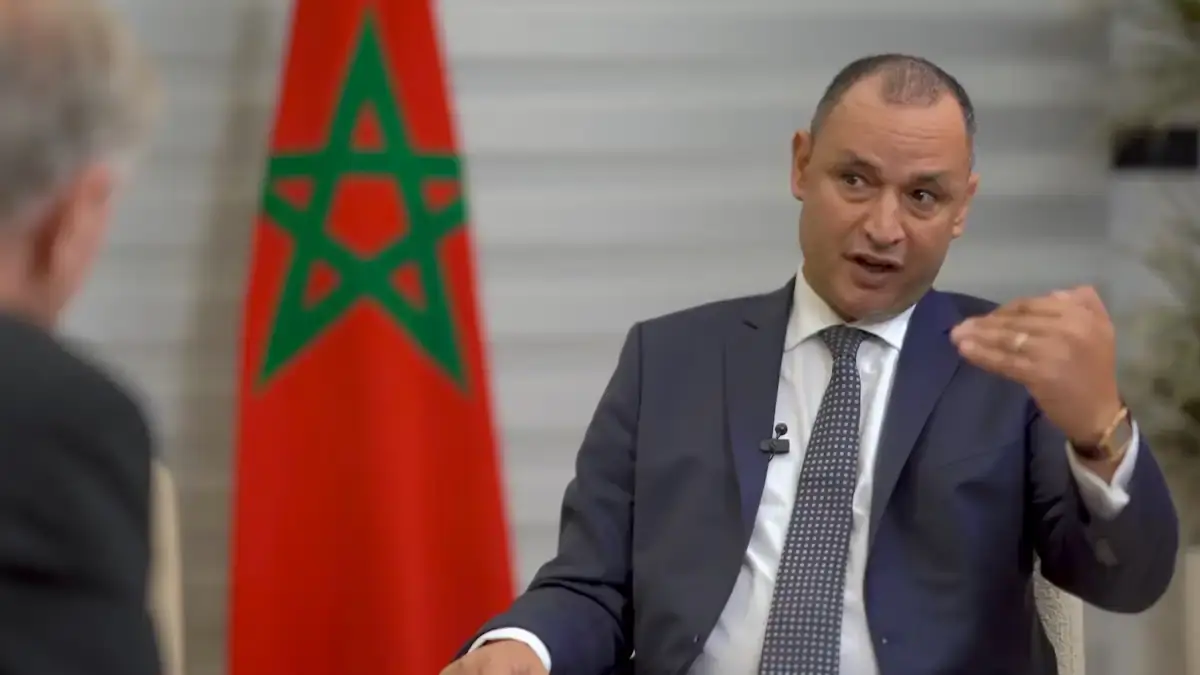
Moroccan Industry and Trade Minister Ryad Mezzour has publicly denounced the European Union's decision to exclude Morocco from the 'Made in Europe' label, describing it as an "aggressive act". In an interview published on November 13, 2026, Mezzour expressed his concerns about the potential impact on Morocco's automotive sector, which has been the country's top exporter for the past three years. The sector is a significant contributor to Morocco's economy, with exports reaching 159.2 billion dirhams in 2025.
Mezzour specifically pointed to France as the country most actively pushing for Morocco's exclusion from the 'Made in Europe' label. He warned that Morocco would not hesitate to take consequences and would do so quickly, without waiting for the issue to fade away. The minister also suggested that Morocco could turn to other partners with different objectives and interests, emphasizing the need to "count our friends". This statement implies that Morocco may seek alternative partnerships outside the EU.
The 'Made in Europe' label is part of the Industrial Accelerator Act, which was presented by the European Commission on March 4, 2026. The act reserves certain aids and public markets for products manufactured within the European Union. Mezzour rejected the "grandfather clause", which would allow current activities to continue while phasing out others. He argued that this position is not acceptable to Morocco, citing that some projects have already shifted their focus to other locations across the Mediterranean.
Mezzour also addressed European concerns about Chinese presence in Morocco's automotive sector. He clarified that no Chinese vehicles are produced in Morocco and that the country's battery chains are subject to stricter controls. This statement aims to alleviate concerns about the potential risks of Chinese involvement in Morocco's industry. The minister's comments reflect Morocco's efforts to maintain its position as a reliable partner for European automakers.
The exclusion of Morocco from the 'Made in Europe' label could have significant implications for the country's automotive sector. Renault and Stellantis, two major European automakers, have established production facilities in Morocco, with Renault operating in Tanger and Casablanca, and Stellantis in Kénitra. Morocco's competitive advantage and favorable business environment have made it an attractive location for these companies.
Mezzour's statements highlight the potential consequences of the EU's decision on Morocco's economy and its relationships with European partners. The minister's emphasis on taking swift action and exploring alternative partnerships underscores Morocco's determination to protect its interests. The EU's decision may lead to a reevaluation of Morocco's partnerships and trade agreements with European countries.
The situation remains uncertain, with Morocco and the EU yet to resolve their differences. The outcome will likely have far-reaching implications for Morocco's economy, its relationships with European partners, and the global automotive industry. As the situation develops, stakeholders will be closely monitoring the negotiations and their potential impact on the industry.
Key points
- Moroccan minister Ryad Mezzour condemns EU's exclusion of Morocco from 'Made in Europe' label as an "aggressive act".
- Morocco's automotive sector, a significant contributor to the country's economy, may be severely impacted by the EU's decision.
- Mezzour suggests that Morocco may seek alternative partnerships outside the EU in response to the exclusion.
Reporting sources
- Made in Europe : l'exclusion du Maroc qualifiée d'« acte agressif » par Ryad Mezzour · lanouvelletribune.info