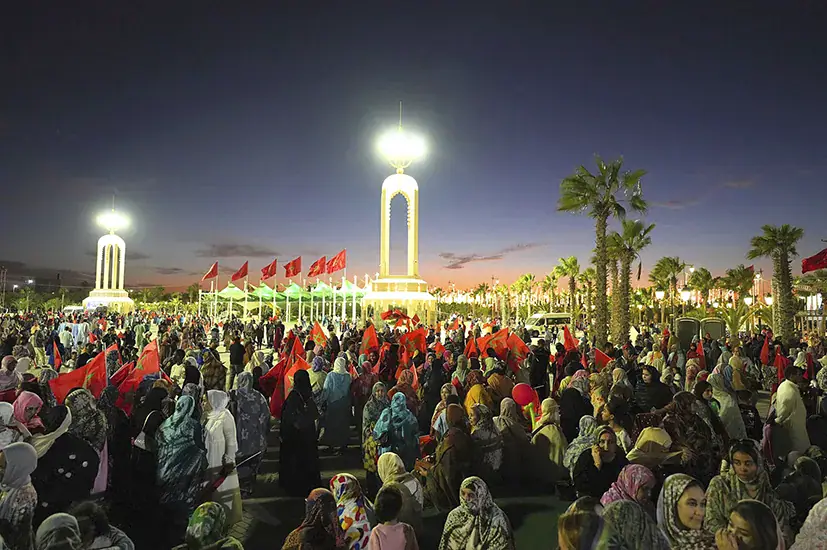
Morocco observed its National Day of Memory and Hope on October 31, a day that commemorates three significant dates in the country's history. These dates are November 18, 1955, which marked the victory of the National Liberation Movement and the end of the French protectorate; November 6, 1975, when the Green March took place, reasserting Morocco's claim to the Western Sahara; and October 31, 2025, when the UN Security Council adopted Resolution 2797, placing the autonomy plan for the Western Sahara at the center of negotiations.
The National Day of Memory and Hope serves as a reminder of Morocco's rich history and its people's collective memory. This collective memory is a vital part of the nation's intangible heritage, allowing Moroccans to identify with their past and envision their future. It is not merely a source of nostalgia but a wellspring from which the nation can draw inspiration to shape its present and future. By recalling these significant dates, Moroccans reaffirm their commitment to unity and diversity.
One of the key dates, November 18, 1955, marks a significant milestone in Morocco's struggle for independence. On this day, Sultan Mohammed V returned to Morocco after being exiled by the French colonial authorities. Two days later, he delivered a historic speech from the Hassan Mosque in Rabat, proclaiming the end of the French protectorate and Morocco's independence. This date is considered more meaningful than March 2, 1956, when France officially recognized Morocco's independence, as it highlights the role of popular will rather than mere legal formalities.
The period leading up to Morocco's independence was marked by a complex and often tumultuous relationship with colonial powers. The country's southern regions remained under Spanish occupation until 1969, when the city of Sidi Ifni was officially returned to Morocco. The National Liberation Army's efforts in the south led to the Spanish withdrawal from the Tarfaya region in 1958. Morocco's post-independence history has been shaped by its ongoing efforts to assert its territorial integrity, particularly in the Western Sahara.
The Western Sahara issue has been a longstanding concern for Morocco, with the country seeking to assert its sovereignty over the region. In 1975, King Hassan II launched the Green March, a peaceful march of over 350,000 Moroccan citizens, which led to the withdrawal of Spanish forces and the eventual signing of the Madrid Accords. This event is commemorated annually on November 6 as a celebration of national unity and territorial integrity.
The situation in Western Sahara has been influenced by the global context of the Cold War and the complex post-colonial dynamics in the Maghreb region. Despite a ceasefire agreement in 1991, a lasting resolution to the conflict has yet to be achieved. In 2007, Morocco presented an initiative for the autonomy of the Western Sahara region, which has been a key component of negotiations with the international community.
As Morocco commemorates its National Day of Memory and Hope, it reaffirms its commitment to preserving its history and collective memory. By recalling these significant dates, Moroccans honor their past, acknowledge their present, and look toward a future built on the principles of unity, diversity, and national sovereignty. The day serves as a reminder of the country's ongoing efforts to assert its territorial integrity and achieve a lasting resolution to the Western Sahara conflict.
Key points
- Morocco commemorates October 31 as its National Day of Memory and Hope, recalling key dates in its history.
- The day marks the country's struggle for independence and its ongoing efforts to assert its territorial integrity.
- Morocco's collective memory plays a vital role in shaping its national identity and informing its future.