Spain's national football association had taken it for granted that the final of the 2030 World Cup would be held in their country after winning a joint bid with Portugal. The country's sporting pedigree and tourism know-how made it a likely choice to host large crowds. However, Morocco's late addition to the bid has changed the dynamics, and Spanish officials are now worried that the North African nation could snatch the game's biggest showpiece from under their nose.
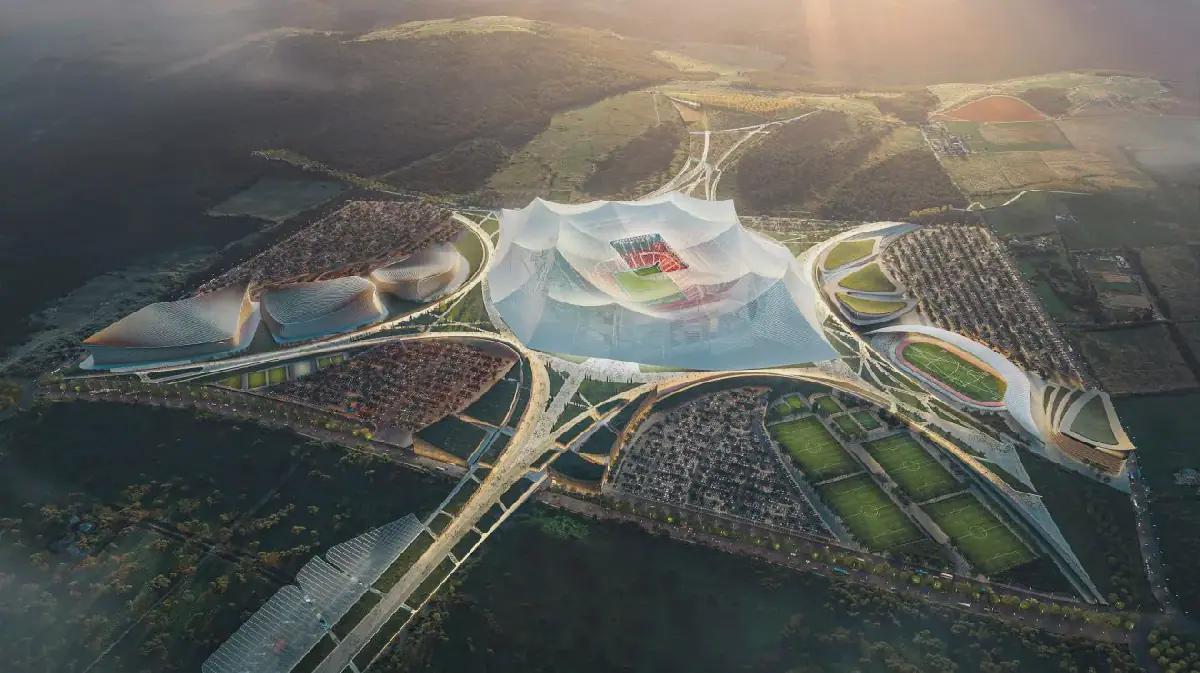
The battle to stage the final has become a contest between Real Madrid's Bernabeu, Barcelona's Camp Nou, and the $1 billion Hassan II stadium under construction near Casablanca. Morocco has united behind bringing the final to its new stadium, which will be the world's largest soccer arena with a 115,000-seat capacity. The Moroccan team's motivation is fueled by its state-backed sponsorship and a desire to showcase its emerging football power.
Spanish officials, including Alberto Núñez Feijóo, the frontrunner to become prime minister, have expressed concerns about hosting the tournament if they cannot stage the final. Javier Tebas, head of LaLiga, and José Luis Martínez-Almeida, the conservative mayor of Madrid, have also voiced their fears. Martínez-Almeida has expressed skepticism about the Spanish government's ability to match Morocco's ambition.
FIFA's inspectors are visiting host cities this month and next, but the governing body has not announced when it will decide on the final venue. The 2026 World Cup final venue was announced two years in advance, held just outside New York. Morocco's united front and massive new stadium have given it a strong case, while Spain's campaign is divided between Madrid and Barcelona.
Ricardo Trade, former CEO of the FIFA World Cup Organising Committee for Brazil 2014, believes Spain should have settled which city got the final as part of the original bid. "Spain is terrified of losing the final, a final they were absolutely certain they'd be hosting," Trade said. He noted that Morocco seems united on this World Cup project, while Spain's bid is divided between Barcelona and Real Madrid.
Moroccan fans, like Bilal Jouhari, 39, believe their country deserves the final as much as Spain. Jouhari pointed out that Morocco is fifth in FIFA's world rankings and that those who threaten to walk out if FIFA chooses Morocco as the final's host are similar to those who abandon the game due to referee decisions.
As FIFA prepares to make its decision, the competition between Spain and Morocco has become entangled with both FIFA President Gianni Infantino's fight for survival and frictions between Spain and Morocco over migration. The outcome will have significant implications for the host cities and the two countries' football associations.
Key points
- Morocco's new $1 billion stadium and united front have given it a strong case for hosting the 2030 World Cup final.