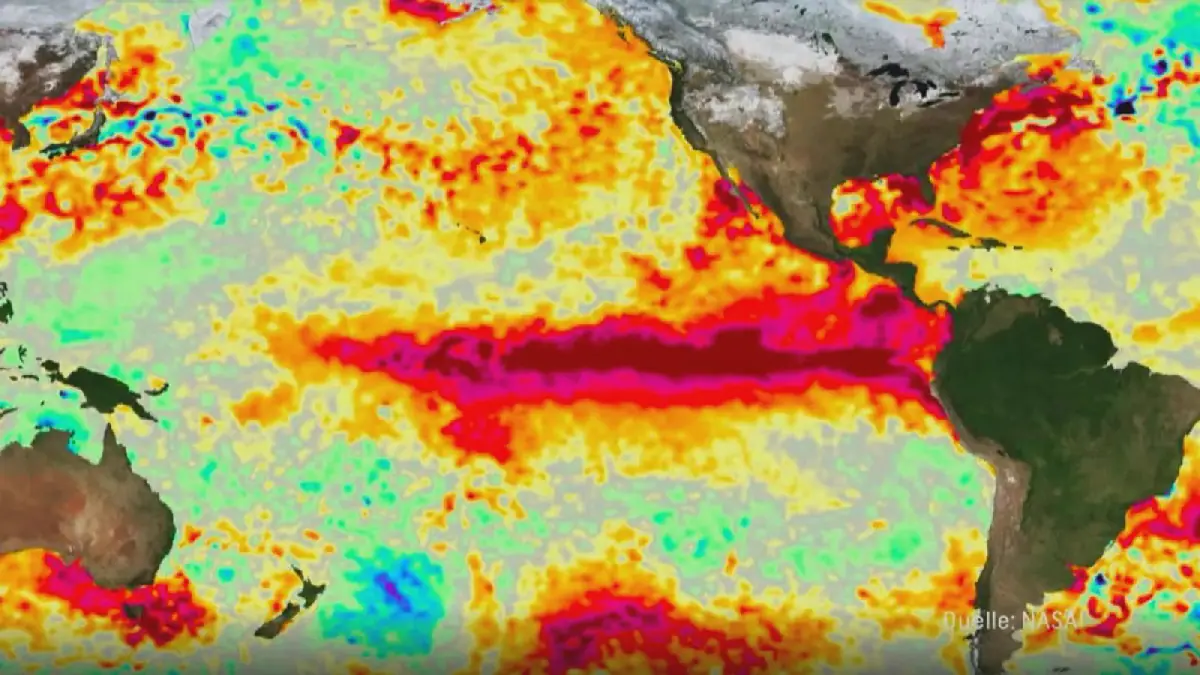
The World Meteorological Organization (WMO) has warned that the current El Niño episode is expected to intensify, reaching its peak in December, with record-high sea surface temperatures in the central and eastern tropical Pacific. This phenomenon is likely to persist until February 2027. The WMO's update on October 8 highlights the potential for severe climate-related impacts worldwide.
A report by the European Commission's Joint Research Centre on October 7 notes that El Niño has already caused significant damage to crops and pastures in East Africa between June and September. The region has experienced severe drought, affecting agricultural production and food security. Additionally, Central America faces threats to its next crop cycle, while southern Africa is expected to experience an unprecedented drought during the 2026-2027 planting season.
The World Food Programme (WFP) estimates that at least 49 million people will fall into acute food insecurity by the end of 2027, across 45 countries. The regions most affected will be East and Southern Africa, with over 18 million people impacted, followed by the Asia-Pacific region with 8.2 million, and West and Central Africa with nearly 6 million. These projections underscore the urgent need for humanitarian assistance.
In response to the impending crisis, the United Nations Food and Agriculture Organization (FAO) and the WFP launched a joint appeal in June to support nearly nine million people in 22 countries. The initiative focuses on providing resilient seeds, protecting livestock, collecting and storing water, and strengthening early warning systems. This multi-faceted approach aims to mitigate the effects of El Niño on vulnerable populations.
Morocco, with its agricultural sector playing a significant role in the country's economy, faces a double exposure to El Niño's impacts. The country's finance law is based on a cautious assumption of a cereal harvest of 70 million quintals, and it imports a growing share of its needs, particularly maize and animal feed. Fluctuations in global cereal and animal feed prices will directly affect the country's subsidy bill for soft wheat flour and livestock reconstitution costs.
While the relationship between El Niño and local rainfall in North Africa is indirect, the region remains vulnerable to climate-related shocks. Morocco's reliance on imported agricultural inputs and its exposure to global market fluctuations make it essential to monitor the situation closely. The government will need to consider strategies to mitigate the potential impacts on food security and the economy.
The effects of El Niño on global prices are not yet quantified, but experts warn of potential market tensions and price increases, which would disproportionately affect low-income households. As the situation continues to unfold, Morocco and other affected countries will need to remain vigilant and adapt to the changing climate landscape.
Key points
- El Niño is expected to peak in December and persist until February 2027.
- At least 49 million people will face acute food insecurity by the end of 2027.
- Morocco faces double exposure to El Niño's impacts, from local rainfall to global market fluctuations.