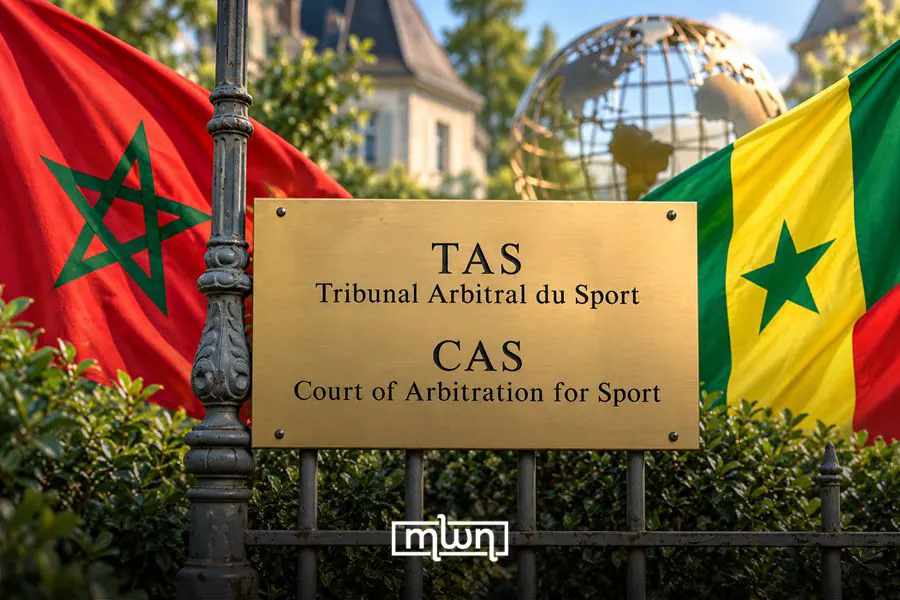
The dispute over the 2025 AFCON final between Morocco and Senegal will be heard by the Court of Arbitration for Sport (CAS) on October 8. The Senegalese Football Federation (FSF) filed an appeal against the decision issued by the CAF Appeal Board on March 17, 2026. The CAS is a specialized arbitral tribunal that settles sports disputes, determining whether the contested decision should be upheld, amended, or set aside based on applicable regulations and established facts.
Senegal won the 2025 AFCON final on the field, 1-0, but Morocco filed a complaint with CAF seeking sanctions over the incident where the Senegalese team left the pitch for nearly 12 minutes to protest a refereeing decision. CAF's Disciplinary Board disagreed, but the CAF Appeal Board overturned the decision, declaring Senegal the loser by forfeit and recording the match as a 3-0 victory for Morocco. The FSF is now challenging this decision before the CAS.
The CAS has full power to review both the facts and the law, conducting a genuine rehearing of the case, commonly described as a de novo review. Article R57 of the CAS Code gives the panel broad powers to issue a new decision replacing the one under appeal or set it aside and refer the case back to CAF. Morocco's objective is not merely to prove that "CAF was right" but to persuade the panel that the decision against Senegal is legally justified.
The October 8 hearing is officially listed by the CAS, but a hearing does not mean that a verdict will be delivered that same day. The panel will deliberate and issue its award in accordance with the applicable procedure. There is no reason to manufacture expectations around a "judgment on the evening of October 8." The CAS operates on a different timetable from social media.
There are three main possible outcomes: the CAS upholds the CAF decision, sets aside or amends the CAF decision, or sets aside the decision and refers the case back to CAF. The CAS would not be forced to choose mechanically between the CAF decision and Senegal's request but may conduct its own legal assessment within the limits of the dispute before it.
Morocco's strongest approach is to argue the law, establish the facts, and leave emotions at the courthouse door. Morocco has nothing to gain from turning these proceedings into a media battle with Senegal. Instead, it needs to present an exceptionally rigorous case built around straightforward questions about the events, conduct, and applicable regulations.
The Moroccan side should resist the temptation to turn the proceedings into an endless debate over the refereeing of the final, as this could be a strategic mistake. The CAS is not being asked to replay the match, but rather to make a decision based on the legal characterization of the events surrounding the end of the game and the application of CAF's regulations.
Key points
- Morocco's best strategy is to focus on rigorous legal argument rather than media noise.
- The CAS has broad powers to review the facts and law in the dispute.
- The hearing on October 8 is for the adversarial examination of the case, not for a verdict.