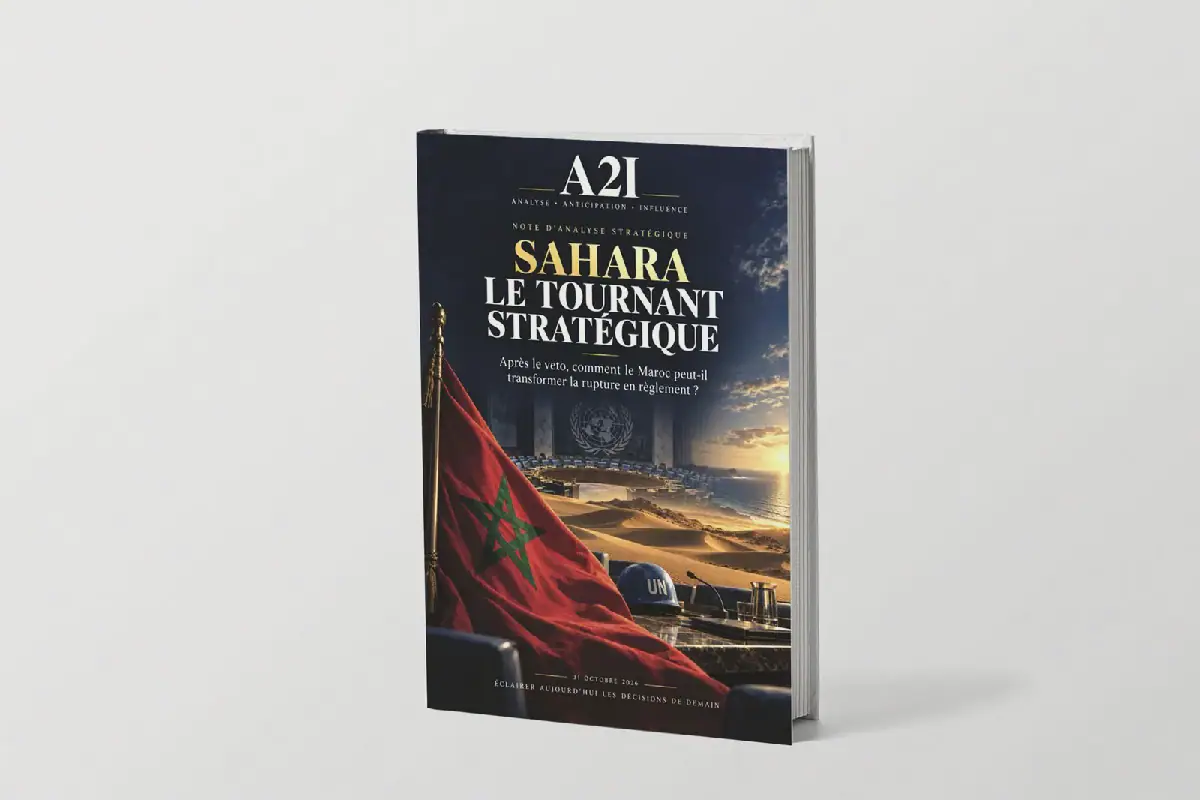
The UN Security Council has failed to adopt a resolution on the renewal of the MINURSO mission in Morocco, with Russia vetoing a US-backed proposal on October 30. The US proposal, which received 11 votes in favor, aimed to renew the mission's mandate with a focus on autonomy under Moroccan sovereignty. However, Russia's veto blocked the proposal, while a Russian counter-proposal failed to gain traction.
The impasse has created a new diplomatic dynamic in favor of Morocco, with the country's think tank, the Alliance des Deux Intelligences (A2I), analyzing the implications of the veto. According to A2I, the situation presents an opportunity for Morocco to shift the debate from the annual renewal of the mission to the concrete conditions for a political solution. This aligns with Morocco's approach since 2007, when it presented its autonomy initiative.
The A2I note, titled "Sahara, le tournant stratégique: Après le veto, comment le Maroc peut-il transformer la rupture en règlement?", sees the veto as a chance for Morocco to negotiate a solution. The resolution 2797, adopted on October 31, 2025, had requested that negotiations be based on the Moroccan proposal and recognized autonomy as a possible solution. The current situation presents a chance for Morocco to advance its autonomy proposal.
To move forward, the debate will need to focus on the architecture of autonomy, including the competencies of autonomous institutions, constitutional guarantees, resources, and control mechanisms. The populations of the region must also be at the heart of the solution, with attention to representation, rights, mobility, and economic prospects. A credible solution must offer a clear framework, guarantees, and perspectives.
The development of Morocco's southern provinces is also crucial, with investments, infrastructure, and public services needing to translate into tangible results, such as jobs, training, and improved living conditions. The territorial development and political proposal must advance together. Morocco's diplomatic efforts will be critical in convincing partners to support its approach.
The A2I identifies four possible scenarios, including a managed transition, accelerated discussions on autonomy, dispersion of the conflict, or a return to adapted continuity. Morocco's roadmap focuses on preserving diplomatic cohesion, making autonomy more precise, and managing the institutional transition. The country must provide clear proposals on competencies, guarantees, and their implementation, accompanied by a calendar.
The outcome will depend on Morocco's ability to sequence decisions and engage in negotiations. The A2I recommends following the instructions given to the mission, monitoring political meetings, and securing US support. Tangible signs of negotiation, such as the opening of working groups and written proposals, will be essential in achieving a durable political settlement.
Key points
- Morocco sees the UN Security Council veto as an opportunity to advance its autonomy proposal for the Sahara region.
- The country's diplomatic efforts will focus on convincing partners to support its approach and negotiating a solution.
- The development of Morocco's southern provinces is crucial to the credibility of the autonomy proposal.
Reporting sources
- Le Maroc aux portes du règlement historique · Challenge Hebdo