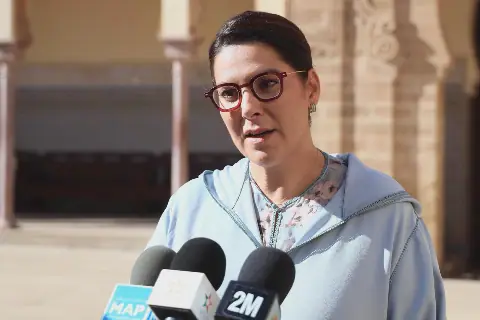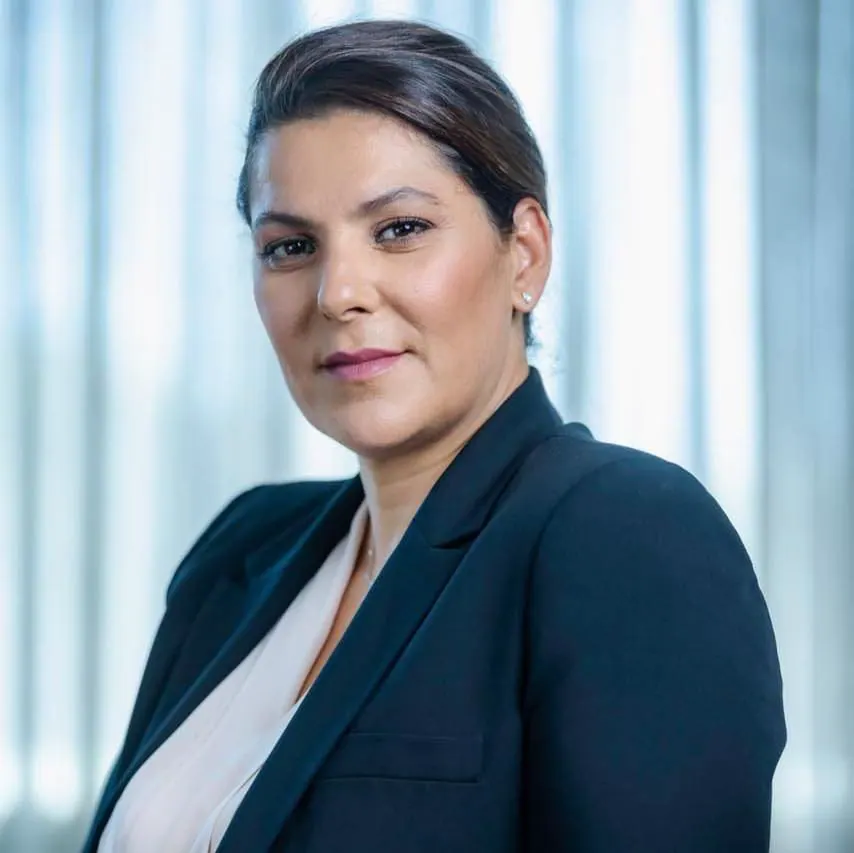
Morocco's King Mohammed VI has appointed Fatima Zahra El Mansouri as the country's new Prime Minister. El Mansouri, born on January 3, 1976, in Marrakech, has a background in law, having obtained a degree in private law from the University of Mohammed V in Rabat and a diploma in business contract law from the University of Montpellier. She has also obtained a certificate in Anglo-Saxon law from the University of Pace in the United States.
El Mansouri's entry into politics began in 2007 with the movement "Per All Democrats," and in the following year, she was one of the founders of the Authenticity and Modernity Party (PAM). In 2009, she was elected as the president of the Marrakech city council, a position she held until 2015. She was re-elected to the same position in 2021 for a term that will last until 2027.
El Mansouri has also served as a member of the House of Representatives between 2011 and 2016 and was re-elected for a second term from 2016 to 2021. Within her party, she served as the president of the National Council of PAM from 2015 to 2024, after which she took on the role of coordinating the party's collective leadership. In 2021, she entered the government as the Minister of National Land Preparation, Urban Planning, Housing, and City Policy.
Her appointment as Prime Minister comes after her party, PAM, topped the legislative elections held in September, securing 97 seats according to the preliminary results announced by the Ministry of Interior. The National Rally of Independents, which led the outgoing government, came second with 66 seats, while the Independence Party came third with 65 seats.
El Mansouri's rise to one of the highest executive positions in the country is not unprecedented for Moroccan women in state institutions. Women have previously held leadership positions in governmental, constitutional institutions, and strategic sectors. Examples include Zlikha Nassiri, who was the first woman to hold the position of advisor to the king, and Zeinab El Adawi, who presided over the Supreme Court of Accounts.
The appointment of El Mansouri is part of a broader context of official policies aimed at promoting women's participation in public affairs and decision-making positions. Her task now is to form a new government. However, since PAM does not have a parliamentary majority on its own, forming a governmental coalition is one of the primary challenges ahead for the newly appointed Prime Minister.
El Mansouri has received recognition for her work and potential, including being listed by Forbes magazine in 2014 among 20 young women in Africa and also being included in the list of global young leaders the same year. She is a member of the International Association of Francophone Mayors and serves as the deputy president of the Moroccan Association of City Council Presidents.
Key points
- El Mansouri's appointment as Prime Minister of Morocco marks a significant milestone in her political career, which has included various roles in local and national governance.
- Her party, PAM, won the most seats in the recent legislative elections but will need to form a coalition to secure a parliamentary majority.
- El Mansouri's rise reflects broader trends of increasing female participation in Moroccan politics and governance.