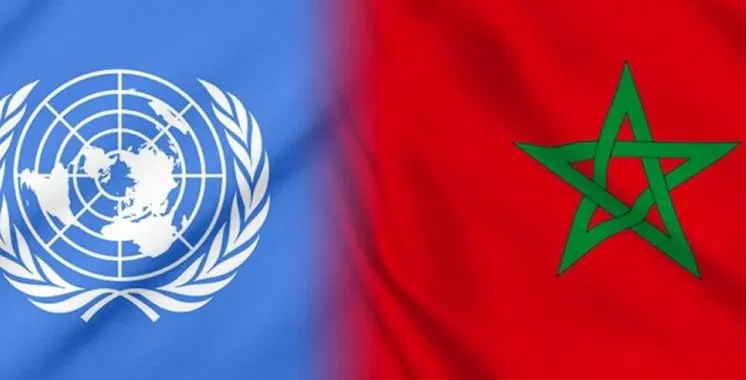
The United Nations Development System (UNSD) in Morocco has published its 2025 annual report, reviewing the country's progress in various sectors. The report highlights the UNSD's contributions to Morocco's development priorities, focusing on human capital development, social protection, and territorial resilience. In 2025, Morocco continued to implement structural reforms, with significant advancements in healthcare, education, and social inclusion. The report emphasizes that despite notable progress, challenges persist, including reducing territorial inequalities and improving access to quality services.
In the healthcare sector, the UNSD supported Morocco in strengthening primary healthcare, maternal and child health, nutrition, vaccination, and mental health. Over 19 million doses of vaccines and nutrients were provided to children in 2025, valued at nearly $11.5 million. An additional $4.6 million was invested in enhancing the national cold chain and laboratory capacities. These efforts helped reduce vaccine hesitancy, particularly against measles. Furthermore, campaigns promoting early breastfeeding and adolescent engagement reached over 2.1 million people and mobilized 6,000 adolescents on essential health topics.
The UNSD also contributed to Morocco's education sector by supporting the reinforcement of educational performance and skills development. The focus was on improving learning quality, preventing school dropout, and aligning education with labor market needs. Interventions helped enhance student retention and learning conditions, particularly through integrated models to combat school dropout among adolescent girls. In vulnerable territories, early identification and individualized follow-up of at-risk students were strengthened, improving support for struggling students and preventing early school exits.
In the realm of social inclusion and protection, the UNSD backed Morocco's social reforms aimed at enhancing inclusion and social protection. This was in line with Morocco's ambition to generalize social protection and adhere to the 2030 Agenda. The UNSD supported the development of public finances oriented towards social sectors by strengthening national actors' capacity to ensure sustainable financing of reforms. This included a review of the national health financing strategy and the elaboration of Morocco's 2023 National Health Accounts.
The UNSD's support for social protection reforms led to significant advancements in 2025. The coverage of family benefits and social protection reached about 80%, up from 58% in 2021. Regular monetary transfers benefited 5.6 million children from the most vulnerable households. An in-depth analysis of social protection financing options identified an annual need of approximately $4.4 billion from 2027 to support direct social assistance programs and the health insurance regime.
The report also highlights that sustaining reforms will require consolidating multisectoral coordination, institutionalizing innovations, and continuing to address the structural vulnerabilities of the system. The UNSD's efforts have contributed to a more integrated and equitable health system, combining governance, service quality, emergency preparedness, and inequality reduction. Moving forward, Morocco aims to build on these achievements while addressing persistent challenges.
The partnership between Morocco and the UNSD demonstrates a collaborative approach to achieving sustainable development goals. By focusing on critical areas such as health, education, and social protection, both parties aim to enhance the well-being of Moroccans and promote inclusive and sustainable development. The UNSD's continued support is crucial in helping Morocco overcome existing challenges and achieve its development objectives.
Key points
- The UNSD provided over 19 million doses of vaccines and nutrients to children in Morocco in 2025.
- Social protection coverage in Morocco reached about 80% in 2025, up from 58% in 2021.
- Morocco requires approximately $4.4 billion annually from 2027 to support its social protection programs.