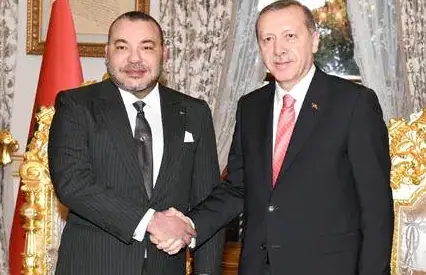
Morocco and Turkey are two countries with rich histories that extend far beyond their current geographical boundaries. Both nations have experienced significant transformations throughout the centuries, with their pasts continuing to shape their present. Morocco, under the rule of the Almoravids and Almohads, once expanded its influence across the Mediterranean and into the Iberian Peninsula. The country's strategic location and historical significance make it a key player in regional and global affairs.
Turkey, on the other hand, inherited the geographical and political legacy of the Ottoman Empire, which once spanned across Europe, Asia, and Africa. The country's complex history has equipped it with a unique perspective on global politics and international relations. The Ottoman Empire's legacy continues to influence Turkey's current relationships with other nations, particularly in the Middle East and North Africa.
One of the key issues that Morocco faces today is the dispute over the Western Sahara region. The conflict, which began in the 1970s, has been a major challenge for Morocco, with the Polisario Front seeking independence for the region. The situation is further complicated by the involvement of international parties and the country's historical ties with Spain, which controlled the region until 1975.
The dispute over Ceuta and Melilla, two cities on Morocco's northern coast that are under Spanish control, is another issue that has significant historical and cultural implications. Morocco's claim to the cities is based on its historical ties to the region, and the issue remains a major point of contention between Morocco and Spain.
In order to understand the complexities of Morocco's relationships with other nations, it is essential to examine the country's history and its implications for current events. By analyzing the country's past, it is possible to gain a deeper understanding of the challenges it faces today and the ways in which it interacts with other countries on the global stage.
Turkey's history also provides valuable insights into its current relationships and global standing. The country's experience as the successor state to the Ottoman Empire has equipped it with a unique perspective on global politics and international relations. Turkey's relationships with other nations in the Middle East and North Africa are influenced by its historical legacy, and the country continues to play a significant role in regional affairs.
The complex histories of Morocco and Turkey serve as a reminder that the past continues to shape the present. By examining the historical contexts of these countries, it is possible to gain a deeper understanding of the challenges they face today and the ways in which they interact with other nations on the global stage.
Key points
- Morocco and Turkey's complex histories continue to influence their present-day relationships and global standing.
- The two countries' experiences as historic empires have equipped them with unique perspectives on global politics and international relations.
- Understanding the historical contexts of Morocco and Turkey is essential for grasping the complexities of their current relationships and global roles.