The 13th session of the Morocco-EU Customs Cooperation Committee was held in Rabat, bringing together high-ranking officials from both sides, including Mohammed Ezzahaoui, director general of Morocco's Administration of Customs and Indirect Taxes, and Dimiter Tzantchev, EU ambassador to Morocco. The meeting aimed to adapt bilateral cooperation mechanisms to changes in international trade. The discussions centered on simplifying commercial procedures, electronic certification of goods origin, and integrating artificial intelligence in customs processes.
The meeting reviewed recent legislative and regulatory developments in both Morocco and the EU, including the application of Protocol 4 on rules of origin and electronic certification. Morocco's customs administration expressed readiness to fully digitalize customs treatments related to origin, while the EU presented its own digitalization project, set to be completed by mid-2028. The two sides also discussed the implementation of Protocol 5 on mutual administrative assistance in customs matters.
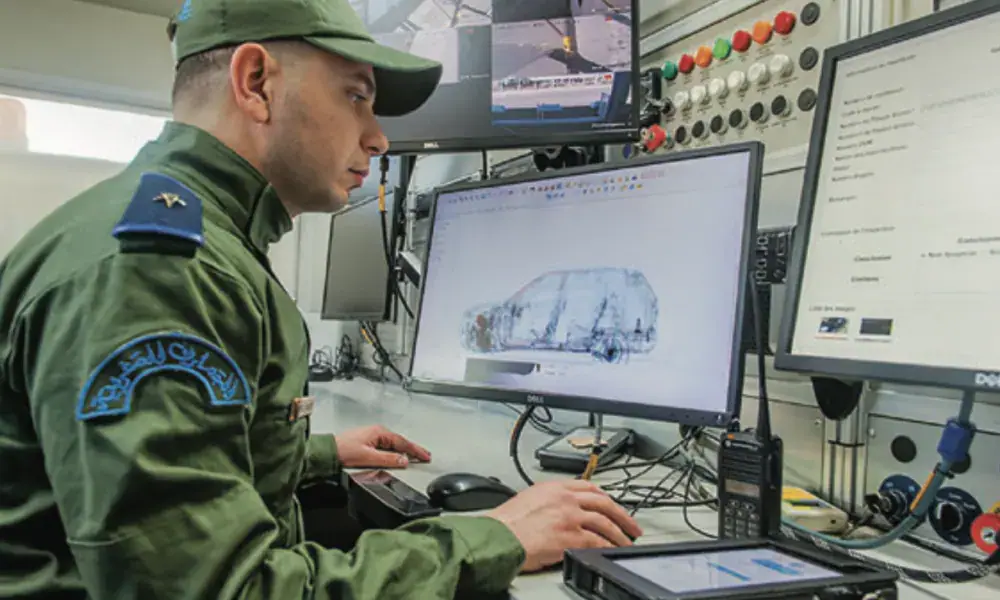
A key aspect of the discussions was the integration of artificial intelligence in customs processes. Both parties showed interest in developing cooperation in this area, exploring ways to align their strategies and roadmaps in the context of digital transformation in customs administrations. This cooperation aims to enhance the efficiency and effectiveness of customs operations.
The meeting also touched on the customs provisions of the new bilateral agreement concluded on October 3, 2025. The two sides reaffirmed their commitment to pursuing technical and operational exchanges, within the frameworks of their partnership. The discussions were attended by representatives from various Moroccan and EU institutions, including the Ministry of Foreign Affairs and Morocco Foodex.
The cooperation between Morocco and the EU in the customs field is part of a broader effort to strengthen bilateral relations and promote trade. The two sides have been working together to facilitate trade while ensuring the protection of their respective economic interests. The digitalization of customs procedures is seen as a key factor in achieving this goal.
The use of artificial intelligence in customs operations is expected to improve the efficiency and speed of customs clearance, reducing costs for traders and enhancing the competitiveness of Moroccan and EU businesses. The cooperation in this area is also expected to contribute to the fight against illicit practices and the protection of intellectual property rights.
The Morocco-EU customs cooperation committee will continue to play a crucial role in promoting and facilitating trade between the two partners. The two sides have agreed to continue their technical and operational exchanges, with a focus on digitalization and artificial intelligence. This cooperation is expected to have a positive impact on trade and economic relations between Morocco and the EU.
Key points
- Morocco and the EU have agreed to deepen their customs cooperation, focusing on digitalization and artificial intelligence.
- The two sides have reaffirmed their commitment to pursuing technical and operational exchanges in the customs field.
- The cooperation aims to enhance trade facilitation, improve customs efficiency, and promote economic growth.