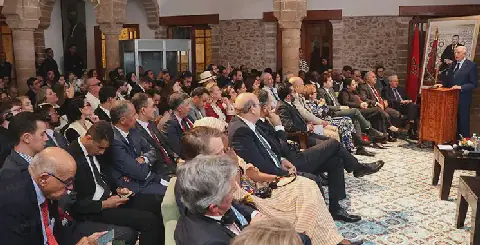
The recent visit of US Ambassador to the United Nations, Mike Waltz, to Rabat has brought the Western Sahara conflict back into focus. Waltz's statement that the Trump administration will continue to push for a settlement based on autonomy has been seen as a significant development. This comes as the UN's MINURSO mission begins to withdraw, leaving Algeria to re-evaluate its stance on the conflict. The Moroccan government has been keen to capitalize on the changing dynamics, with Foreign Minister Nasser Bourita emphasizing the need for a settlement that preserves Moroccan sovereignty.
The withdrawal of MINURSO has significant implications for Algeria, which had been relying on the mission to delay a resolution to the conflict. With the mission's mandate expiring, Algeria is now forced to confront the question of what it wants to achieve in the next phase. The country's diplomacy has been focused on supporting the Polisario Front, but with limited success. As the conflict drags on, Algeria's domestic politics are likely to be affected, with citizens questioning the government's handling of the issue.
Morocco's position on the conflict has been strengthened by the US's support for autonomy. The Rabat government has made it clear that it will not compromise on its sovereignty over Western Sahara, but is willing to discuss the details of autonomy and transitional arrangements. This stance has put Algeria under pressure, as it struggles to articulate a clear alternative. The Algerian government has traditionally maintained that a referendum is the only solution, but this position is becoming increasingly untenable.
The Russian veto on a US-drafted resolution at the UN Security Council has had significant repercussions for Algeria. The veto allowed Morocco to gain the upper hand in the conflict, with the US and other Western powers now pushing for a settlement based on autonomy. Algeria's attempts to rally support for its position have been unsuccessful, with many countries now urging a negotiated solution.
The conflict in Western Sahara has significant regional implications, with many countries calling for a peaceful resolution. The African Union has been actively engaged in efforts to resolve the conflict, but progress has been slow. As the situation on the ground continues to evolve, it is clear that a solution will require compromise and creative thinking from all parties involved.
The role of the international community in resolving the conflict will be crucial. The UN has a critical role to play in facilitating negotiations and ensuring that any settlement is fair and sustainable. The US, in particular, has significant influence in the region and can play a key role in pushing for a resolution. European countries, including the EU, also have a stake in the conflict and can help to bring pressure to bear on the parties.
As the situation in Western Sahara continues to unfold, it is clear that Morocco and Algeria will have to navigate a complex and rapidly changing landscape. Morocco's emphasis on autonomy and sovereignty is likely to remain a key aspect of its position, while Algeria will have to adapt to a new reality in which its traditional stance on the conflict is no longer tenable. The coming months will be critical in determining the future of Western Sahara and the region as a whole.
Key points
- Morocco gains upper hand in Western Sahara dispute as Algeria struggles to adapt to changing dynamics.
- US support for autonomy strengthens Morocco's position, puts pressure on Algeria.
- International community, including UN, US, and EU, has critical role to play in resolving conflict.