The Sahel region in Africa has become a critical area for redefining power dynamics on the continent. The region's strategic importance has drawn the attention of various African, regional, and international players with competing security, economic, energy, and diplomatic interests. A recent development in Algeria's policy towards the Sahel has made it essential for Morocco to reassess its approach. Algeria has redeployed its military assets to the region, dispatching fighter jets to Niger in response to a recent attempt to destabilize the country.
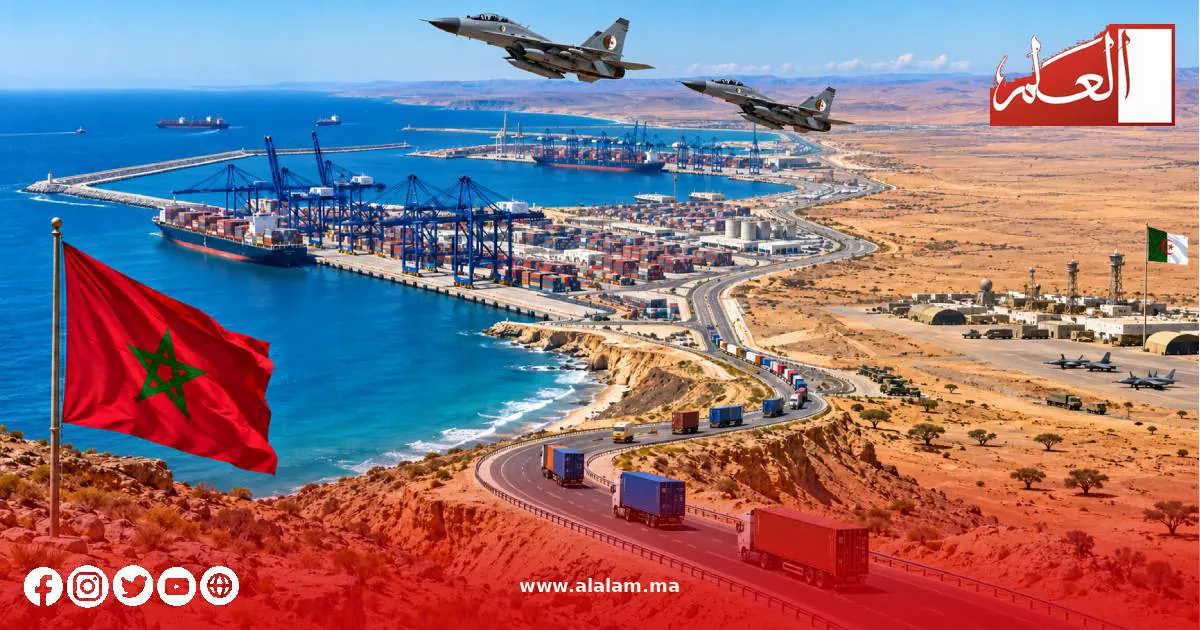
Algeria's decision to send four Sukhoi 30 fighter jets, accompanied by a refueling plane, to Niger's capital, Niamey, marks a significant shift in its foreign policy. This move is seen as the country's first public military deployment outside its borders since 1973. The Algerian Ministry of Defense stated that the mission was carried out at the request of Nigerien authorities to support the Nigerien army. This development has sparked concerns in Morocco, which has been promoting a different approach to engaging with Sahel countries.
Morocco's strategy focuses on economic development, investment, and regional connectivity. King Mohammed VI's Atlantic Initiative aims to provide Sahel countries with access to the Atlantic Ocean and global markets through Morocco's ports, infrastructure, and financial institutions. This approach is designed to offer a sustainable alternative to the traditional security-based relationships often seen in the region. Mali has already expressed its commitment to the initiative, announcing plans to gradually implement projects proposed within its framework.
The competition between Morocco and Algeria for influence in the Sahel region has significant implications for the area's future. While Algeria is leveraging its military capabilities and historical ties with Sahel countries, Morocco is promoting economic development and regional integration. Morocco's approach has been successful in building relationships with Sahel countries, which see the economic benefits of partnering with the kingdom.
A key aspect of Morocco's strategy is its focus on transforming the country's geography from a liability to an opportunity. The development of the Atlantic ports, such as the one in Dakhla, and the construction of roads and other infrastructure are critical components of this approach. These projects aim to turn Morocco into a hub connecting Europe, West Africa, and the Sahel region.
The rivalry between Morocco and Algeria also has an energy dimension, with Algeria seeking to revive the Trans-Saharan gas pipeline project. The project, which would connect Nigeria to Algeria via Niger, is seen as a way for Algeria to regain its regional influence. However, Morocco's focus on renewable energy and its existing gas infrastructure make it an attractive partner for Sahel countries.
As the competition between Morocco and Algeria continues, the Sahel region is likely to benefit from increased investment and attention from both countries. The region's stability and development will depend on the success of these initiatives, which have the potential to transform the lives of millions of people. The outcome of this competition will have significant implications for the region's future and the balance of power in Africa.
Key points
- Morocco's focus on economic development and regional connectivity offers a sustainable alternative to traditional security-based relationships in the Sahel region.