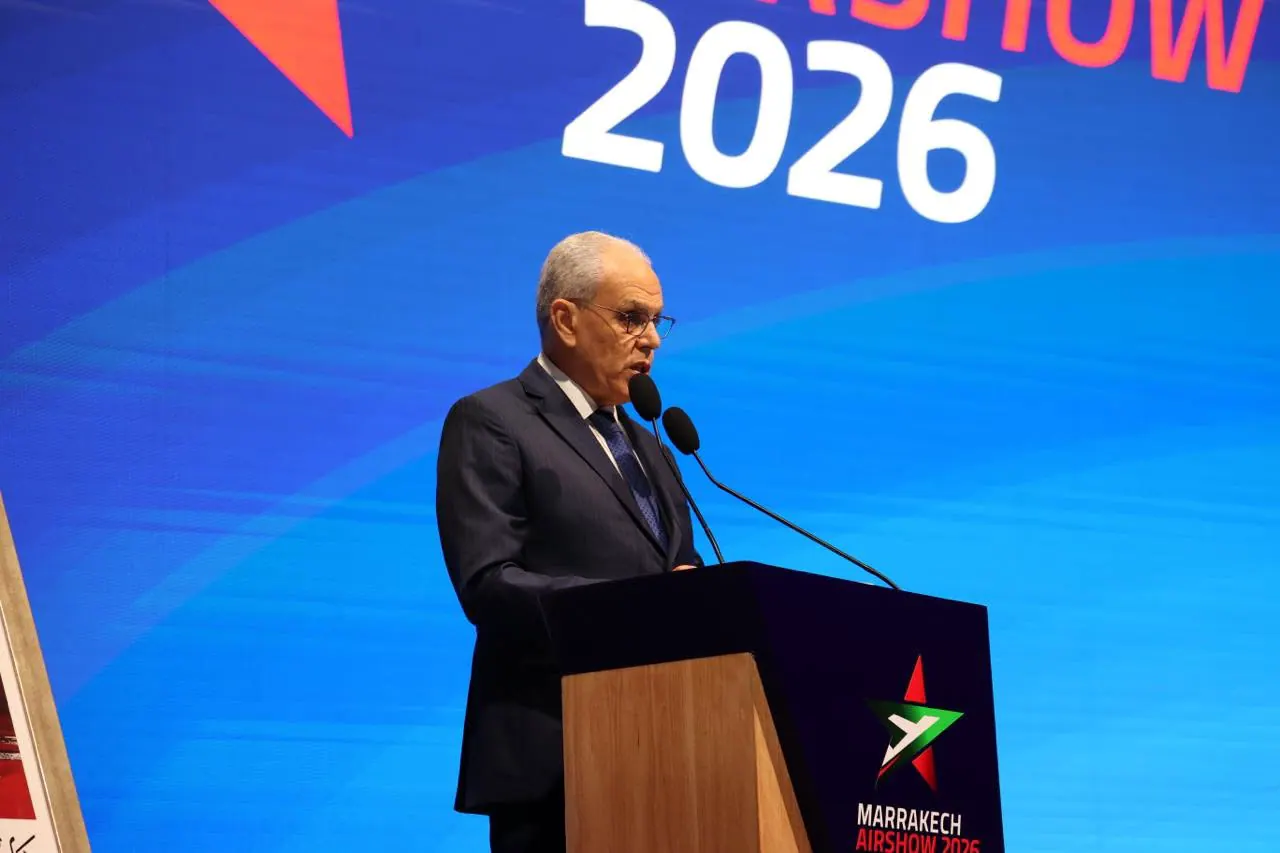
Morocco's Minister Delegate for National Defense Administration, Abdellatif Loudiyi, outlined the country's ambition to transition from a defense importer to a producer during the Marrakech aerospace show. He emphasized the development of a domestic defense industry, built on the foundation of the nation's aerospace sector, which has grown significantly over the past two decades. This industry currently comprises over 150 companies and is a major contributor to Morocco's industrial exports.
To achieve this goal, Loudiyi highlighted three key levers: a dedicated legal framework, reserved industrial zones, and an incentives regime. These measures, adopted in recent years, aim to attract defense equipment manufacturers to the country. The minister stressed that the success of this endeavor depends on the transfer of technologies, enabling Morocco to move beyond mere assembly and towards mastering design, integration, and maintenance of defense systems.
The Moroccan aerospace sector has been primarily driven by subcontracting for major civil aviation players such as Airbus, Boeing, and Safran. The sector's growth has been significant, but the focus is now shifting towards defense. Two recent announcements illustrate this new orientation. Lockheed Martin has confirmed plans to establish a heavy maintenance and overhaul facility in Benslimane for C-130 Hercules and F-16 aircraft. This move follows the first flight of the F-16 Block 72 ordered by Morocco.
Another company, Harmattan AI, has committed to establishing a production platform for autonomous systems and local manufacturing of the IRIFI strike drone. These developments signal Morocco's intent to build a domestic defense industry, leveraging its existing aerospace capabilities. The challenge lies in overcoming barriers to entry in the defense sector, which are more related to access to sensitive technologies than capital requirements.
The Moroccan government's strategy aims to replicate the success of the aerospace sector, where the country has become a significant player in subcontracting for major manufacturers. The goal is to create a similar ecosystem in the defense sector, with a focus on technology transfer and local production. This approach is expected to enhance Morocco's defense capabilities and reduce its reliance on imports.
The development of a domestic defense industry is also expected to contribute to Morocco's economic growth and diversification. The aerospace sector has already demonstrated its potential as a driver of industrial exports, and the defense sector is seen as a promising area for growth. The government's efforts to create a favorable business environment, including dedicated industrial zones and incentives, are aimed at attracting investment and promoting local production.
As Morocco continues to develop its defense industry, the country faces the challenge of balancing its relationships with major defense suppliers while building its domestic capabilities. The recent announcements from Lockheed Martin and Harmattan AI demonstrate the country's commitment to this goal. With a focus on technology transfer and local production, Morocco aims to become a significant player in the defense sector, moving beyond its role as a defense importer.
Key points
- Morocco aims to develop a domestic defense industry, leveraging its aerospace sector.
- The country's strategy focuses on technology transfer and local production.
- The development of a domestic defense industry is expected to contribute to Morocco's economic growth and diversification.