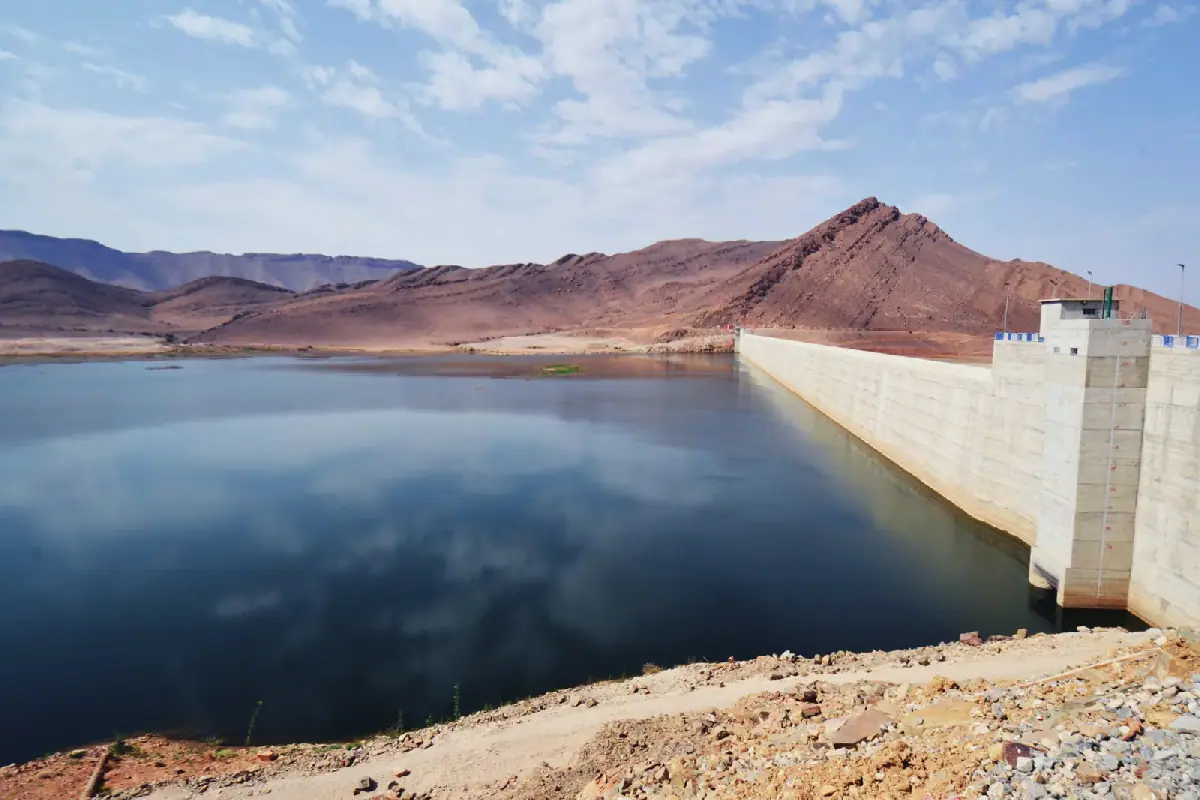
Morocco's water management strategy, as outlined in the financial bill, aims to enhance the country's water storage capacity to over 24 billion cubic meters by the end of 2027. This goal is being pursued through the ongoing construction of 14 major dams, the launch of a new dam, and the elevation of an existing dam. Since 2020, eight major dams have been completed, including those at Kaddoussa, Tiddas, and Toudgha, adding 1.89 billion cubic meters of storage capacity.
In addition to the major dams, five other dams have been filled with water ahead of schedule, including Sakia El Hamra, Aït Ziat, and Tamri, which have added 746 million cubic meters of capacity. The construction of 155 smaller dams and hilltop reservoirs is also underway, with 24 completed and 32 currently under construction. These projects are part of Morocco's efforts to bolster its water storage infrastructure and mitigate the effects of drought.
Desalination is another key component of Morocco's water management strategy. Desalination plants in Agadir, Jorf, and Safi are currently operational, and the Dakhla plant is set to be commissioned in 2027. The Safi plant is being expanded to supply water to Marrakech, and the first phase of the Grand Casablanca plant is also set to begin. Morocco aims to produce over 1.8 billion cubic meters of desalinated water per year by 2031, which would meet nearly 60% of the country's drinking water needs.
The transfer of water between different basins is also being prioritized. The first phase of the connection between the Sebou and Bouregreg rivers is operational, with a capacity of 15 cubic meters per second, and secures the Rabat-Casablanca axis. Another connection between the Oued Makhazine and Dar Khrofa rivers supplies 3.2 cubic meters per second to Tanger. Preparatory work is ongoing for the interconnection of the Sebou, Bouregreg, and Oum Er-Rbia basins.
The agricultural sector is also set to benefit from Morocco's water management strategy. The Dakhla desalination plant will be used to irrigate 5,000 hectares of land, and public-private partnerships are being established to supply desalinated water to the Sidi Rahal and Moulouya areas. The reuse of treated wastewater is also being promoted, primarily for irrigation of green spaces and golf courses.
Morocco is also seeking to improve the efficiency of its water distribution networks, with a target of 78% efficiency by 2027. Five contracts have been signed for the management of groundwater resources, and three more are expected to be signed soon. Additionally, nearly 1,000 new water points are being programmed in pastoral areas to support local communities.
Finally, Morocco is planning to modernize its water quality monitoring systems and update its national flood forecasting plan. While no specific targets or timelines have been announced, these initiatives are expected to enhance the country's ability to manage its water resources effectively and respond to water-related challenges.
Key points
- Morocco aims to increase its water storage capacity to over 24 billion cubic meters by 2027.
- The country plans to produce over 1.8 billion cubic meters of desalinated water per year by 2031.
- Morocco is seeking to improve the efficiency of its water distribution networks to 78% by 2027.