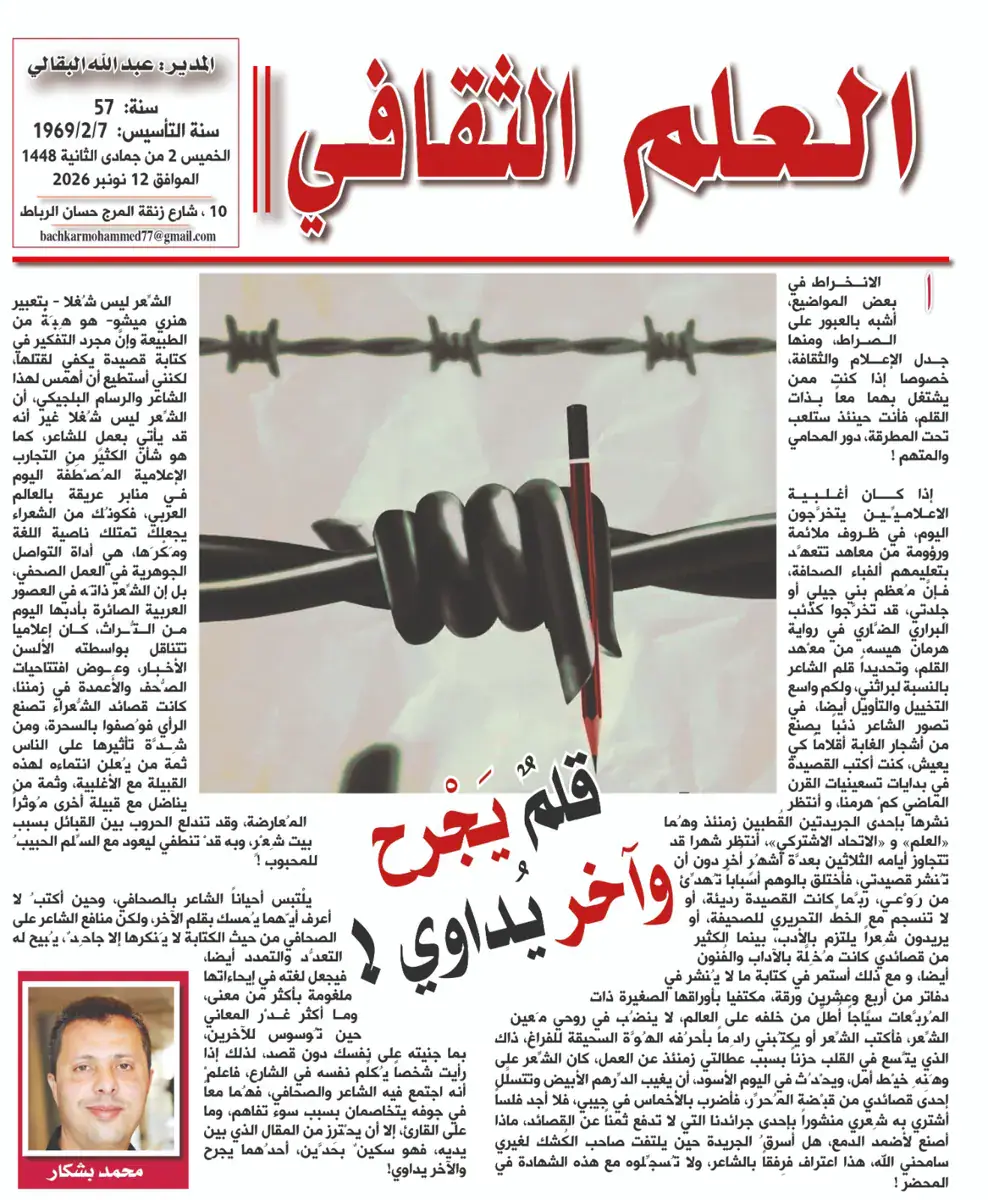
In a thought-provoking article, Moroccan writer and poet Mohamed Beshkar shares his experiences and reflections on the intersection of poetry and journalism. Beshkar notes that while some may view poetry and journalism as two distinct fields, he believes that they share a common thread - the art of storytelling. As a poet, Beshkar has learned to harness the power of language to convey emotions and ideas, a skill that has also served him well in his work as a journalist.
Beshkar recounts his early days as a young poet, struggling to get his work published in prominent Moroccan newspapers. Despite facing rejection and disappointment, he persevered, continuing to write and hone his craft. His experiences as a poet have taught him the importance of nuance and subtlety in language, skills that have been invaluable in his work as a journalist. Beshkar notes that poetry has allowed him to tap into his creative side, while journalism has provided him with a platform to share his ideas and perspectives with a wider audience.
The writer highlights the challenges of working as a journalist in Morocco, where the media landscape is often marked by censorship and self-censorship. Despite these challenges, Beshkar believes that journalists have a critical role to play in shaping public discourse and holding those in power accountable. He notes that poetry and journalism can be powerful tools for social commentary and critique, allowing writers to express themselves in unique and impactful ways.
Beshkar's reflections on the intersection of poetry and journalism are particularly relevant in the context of Moroccan culture and society. Morocco has a rich literary tradition, with many prominent writers and poets having made significant contributions to the country's cultural landscape. Beshkar's work is part of this larger tradition, and his insights offer a valuable perspective on the role of writers and journalists in shaping Moroccan society.
The article also touches on the theme of creativity and freedom of expression in Morocco. Beshkar notes that while there are challenges to expressing oneself freely in Morocco, there are also opportunities for writers and journalists to push boundaries and challenge the status quo. He believes that poetry and journalism can be powerful tools for promoting social change and advocating for human rights.
Beshkar's experiences as a poet and journalist offer a unique perspective on the complexities of Moroccan society and culture. His work highlights the importance of creative expression and freedom of speech, particularly in contexts where these values are under threat. As a writer and poet, Beshkar continues to play a vital role in shaping public discourse and promoting social change in Morocco.
Ultimately, Beshkar's reflections on the intersection of poetry and journalism offer a powerful reminder of the importance of creative expression and freedom of speech. His work serves as a testament to the enduring power of poetry and journalism to shape our understanding of the world and ourselves. As Morocco continues to evolve and grow, the contributions of writers and journalists like Beshkar will remain essential to the country's cultural and intellectual landscape.
Key points
- The intersection of poetry and journalism offers a unique perspective on Moroccan culture and society.
- The challenges of working as a journalist in Morocco highlight the importance of creative expression and freedom of speech.
- Poetry and journalism can be powerful tools for social commentary and critique.
Reporting sources
- قلمٌ يَجْرح وآخر يُداوي ! · Al-Alam