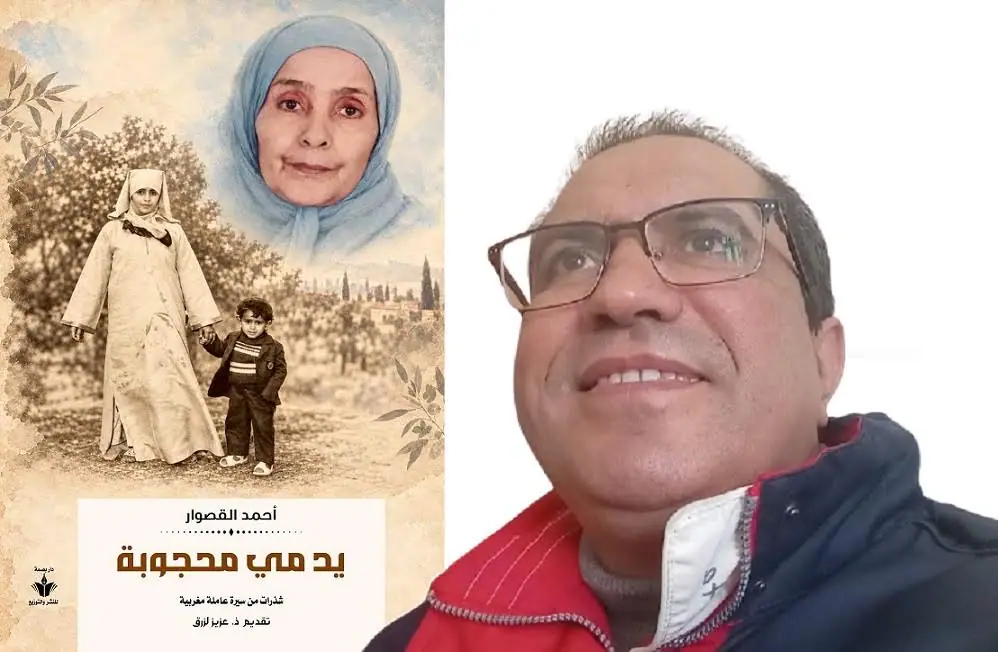
Moroccan writer Ahmed Al-Qaswar has recently published a book titled "My Veiled Hand: A Fragment of a Moroccan Female Worker's Biography". The book is a documentation of his mother's life, who passed away in 2012, as a female factory worker in a textile factory in Salé, Morocco. Al-Qaswar's mother, Mahjouba, worked in the factory for nearly four decades, balancing her work life with family responsibilities.
The book is not just a personal tribute to Al-Qaswar's mother but also an attempt to preserve a part of Moroccan history and the experiences of female factory workers during the 1960s and 1970s. During this period, many Moroccan women left their rural areas to work in factories, seeking a better life and a chance to support their families. These women, including Mahjouba, played a crucial role in shaping Morocco's social and economic landscape.
Al-Qaswar's book sheds light on the challenges faced by female factory workers, including long working hours, low wages, and limited social benefits. Despite these challenges, women like Mahjouba persevered and made significant contributions to their families and communities. The book also highlights the importance of preserving the history and experiences of these women, who are often overlooked in official historical records.
The book is based on Al-Qaswar's personal experiences and memories of his mother's life, as well as his research on the history of the textile industry in Morocco. It includes stories about Mahjouba's childhood, her decision to work in the factory, and her experiences as a female worker in a male-dominated industry.
Al-Qaswar's work has been praised for its contribution to the preservation of Moroccan cultural heritage and its exploration of the lives of female factory workers. The book has been described as a valuable resource for anyone interested in understanding the social and economic changes that have taken place in Morocco over the past few decades.
The book's title, "My Veiled Hand", refers to the physical labor that Mahjouba performed in the factory, as well as her role as a caregiver and nurturer within her family. The title also reflects the complexities of Mahjouba's life, who had to balance her work and family responsibilities while navigating the challenges of being a female worker in a patriarchal society.
Overall, Al-Qaswar's book is a significant contribution to the documentation of Moroccan history and culture, and it highlights the importance of preserving the experiences and stories of ordinary people, particularly women, who have played a crucial role in shaping the country's social and economic landscape.
Key points
- The book documents the life of Mahjouba, a female factory worker in Morocco, and her experiences during the 1960s and 1970s.
Reporting sources
- في«يد مي محجوبة» أحمد القصوار يوثق ذاكرة المرأة المغربية العاملة ويحفظ فصولا من تاريخ مصانع النسيج · Al Ittihad Al Ichtiraki