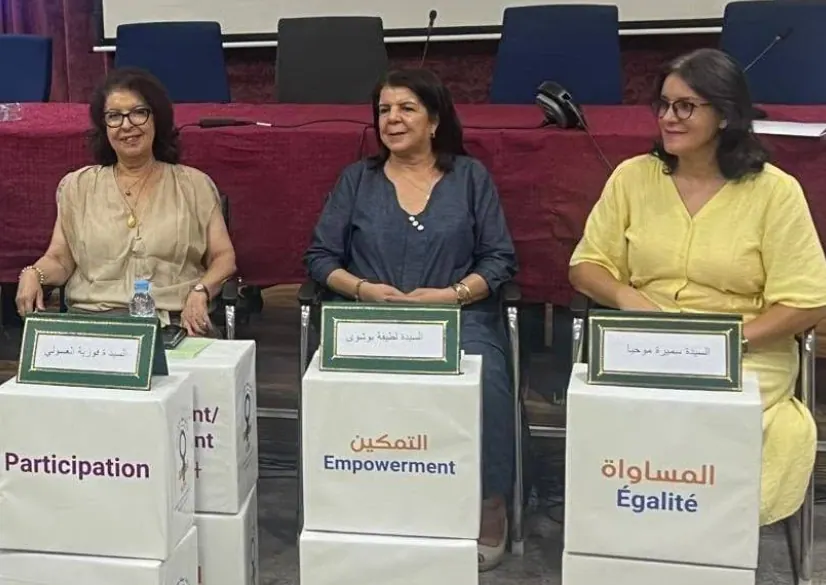
The Moroccan Women's Rights Federation has called for the government to accelerate reforms to the Family Code and increase women's representation in decision-making positions. In a statement released on the occasion of Morocco's National Women's Day, the federation emphasized the need to transition from constitutional and political commitments to tangible actions that ensure real equality between men and women. The federation highlighted that achieving equality remains conditional on clear, assessable, and accountable legislative, institutional, and public policy reforms.
The federation acknowledged that the appointment of a woman to the position of Head of Government is a significant development, but it is not sufficient to judge the reality of women's political participation. The federation noted that women continue to face obstacles that hinder their equal access to responsibility and decision-making positions. Despite progress in parliamentary representation, the federation pointed out that difficulties related to candidacy and participation in decision-making processes persist, and the risks of political and electoral violence, as well as digital defamation targeting women in public affairs, are increasing.
The federation demanded a review of the electoral and party systems to ensure equal opportunities between men and women and to strengthen protection mechanisms against political and digital violence. They also called for guarantees of investigation, redress, and respect for rights and freedoms. The federation emphasized the need to make equality and the implementation of women's human rights a priority in public policies, as a fundamental approach to consolidating democracy and achieving social and gender justice.
The federation noted that there are still structural gaps between constitutional provisions and the reality experienced by women, and that bridging these gaps requires an objective evaluation of previous policies and programs. They also called for the development of future initiatives based on tangible results and measurable indicators. In the legislative sphere, the federation prioritized the review of the Family Code, calling for its alignment with equality and human rights standards, as well as the reform of the Penal Code to ensure the protection of rights and freedoms.
The federation also demanded an evaluation of the implementation of Law No. 103.13 related to combating violence against women and the development of prevention, protection, and care mechanisms for victims, including digital violence. They emphasized the need to ensure the independence and effectiveness of specialized institutions and to provide sustainable funding for support and redress services. In the economic and social sphere, the federation highlighted the persistence of weak female participation in the labor market, wage disparities, and precarious working conditions.
The federation noted that these challenges are exacerbated by disparities in access to education, healthcare, transportation, and social protection, particularly for women and girls in rural and marginalized areas. They called for a comprehensive economic and social policy aimed at increasing women's economic activity rates, providing decent job opportunities, and reducing wage disparities. The federation also emphasized the need to expand care and social protection services and improve access to basic resources and services.
The federation drew attention to the challenges posed by climate change and technological transformations, warning of their disproportionate impact on women's economic and social situations. They called for proactive policies that take into account gender dimensions in addressing climate change, food security, energy, and digital transformations. The federation emphasized the importance of evaluating previous government plans in the field of equality and ensuring the independent and effective participation of the women's movement in preparing public policies.
Key points
- The Moroccan Women's Rights Federation calls for accelerating family code reform and increasing women's representation in decision-making positions.
- The federation emphasizes the need for clear, assessable, and accountable legislative, institutional, and public policy reforms to achieve real equality between men and women.
- The federation demands a comprehensive economic and social policy aimed at increasing women's economic activity rates and reducing disparities in access to education, healthcare, and social protection.