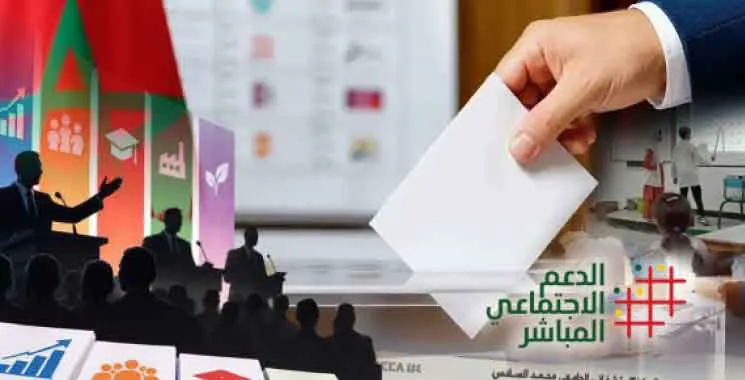
Morocco is set to hold legislative elections in the coming days, with voters tasked with selecting their representatives to the Chamber of Deputies. At the heart of the decision is a fundamental question: who can Moroccans trust to lead the country for the next five years? The answer lies not just in the candidates' programs and promises, but in their ability to translate these into tangible results.
Over the past few years, Morocco has embarked on an ambitious development trajectory, marked by significant investments in infrastructure, industry, and social welfare. The country's economic landscape is undergoing a substantial transformation, with the automotive sector evolving beyond assembly to include electric vehicles and battery production. In July, the UN Conference on Trade and Development (UNCTAD) cited Morocco as a new global investment platform in this field.
The investment dynamic has gained momentum, with 391 conventions representing around 520 billion dirhams signed as of early July 2026, according to government data. In April alone, the National Investment Commission approved 44 projects worth over 86 billion dirhams, covering sectors such as automotive, renewable energy, tourism, aeronautics, telecommunications, and infrastructure. These investments signal a shift towards more sophisticated projects and sectors.
The health sector is also undergoing significant reforms, with a program to rehabilitate primary healthcare centers completing its first phase, which covered 1,400 centers across the country's 12 regions. A second phase is now underway, targeting an additional 1,600 centers. New hospital infrastructure is being built or completed in several regions, with around 3,000 additional beds expected by 2026.
The education sector has seen the introduction of "pioneer schools" since the 2023-2024 academic year, which have gradually expanded in scope. For the 2026-2027 academic year, the program is set to cover around 80% of primary schools and 50% of middle schools. The focus here is not just on infrastructure but also on changing teaching and learning methods.
A significant shift has also occurred in the social sphere, particularly with the introduction of a direct social aid system launched in late 2023. By 2026, this system was supporting around 3.9 million households, or over 12.5 million citizens, according to the National Social Support Agency. This represents a move towards a more institutionalized and targeted approach to social aid.
As Moroccans head to the polls, they will be evaluating the progress made in various sectors and the potential for future growth. The choice will be between relying on untested plans and trusting in the capabilities of those who have already demonstrated their ability to deliver results.
Key points
- Morocco's legislative elections will focus on the candidates' ability to implement their plans and build on existing development trajectories.
- The country's economic transformation includes growth in the automotive and renewable energy sectors, with significant investment and job creation potential.
- Social reforms, including healthcare and education initiatives, as well as a new social aid system, are central to the evaluation of candidates' programs.