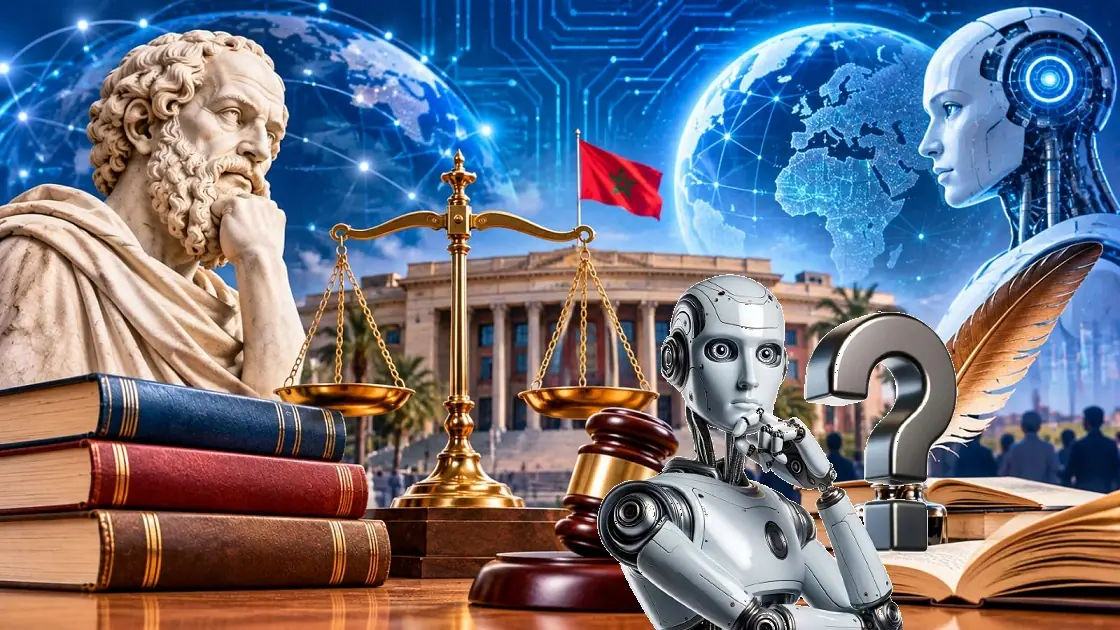
The University of Hassan I in Bsatna, Morocco is hosting a national scientific symposium titled "Intersections of Philosophy, Law, Politics, and Literature in the Era of Digital Transformation and Artificial Intelligence". The event, scheduled for November 19, 2026, marks the celebration of World Philosophy Day. It aims to initiate an interdisciplinary discussion on the transformations in knowledge, law, politics, and culture triggered by rapid technological advancements and the emergence of artificial intelligence applications.
The symposium addresses the profound changes brought about by digital transformations, which extend beyond technological development and improved services to affect the structure of human knowledge, its production, and dissemination. These changes also influence thinking, communication, interaction, and redefine the relationship between humans and technology. New issues have arisen concerning the boundaries of moral and legal responsibility, the nature of political practice, and forms of literary and cultural expression.
The central theme of the symposium revolves around the capacity of digital transformation and artificial intelligence to reshape relationships between philosophy, law, politics, and literature. It questions the implications of these transformations on the foundational principles of modern societies. Key issues include the limitations of algorithmic knowledge, the role of critical thinking in the age of artificial intelligence, and the ability of legal systems to keep pace with changes in the digital space.
The event targets an examination of the epistemological shifts caused by digitization and artificial intelligence in human knowledge. It seeks to uncover the philosophical and ethical frameworks that should guide the development of smart technology and its applications. The symposium also aims to analyze legal issues related to protecting rights, freedoms, and personal data, and to determine legal responsibility for actions and decisions involving intelligent systems.
The discussion will extend to the political realm, focusing on changes in political practice and democratic institutions due to the growing influence of digital platforms and algorithms. The impact of artificial intelligence on literature, creativity, and culture will also be explored, including issues related to authorship, intellectual property, and the boundaries of creative production involving machines.
Organized by the Laboratory of Legal, Political, Human, and Digital Transformation, the symposium features a scientific committee comprising professors and researchers from various Moroccan universities. The event encourages participation from professors, researchers, students, and media representatives to engage in a multidisciplinary dialogue on the intersections of philosophy, law, politics, and literature in the era of artificial intelligence.
The symposium's objectives align with the need to transcend traditional disciplinary boundaries and explore the interconnections between knowledge fields. By fostering a comprehensive understanding of the transformations reshaping contemporary societies, the event aims to address issues of human responsibility, decision-making autonomy, rights, freedoms, and justice.
Key points
- The symposium will address the impact of artificial intelligence on literature and creativity.
- The event aims to initiate an interdisciplinary discussion on the transformations triggered by rapid technological advancements.
- The symposium is scheduled for November 19, 2026, at the University of Hassan I in Bsatna, Morocco.
Reporting sources
- ندوة علمية بسطات تناقش تقاطعات الفلسفة والقانون والسياسة والآداب في زمن الذكاء الاصطناعي · Al Ittihad Al Ichtiraki