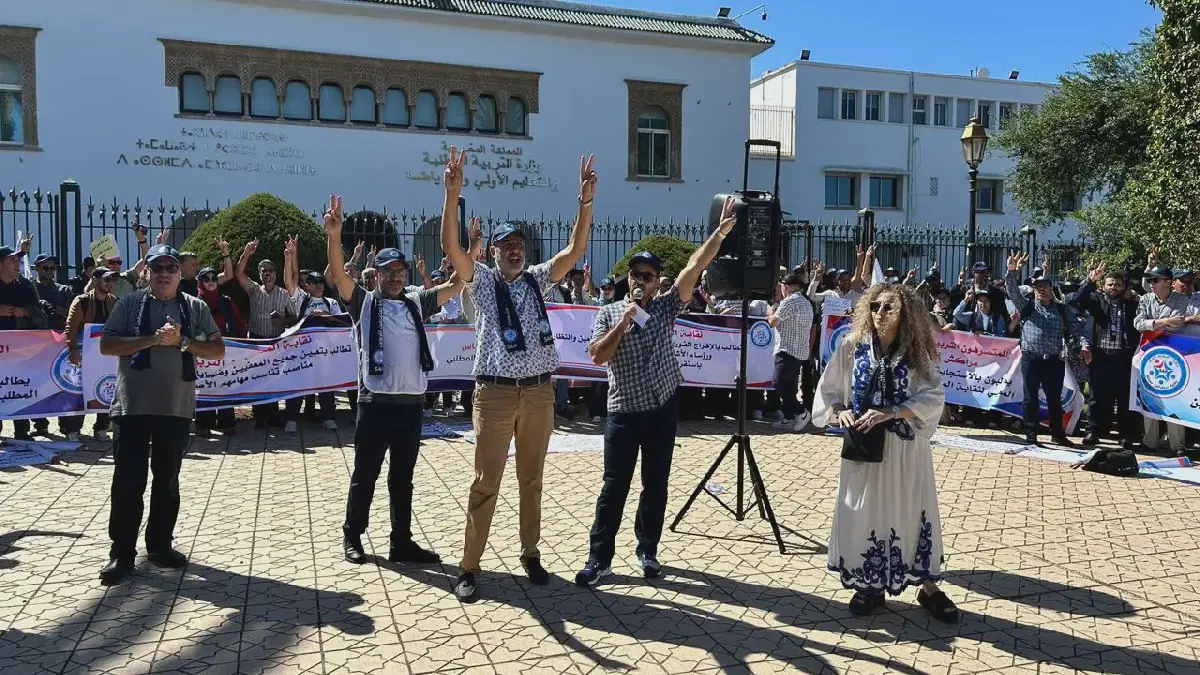
The Moroccan Teachers' Union has announced an escalation of its protest program, calling for a national demonstration in front of the Ministry of National Education in Rabat on December 8. The union is protesting what it describes as the government's continued policy of ignoring and marginalizing the concerns of teachers. The union's national council, in a statement released after an extraordinary session, vowed to continue its protest program, citing the government's failure to address the sector's problems.
The union's statement highlighted the ongoing structural and management problems within the education sector, including a severe shortage of human resources, inadequate equipment and infrastructure, and delayed rehabilitation of several institutions. The union also criticized the ministry's approach, describing it as unilateral and exclusionary, and accused the government of ignoring the professional and social demands of teachers. The union is demanding a special basic system for teachers, which would recognize their specific roles and responsibilities.
The union's demands include a supplementary compensation for teachers, to be counted towards their pension, and the creation of a new grade that would provide additional opportunities for promotion. The union is also calling for an increase in the value of administrative and housing allowances, as well as clear regulations for compensation for travel and additional tasks. Furthermore, the union is demanding that the government provide necessary human resources and equipment, and put an end to the accumulation of tasks that burden the education administration.
The union's national council has also announced a series of protest actions, including a boycott of work in school associations, and a boycott of meetings and training sessions related to the "Mouvement de l'Ecole" project. The union will also boycott various operations related to the "Mouvement de l'Ecole" project, including meetings, training sessions, and administrative operations. Additionally, the union will boycott publishing and sharing school activities, collecting school insurance premiums, and operations related to early childhood education.
The union's protest program also includes a boycott of taking attendance using the "Massar" system, as well as a call to withdraw from professional WhatsApp groups and not respond to professional messages on personal phones. The union's actions are a response to what it describes as an excessive workload and responsibilities placed on teachers, without providing the necessary resources and means. The union rejects what it sees as a threatening approach, instead calling for dialogue and shared responsibility.
The union has called on all its members across the country to participate in the national demonstration on December 8, which will take place in front of the Ministry of National Education in Rabat. The demonstration is set to start at 10 am. The union's escalation of protests puts the Ministry of National Education to the test in managing its relationship with teachers, amid growing demands and calls for a genuine and responsible dialogue.
The protest is also seen as a test of the government's commitment to addressing the concerns of teachers and finding solutions to the problems facing the education sector. The union's demands are aimed at improving the working conditions and benefits of teachers, as well as addressing the structural and management problems within the sector. The outcome of the protest and the government's response will likely have significant implications for the education sector in Morocco.
Key points
- The Moroccan Teachers' Union has called for a national demonstration on December 8 to protest the government's handling of the education sector.
- The union is demanding a special basic system for teachers, which would recognize their specific roles and responsibilities.
- The protest program includes a boycott of work in school associations, meetings, and training sessions, as well as a boycott of taking attendance using the "Massar" system.