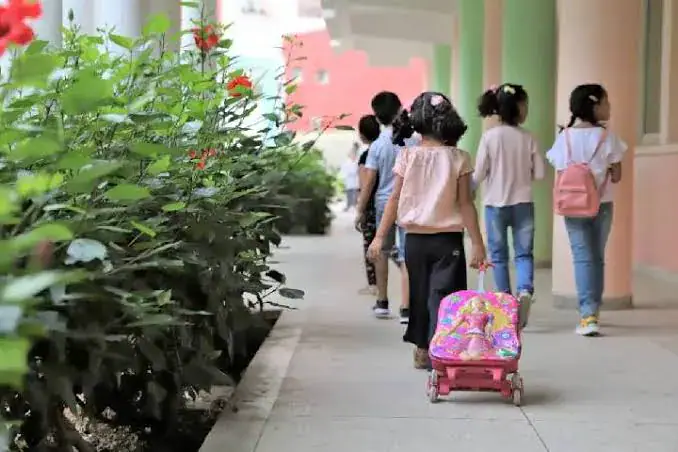
The Moroccan National Union of Primary School Teachers, affiliated with the National Education Union (FNE), has expressed concerns over the current school year's conditions. The union stated that the continued overcrowding and multiple tasks assigned to teachers increase pressure on educational staff and negatively impact their ability to perform their basic duties. This situation has led to a significant rise in stress levels among teachers.
The union announced a protest program set for Monday, October 5, which includes wearing protest badges and organizing demonstrations within educational institutions. This move is in response to what they describe as a worsening of dysfunctions in primary education at the start of the new academic year. The union highlighted ongoing issues such as a shortage of human resources, overcrowding, and multiple tasks.
According to the union, primary school teachers are required to perform administrative, evaluative, and digital tasks in addition to teaching. This accumulation of tasks increases pressure on educational staff. The union also criticized the continued overcrowding in classrooms, calling for it to be addressed by providing additional staff and creating new educational institutions and infrastructure.
The union rejected the conversion of "extended support" into a mechanism to compensate for the shortage of teachers. They emphasized that educational support should be part of a clear pedagogical vision without compromising class stability or assigning undefined tasks to teachers. The union also called for an end to the adoption of schedules that include five consecutive hours of teaching in some regional directorates.
The union criticized the implementation of the "Schools of Excellence" project, arguing that the standardization of teaching methods, tests, and reports limits teachers' professional discretion and adds new administrative burdens. They also rejected the increasing tasks associated with digital platforms and criticized the memorandum related to the immediate registration of student absences in the "Massar" system.
Regarding the teaching of the Amazigh language, the union demanded that Amazigh language teachers be allowed to work within the same time frame as dual-education teachers and benefit from the same compensations. They also called for the inclusion of Amazigh in intensive support programs. On the financial level, the union requested a general salary increase of 3000 dirhams.
The union renewed its call for the settlement of several pending files, including the file of those affected by the administrative and financial impact of the April 26, 2011 agreement, victims of Article 81, and contract teachers. The union's demands reflect broader concerns about the state of education in Morocco and the need for reforms to address teacher workload and resource shortages.
Key points
- The Moroccan National Union of Primary School Teachers has announced a protest program in response to ongoing issues in primary education.
- The union is calling for improved working conditions, including a reduction in overcrowding and multiple tasks assigned to teachers.
- The union demands a general salary increase and the settlement of several pending files affecting teachers.
Reporting sources
- “الاكتظاظ وتعدد المهام”.. نقابة تنتقد ظروف الدخول المدرسي · Barlamane.com