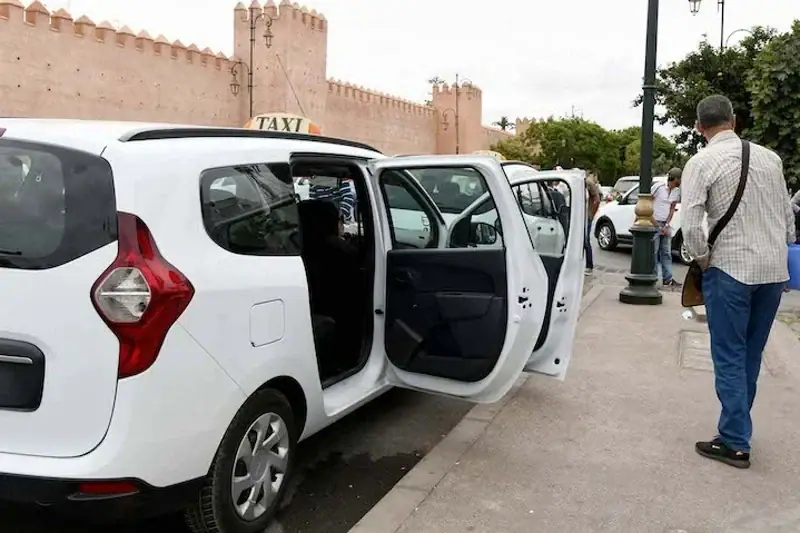
The union representing large taxi drivers in Rabat, Morocco, has announced that it will not reverse its recent decision to increase fares. Effective recently, the new fare structure has raised prices from 5 to 6 dirhams per ride. Union officials argue that this change was necessary due to rising operational costs, including fuel, vehicle rentals, spare parts, tires, and living expenses.
According to union representatives, the increase in fuel prices is not the sole factor driving the fare hike. Other expenses, such as vehicle rental costs, spare parts, tires, and general living expenses, have also seen significant increases over the years without corresponding adjustments to taxi fares. As a result, the union asserts that the fare increase is essential for the sustainability of their operations.
The union also criticized the current system of government subsidies, arguing that it is flawed and does not directly benefit the drivers who need it most. They called for a more direct approach to subsidy distribution, ensuring that support reaches the eligible drivers. However, the union made it clear that even if subsidies were to be distributed monthly, their stance on the fare increase would remain unchanged.
Union officials emphasized that the decision to increase fares was not taken lightly and reflects the challenging economic conditions faced by taxi drivers. They pointed out that the rising cost of living and doing business in Rabat has made it difficult for drivers to maintain their livelihoods without adjusting their fares. The union's firm stance suggests that further negotiations with authorities may be necessary.
The large taxi union in Rabat represents a significant number of drivers who operate in the city. Their decision to increase fares has likely impacted thousands of commuters who rely on these services daily. While the union argues that the increase is necessary for their survival, commuters may face higher costs for their daily travels.
The Moroccan government's policies on public transportation and subsidies have come under scrutiny following the union's decision. Authorities may face pressure to revisit the subsidy distribution system and explore ways to mitigate the impact of fare increases on commuters. However, the union's resolve indicates that finding a compromise will require careful negotiation.
As the situation develops, both the union and government officials will need to engage in dialogue to address the concerns of taxi drivers and commuters alike. The fare increase in Rabat highlights the broader challenges faced by public transportation systems in Morocco and the need for sustainable solutions that balance the needs of drivers, commuters, and the economy.
Key points
- The union's decision to increase fares from 5 to 6 dirhams per ride was driven by rising operational costs.
- The union criticized the current subsidy system, calling for more direct support to drivers.
- The fare increase has significant implications for commuters and may prompt further negotiations with authorities.
Reporting sources
- نقابة الطاكسيات الكبيرة بالرباط ترفض التراجع عن الزيادة في التسعيرة · Al Ittihad Al Ichtiraki