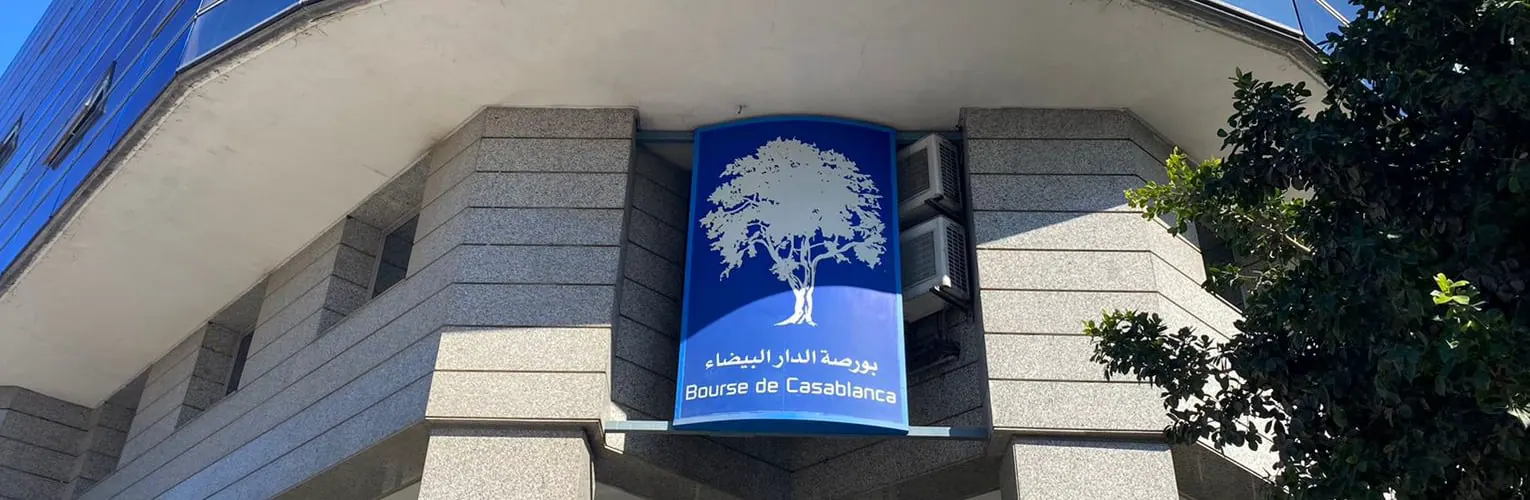
The Moroccan stock market had a tumultuous week, with the MASI index plummeting over 5% in just five sessions, marking its worst performance since the onset of the Middle East conflict. On Friday, September 18, the index closed at 17,592.46 points, down 2.18% from the previous day. Trading volumes were significantly high, reaching approximately 624 million dirhams. This decline is part of a larger trend, with the index experiencing a 6.6% correction over six sessions between September 10 and 18.
The downward trend was not limited to the MASI index, as derived indices also followed suit. The MASI 20 fell by 2.35% to 1,282.32 points, representing a 13.69% annual decline. Similarly, the MASI ESG and MASI Mid indices dropped by 1.96% and 1.60%, respectively, to 1,307.79 points and 1,674.50 points. The overall market capitalization stood at 1,035.64 billion dirhams. These declines can be attributed to various factors, including rising bond yields, which increased the risk-free rate and reduced the relative attractiveness of stocks.
Market operators pointed to three primary factors contributing to the decline. The first factor is the rise in bond yields, which makes stocks less appealing. The second factor is the heightened geopolitical risk, particularly with disruptions in the Saudi Arabian supply chain and the Brent crude oil price remaining above $100 per barrel. The third factor is technical in nature, with selling pressure from collective placement organisms exacerbating the downward trend in an already fragile market.
On September 18, some stocks bucked the trend, with CMT rising by 9.97%, PRO by 5.87%, and SMI by 3.54%. Conversely, WAA declined by 7.50%, BCI by 6.90%, and LHM by 5.96%. This fluctuation occurred after a technical incident on September 17, which led to the suspension and subsequent cancellation of the day's transactions due to a failed switch to the backup site.
While the technical incident added an element of operational uncertainty, it does not solely explain the market's correction. Instead, it highlights a deeper issue regarding the market's structure. The Moroccan stock market's capitalization is heavily concentrated on a limited number of stocks, and its liquidity is largely dependent on the trading activities of a few large collective asset managers. This concentration amplifies market movements in both directions.
The recent market performance raises questions about the resilience and diversity of the Moroccan stock market. With a capitalization concentrated on a restricted number of values and liquidity heavily dependent on a few major players, the market is vulnerable to significant fluctuations. This situation underscores the need for a more diversified market with a broader range of participants to mitigate such risks.
As the market continues to navigate these challenges, investors and market operators will be closely monitoring the situation to assess the potential for recovery. The interplay of global geopolitical factors, technical trends, and market structure will likely influence the market's trajectory in the coming weeks. For now, the Moroccan stock market faces the task of regaining stability and confidence among investors.
Key points
- The MASI index experienced a 5% decline over five sessions, its worst performance since the Middle East conflict began.
- Rising bond yields and geopolitical risks contributed to the market's decline.
- The Moroccan stock market's structure, with concentrated capitalization and dependent liquidity, amplifies market movements.