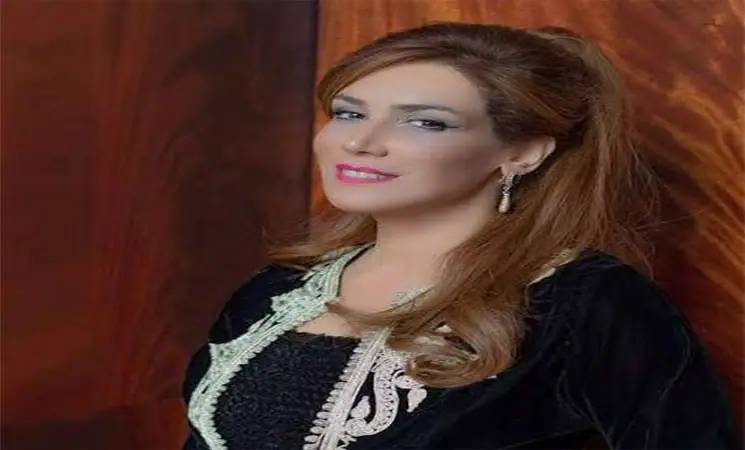
Moroccan soprano Samira El Kadri, former director of the Tangier Cultural Center, has criticized the reduction of the International Oud Festival in Tangier's memory, in a post on her official Facebook page, coinciding with the current edition honoring Lebanese artist Marcel Khalifa. El Kadri, who managed the festival for years, expressed her disappointment with the current state of the festival.
El Kadri mentioned that she had previously honored Marcel Khalifa with the Zriab Award for his skills, which is granted by the National Music Council, a partner of UNESCO. She also recalled hosting Khalifa three times in Tangier and outside. A meeting with Khalifa was attended by over 500 spectators at the Tangier Culture House, with the participation of musician Nasser Chamma and writer Idriss El Melloumi.
El Kadri stated that she joined the Ministry of Culture in 1992 and took over the artistic management of the festival since its inception, under the era of ministers Thriya Jibrane and Mohammed Al Ashari. She emphasized that the festival is a result of 25 years of collective work. El Kadri criticized a video shown in 2024, saying it did not include several names that contributed to the establishment and development of the festival.
Regarding the Zriab Award, El Kadri noted that the award, given at the festival since 2013, was excluded from the current edition, despite being scheduled to be awarded to Syrian musician and composer Kenan Adnawi. She stated that there was no contact or coordination with the National Music Council, putting Adnawi in an embarrassing situation.
El Kadri also mentioned a similar situation that occurred with artist Abd al-Haq Takroun. She described an incident in 2024 as very sad, where she attended the festival with Wafaa Bennani, head of the award committee, only to have the Saudi delegation, which covered all expenses, receive poor treatment.
El Kadri discussed the upcoming book on the festival's memory, dedicated to Marcel Khalifa. She considered documentation a duty towards future generations but suggested it should be a collective effort, not just the experience of two individuals. El Kadri questioned the use of images from the festival's archive that date back to periods when the book's authors were not involved in its management.
El Kadri emphasized that her post was not a personal criticism but a contribution to a discussion on collective cultural memory. She called for the festival to continue with a logic of continuity, not disruption, and to be a model for cultural work that brings people together, not divides them.
Key points
- El Kadri criticizes the exclusion of memories from the International Oud Festival in Tangier.
- The Zriab Award was excluded from the current festival edition.
- El Kadri calls for a collective effort in documenting the festival's memory.