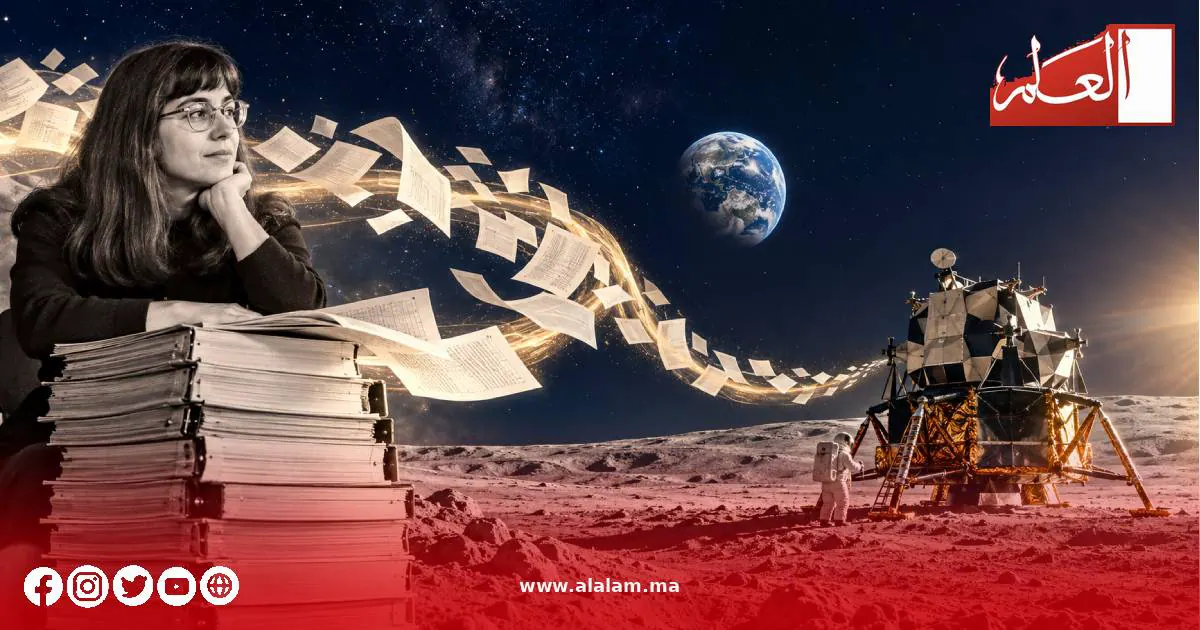
Margaret Hamilton, a trailblazing computer scientist, passed away on September 30 at the age of 90. She was a key figure in developing the software for NASA's Apollo missions, including the historic Apollo 11 moon landing in 1969. Hamilton led the software engineering team at the Massachusetts Institute of Technology's Instrumentation Laboratory, which designed and implemented the software that enabled the spacecraft to successfully land on the moon.
Hamilton's contributions to the Apollo missions were instrumental in overcoming critical technical challenges. During the lunar descent, the onboard computer faced increased pressure in processing data, but the software developed by her team allowed it to prioritize essential tasks and suspend less critical ones, ensuring a safe and successful landing. Her work on the Apollo missions showcased her expertise in developing reliable and fault-tolerant software systems.
Throughout her career, Hamilton was recognized for her groundbreaking work in software engineering. In 2016, she received the Presidential Medal of Freedom from President Barack Obama, the highest civilian honor in the United States. Her achievements also paved the way for women in computer science and space exploration, inspiring future generations of scientists and engineers.
Hamilton's legacy extends beyond her technical contributions to the field of software engineering. She played a significant role in establishing software engineering as a distinct discipline, emphasizing the importance of reliability, fault tolerance, and predictability in software design. Her work continues to influence the development of software systems for critical applications, including space exploration.
The impact of Hamilton's work on the Apollo missions and beyond cannot be overstated. Her software development expertise enabled the successful execution of complex space missions, demonstrating the critical role of software in modern space exploration. As the space industry continues to evolve, Hamilton's contributions serve as a testament to the power of innovative software development in pushing the boundaries of human achievement.
The Massachusetts Institute of Technology, where Hamilton spent much of her career, acknowledged her passing on October 7. Her legacy serves as a reminder of the importance of investing in scientific research and development, as well as promoting diversity and inclusion in STEM fields. Hamilton's remarkable life and achievements continue to inspire scientists, engineers, and explorers around the world.
As the scientific community mourns the loss of this pioneering figure, her remarkable story serves as a testament to the impact of dedicated individuals on the advancement of human knowledge and achievement. Hamilton's contributions to software engineering and space exploration have left an indelible mark on history, ensuring her legacy will continue to inspire future generations.
Key points
- Margaret Hamilton developed software for NASA's Apollo missions, including the historic Apollo 11 moon landing in 1969.
- Hamilton received the Presidential Medal of Freedom in 2016 for her contributions to software engineering and space exploration.
- Her work established software engineering as a distinct discipline, emphasizing reliability, fault tolerance, and predictability in software design.