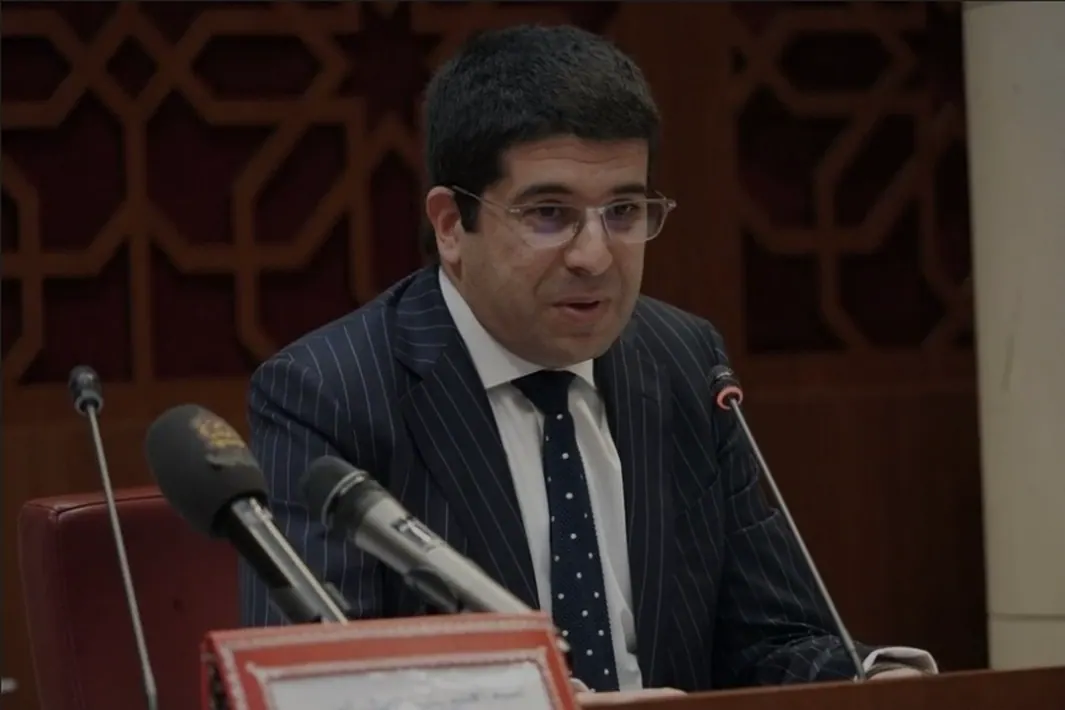
Moroccan King Mohammed VI's recent speech to parliament has set a clear roadmap for the country's development and reform agenda. The speech, which marked the beginning of the new legislative year, emphasized the importance of balancing economic growth with social justice and territorial equity. According to Abd al-Haqq Azzouzi, a professor and head of the UN Alliance of Civilizations chair, the speech carries significant weight, not only for its policy directives but also for outlining a clear roadmap for institutions and political actors.
Azzouzi highlighted the King's emphasis on Moroccan identity, citing the phrase "the feeling that is most precious to me in life is my pride in being Moroccan." He argued that this statement conveys a deep cultural and political message, underscoring that Moroccan identity is not just a sentiment but a responsibility and a commitment to building a strong, solidary, and advanced country. The King's speech also stressed the need for a development model that promotes equitable growth and provides opportunities for all citizens.
A key aspect of the King's speech was the focus on decentralization and advanced regionalization. Azzouzi emphasized the importance of transitioning from a centralized planning approach to one that is more responsive to local needs and realities. This, he argued, requires empowering local authorities with the necessary powers and resources to make decisions. Effective decentralization, Azzouzi stressed, is crucial for the success of advanced regionalization.
The King's speech also underscored the need for effective implementation of strategies and policies. Azzouzi noted that the challenge is no longer just about having strategies in place but about executing them efficiently and translating them into tangible results that benefit citizens. In this context, the role of the legislative institution is critical, Azzouzi argued, as it must work to convert citizens' aspirations into concrete policies.
Azzouzi emphasized that the King's speech places significant responsibility on parliament and parliamentarians. He argued that the trust placed in elected officials is not a privilege but a duty that requires proximity to citizens, listening to their concerns, and monitoring public policies. Parliamentarians must also hold the government accountable for implementing programs and commitments.
The King's speech has been seen as a call to action for all stakeholders, including parliamentarians, government officials, and civil society. Azzouzi stressed that Morocco has a unique opportunity to drive progress and transformation, but this requires effective execution and a commitment to results. He emphasized the need for a well-trained youth, effective administration, a proactive private sector, and strong institutions.
In conclusion, Azzouzi argued that the King's speech embodies a vision for Morocco that is rooted in national identity, a commitment to social justice, and a determination to achieve tangible results. He emphasized that the challenge now is to translate this vision into concrete achievements on the ground, requiring a collective effort from all stakeholders to drive progress and development.
Key points
- The King's speech sets a clear roadmap for Morocco's development and reform agenda, emphasizing the need for balanced growth, social justice, and good governance.
- Effective decentralization and implementation of strategies are critical for achieving the King's vision for Morocco.
- Parliament and parliamentarians have a significant role to play in driving progress and transformation in Morocco.