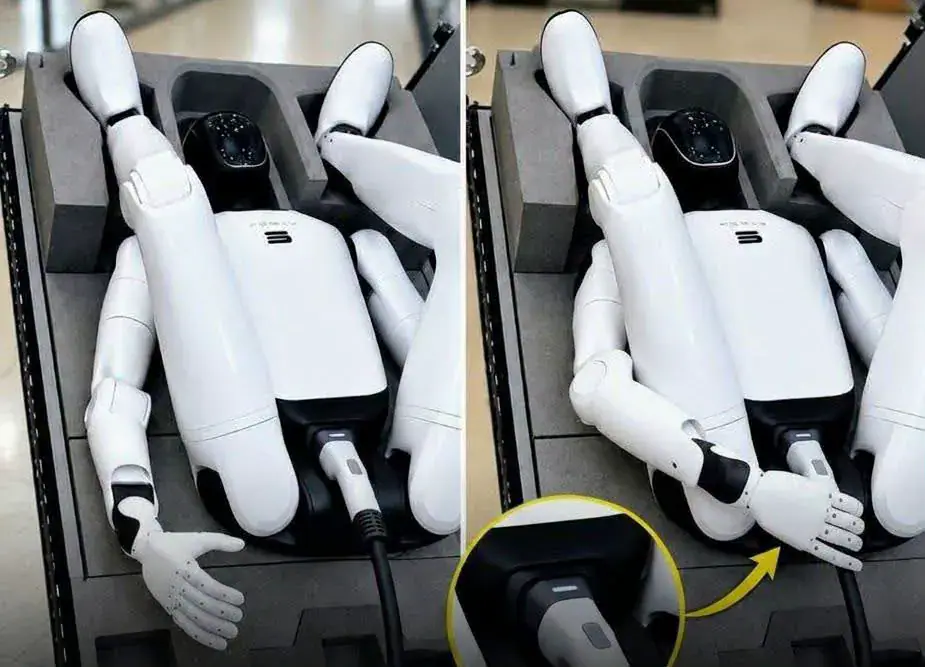
A recent video showcasing a humanoid robot named Digit, developed by US-based Agility Robotics, has garnered attention for its ability to autonomously charge itself. The robot, designed primarily for warehouse and logistics tasks, can handle repetitive work such as moving goods and interacting with boxes and materials. This development marks a significant milestone in robotics, as Digit can now perform tasks without direct human intervention.
The video demonstrates Digit's ability to locate a charging cable, connect it to its port, and then disconnect it once charged. This level of autonomy is a notable achievement, as it reduces the need for human interaction and intervention. According to Agility Robotics, Digit's autonomous charging feature is part of a broader effort to minimize human involvement in its operations.
Agility Robotics' focus on warehouse and logistics applications is evident in Digit's design. The robot is intended to handle tasks that are typically repetitive and labor-intensive, freeing human workers to focus on more complex and high-value tasks. With its advanced capabilities, Digit has the potential to transform the logistics and warehousing industries.
While Digit's autonomous charging ability is impressive, some observers have noted that the robot's movements appear somewhat awkward and inefficient. The robot's twisting and turning motions to reach the charging cable make the process seem more complicated than necessary. However, this does not detract from the significance of the achievement.
The development of robots like Digit is part of a broader trend towards increased automation in various industries. As robotics and artificial intelligence continue to advance, we can expect to see more machines taking on complex tasks and interacting with their environments in increasingly sophisticated ways. Agility Robotics' work on Digit is at the forefront of this trend.
The use of robots in logistics and warehousing has the potential to improve efficiency, reduce costs, and enhance workplace safety. By taking on repetitive and physically demanding tasks, robots like Digit can help mitigate the risk of workplace injuries and allow human workers to focus on higher-value tasks. As the technology continues to evolve, we can expect to see widespread adoption across various industries.
The advancements in robotics and automation, as demonstrated by Digit, have significant implications for the future of work. As machines become increasingly capable of performing complex tasks, there will be a growing need for workers who can design, develop, and interact with these systems. The development of robots like Digit is an exciting step towards a more automated and efficient future.
Key points
- Agility Robotics' humanoid robot Digit can autonomously charge itself, marking a significant milestone in robotics and automation.